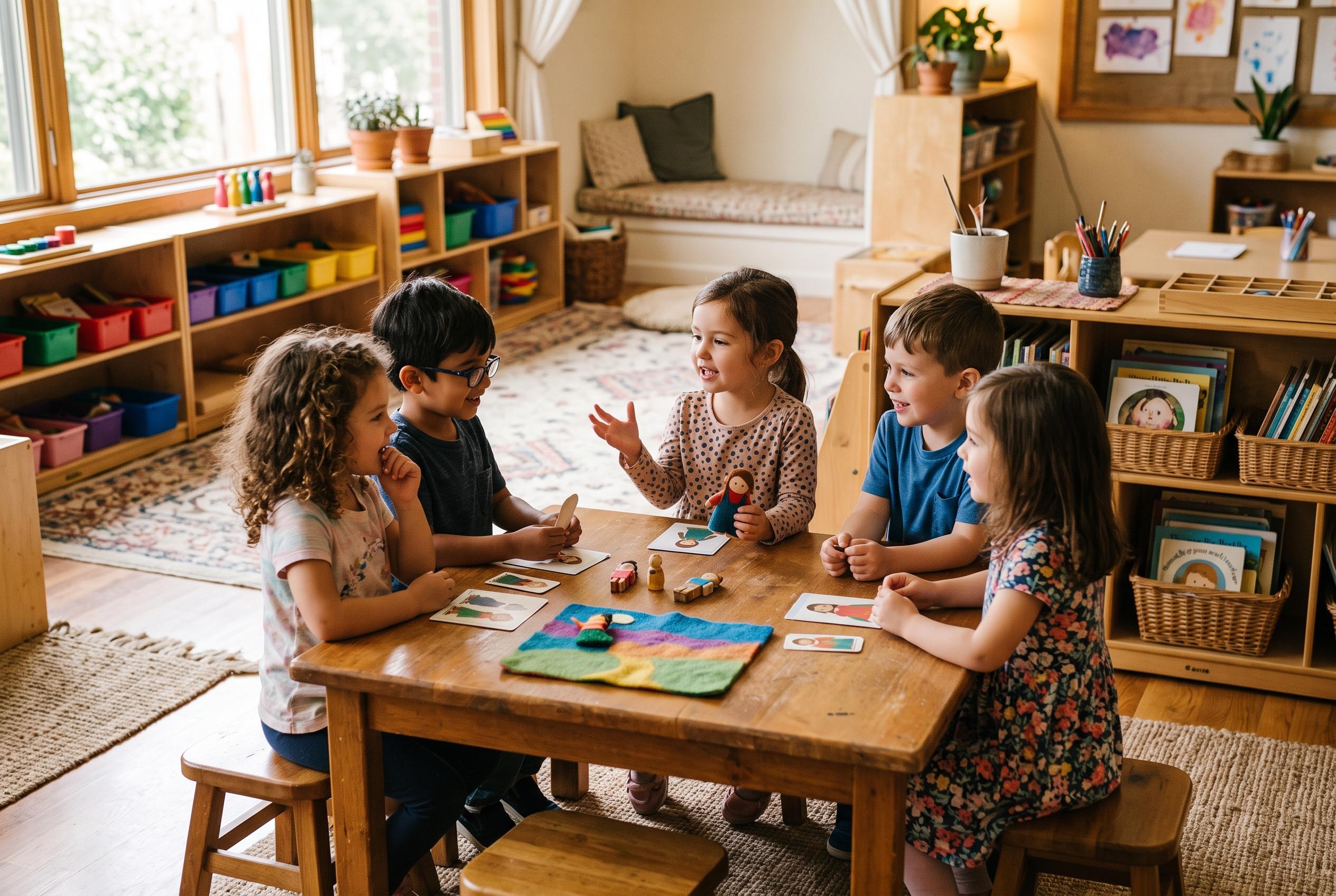

Educators emphasise the importance of intentional teaching through stories, play, and family involvement to nurture kindness, cooperation, and social resilience among preschoolers, transforming friendship from an innate trait into an acquired skill.
Preschoolers do not arrive knowing how to be good friends; they have to be taught, and then given repeated chances to practise. One educator writing on No Time for Flash Cards says the work begins with adults helping children regulate big feelings, model friendly behaviour and build a classroom culture where children do not have to be best friends with everyone, but do need to be kind and respectful to everyone.
Books can help make those lessons concrete. PBS KIDS says stories, crafts and simple games are useful for teaching kindness, trust and support, while Healthline notes that friendship activities for young children can also reinforce sharing, cooperation and empathy. In practice, that means choosing books that talk about including others, getting along and building community, then using them when children are calm enough to listen and talk.
The same principle applies to games. According to teaching resources from Teaching Expertise and books such as “Join In and Play” by Cheri J. Meiners, preschoolers learn friendship skills by doing things that require turn-taking, fair play, asking before joining in and handling both winning and losing. That is why board games, whole-group games and paired activities can be more than fillers; they are rehearsals for real-life social situations.
Names matter too. The No Time for Flash Cards post argues that repeated name activities help children feel seen, lower anxiety and make it easier for them to approach classmates. It also recommends creating intentional small groups in different learning areas so children have to share materials, wait their turn and solve small problems together, rather than always staying with the same friends.
Just as important is bringing families into the loop when friendships turn rocky. The educator behind the post says classroom conflicts often spill over from home, so early communication with parents or carers can help adults understand what a child is carrying into school and respond consistently. Other preschool friendship guides, including those from KidsSoup and Homeschooling Preschool, echo that broader point: friendship is not left to chance. It is taught through stories, play, shared routines and plenty of guided practice.
Disclaimer: This content is for informational purposes only and is not intended to be a substitute for professional medical judgment, advice, diagnosis, or treatment.