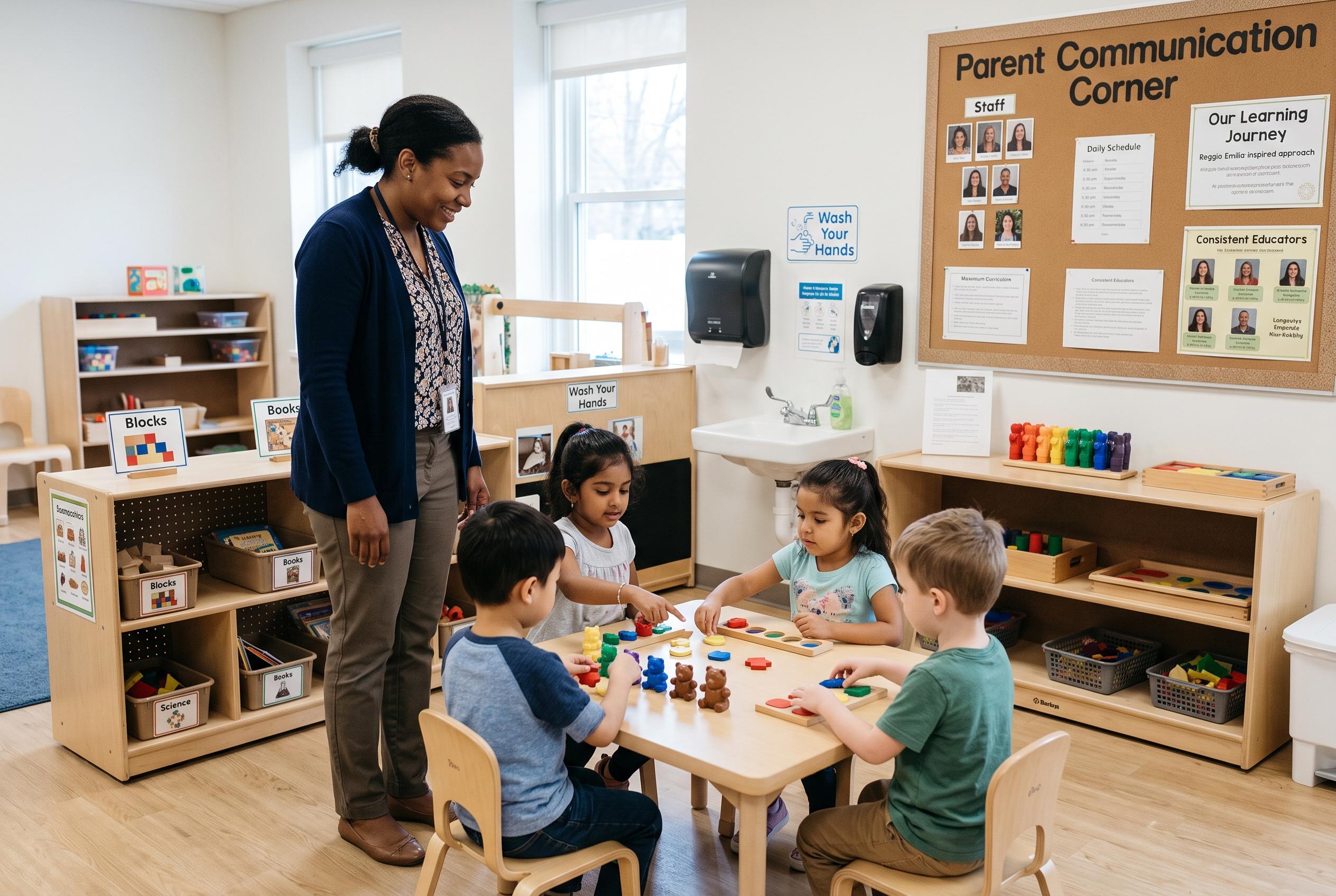

Families seeking the ideal preschool environment should focus on staff stability, learning approaches, health protocols, and communication practices, as new guidance emphasizes transparency and child-centred care.
Choosing a childcare centre for a preschool child is one of the most important decisions many families make, and parents often get the clearest picture only after asking direct questions during a tour. The initial walkthrough should do more than confirm that the rooms look tidy; it should help families understand how the centre is run, how staff interact with children and whether the setting can meet a child’s daily needs. Reliable providers should be able to explain their staffing, curriculum, health rules and communication practices in plain language.
One of the first things to ask about is staff experience and stability. ChildcarePath says lower staff-to-child ratios generally mean closer supervision and more individual attention, while other guidance on childcare standards links those ratios with both quality and safety. Parents should ask how many qualified educators work in each room, what training room leaders and assistants have, and how long key staff have been in place. Turnover matters too: a centre with consistent educators is often better placed to offer children a settled routine and stronger relationships.
Parents should also ask how learning is organised. Many centres say they use play-based learning, while others combine structured activities with outdoor exploration, and the best fit will depend on a child’s temperament and the family’s priorities. It is worth asking how educators use the Early Years Learning Framework in daily activities, how they prepare preschoolers for literacy, numeracy and independence, and how they turn observations into individual learning goals. Centres that give children regular access to outdoor play may also offer a richer mix of physical activity and discovery.
Health and hygiene policies deserve close attention as well. National Childcare Authority and Neztio both stress the importance of written procedures covering illness exclusion, handwashing, surface cleaning, toy sanitation and medication handling. Parents should ask what happens when a child develops a fever or stomach bug, how often high-touch areas are disinfected, and how families are told about contagious illnesses in the room. Clear answers on these points can make a major difference in day-to-day peace of mind.
Communication and costs are the final pieces of the puzzle. Many centres now use apps to share photos, learning notes and daily updates, but families should also ask how formal progress meetings are handled and how quickly staff respond to concerns. Fees should be equally transparent, including holiday charges, closure periods and what is covered in the daily rate. It is also sensible to ask about orientation visits, which can help children settle in gradually and ease the transition for parents as well as preschoolers.
Disclaimer: This content is for informational purposes only and is not intended to be a substitute for professional medical judgment, advice, diagnosis, or treatment.