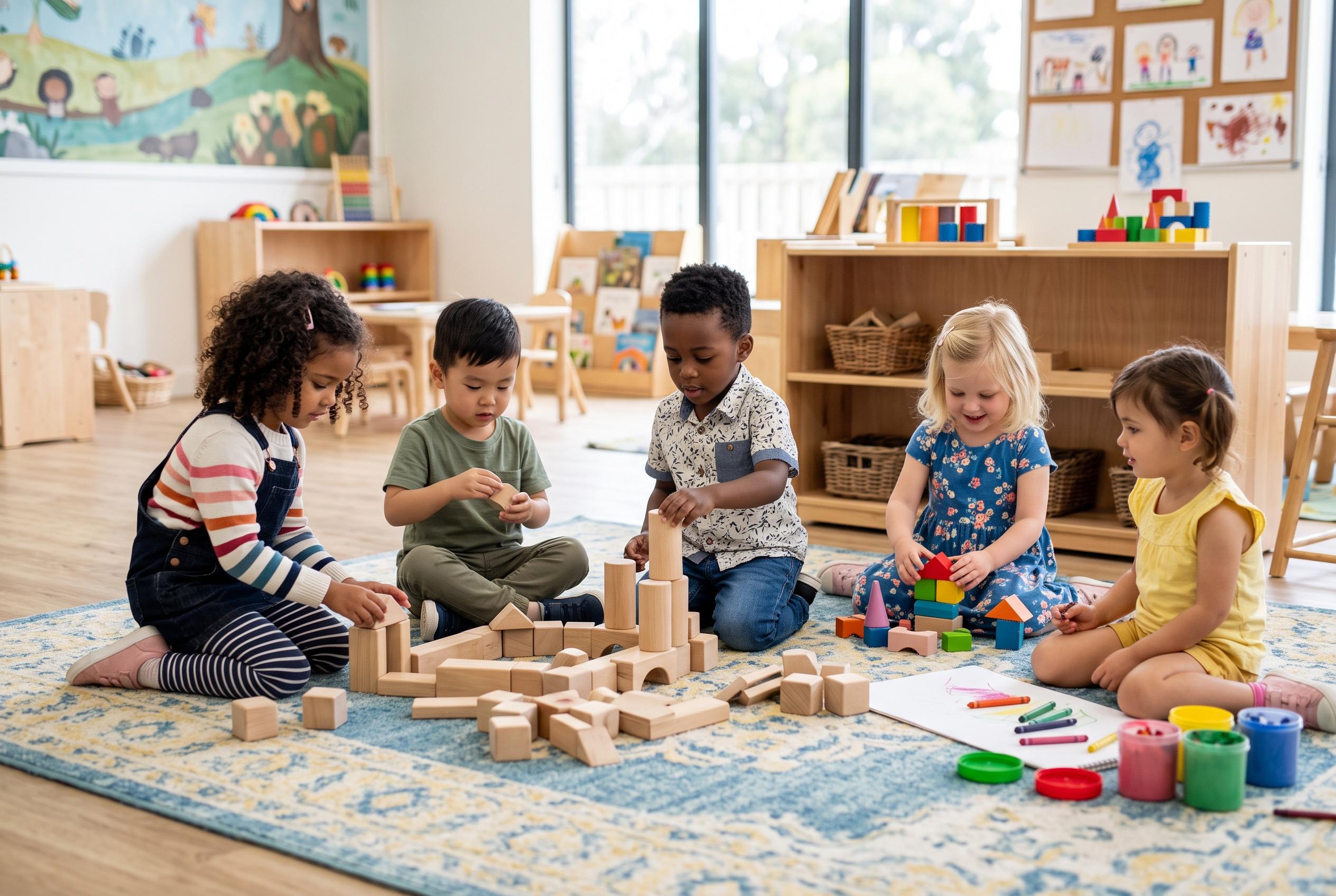

Recent perspectives emphasise that kindergarten readiness hinges on developmental milestones and social skills rather than age, guiding parents and educators in supporting children’s transition into school.
Junior kindergarten is less about reaching a particular birthday and more about whether a child is developing the habits that make a classroom feel manageable. Parents are often looking for signs of growing independence, curiosity and the ability to settle into simple routines. That view is echoed by Cleveland Clinic, the American Academy of Pediatrics and Reading Rockets, which all stress that readiness is shaped by development across several areas rather than age alone.
In practical terms, junior kindergarten is meant to ease children from play-based preschool into the structure of school. Programmes vary, and some begin earlier than others, but the best ones balance play with gentle instruction in early reading, writing and number skills. The goal is not to push children into formal learning before they are ready, but to help them build confidence in a setting that matches their stage of development.
Social readiness is often one of the clearest indicators. A child who can play alongside others, share, take turns and cope with short periods away from a parent is usually adapting well to group life. Reading Rockets says comfort in a classroom setting, an ability to ask for help and familiarity with basic personal information, such as a name and age, can also matter. Shyness alone is not necessarily a concern; many children take time to warm up once they are in a new environment.
Independence is another useful guide. Being able to manage toileting, wash hands, put on a coat or tidy up with only a little help suggests a child is starting to handle the expectations of school. The same is true of following simple instructions, such as collecting a bag and lining up. The American Academy of Pediatrics and UCSF Benioff Children’s Hospitals both note that physical and behavioural skills develop at different rates, and that a child who is still learning one task may well pick it up after school begins.
Attention, language and emotional control also help show whether the timing is right. A child who enjoys being read to, speaks in full sentences, asks lots of questions and can sit with a puzzle or story for a few minutes is building the foundations for classroom learning. The Cleveland Clinic and LeapFrog both highlight the value of being able to manage small frustrations, move between activities and separate from parents with reassurance. Taken together, these signs matter more than any single checkbox, and parents are usually best placed to judge the overall picture.
Disclaimer: This content is for informational purposes only and is not intended to be a substitute for professional medical judgment, advice, diagnosis, or treatment.