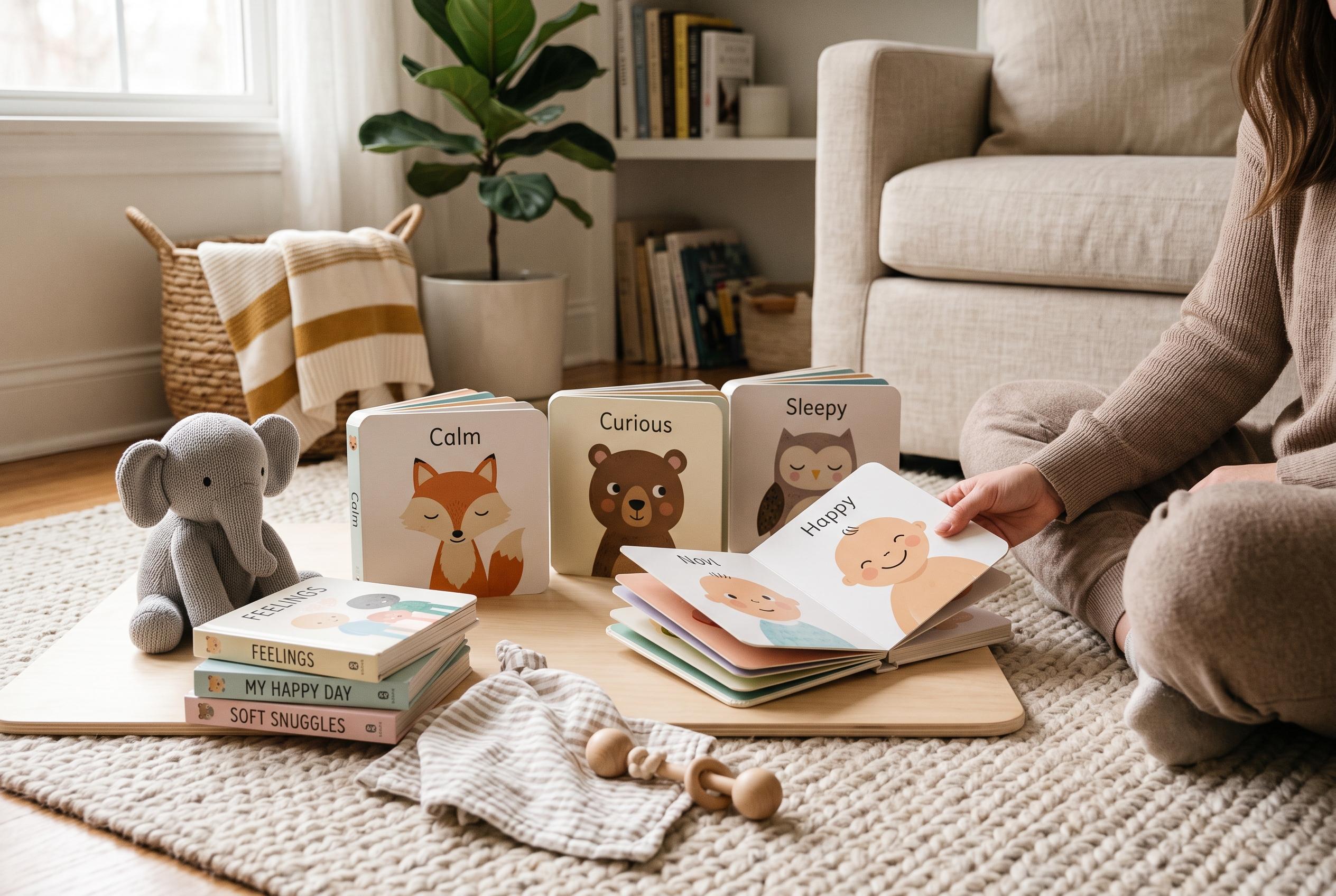

Recent guidance highlights the importance of gentle, expressive, and durable books to help babies understand and connect with their feelings, supporting their emotional growth and reinforcing bonds with caregivers.
The gentlest books for babies do not try to explain every feeling at once. Instead, they give young children a quiet way to notice comfort, worry, happiness and reassurance while staying close to a trusted adult. Reading in this way can support early language growth, bonding and emotional development, according to Healthline and Cleveland Clinic.
A good starting point is a feeling a baby already knows. Separation, reunion, tiredness after a busy day and the security of being held are all familiar experiences, even before a child can name them. Books that reflect those moments can help babies begin connecting emotions with words without making story time feel heavy or instructional.
Illustrations matter just as much as the text. The Cleveland Clinic and the Children’s Library Lady recommend picture books with bright, clear images, expressive faces and simple scenes that are easy for babies to follow. A smile, a worried brow or a tucked-in chin can communicate as much as a sentence, especially when a parent pauses to point, mimic the expression or name what is happening on the page.
The best choices also leave room for comfort. The American Academy of Pediatrics says reading together helps children build social and emotional skills, while the Children’s Hospital of Philadelphia notes that babies begin linking books, voices and closeness. Stories that move from a small worry to reassurance can reinforce that connection, showing that uneasy moments can pass with support nearby.
Sound is part of the appeal, too. Repetition, rhyme and a steady rhythm can make a book soothing to hear again and again, and Healthline says repeated exposure gives children richer language than they usually hear in everyday conversation. Parents do not need to rush. A line that feels pleasant to say out loud is often a better choice than one that merely sounds clever on the page.
The format should suit the child’s age and curiosity. Guides for babies often point to board books, soft books and touch-and-feel books because they are durable, easy to handle and inviting for independent exploration. Large images, real photographs and simple first words can help hold attention while still feeling manageable for tiny hands.
Just as important is ending on a note that feels safe. A story does not need a perfect lesson, but it should leave enough warmth for a baby to settle. A character who is comforted, a room that becomes familiar or a loving adult who stays close can all echo what young children already need to feel secure.
Over time, the same book can serve different purposes. At first, a baby may simply enjoy the voice reading it aloud. Later, the child may point to a sad face, finish a repeated phrase or bring the book over at bedtime. That changing relationship is part of what makes emotional storybooks so useful: they grow with the child and keep offering new ways to talk about feelings.
Disclaimer: This content is for informational purposes only and is not intended to be a substitute for professional medical judgment, advice, diagnosis, or treatment.