
Recent guidance emphasises that tracking the sequence and quality of early infant movements offers vital clues for detecting developmental concerns, with expert advice advocating simple at-home activities to support growth in the first year.
For many parents, the first year can feel like a race from one physical change to the next. But paediatric specialists often care less about the exact month a baby sits or walks than about the order and quality of those movements. According to the Benchmark Physio guide, early skills such as head control, rolling, crawling and standing build on one another, creating the base for later mobility. Public guidance from the US Centres for Disease Control and Prevention and major children’s hospitals also stresses that milestone tracking is useful because it can help families spot possible concerns early.
In the first months, the focus is usually on head control, time on the tummy and early reaching. Cleveland Clinic says babies around two months may begin lifting their heads during tummy time, while by four months many can hold their heads up more steadily and reach for toys. Nationwide Children’s Hospital notes that hand-to-mouth play, smiling and bringing the hands together are also common early signs of progress. These small movements matter because they prepare the neck, shoulders and trunk for later sitting and crawling.
By mid-year, many infants are rolling, sitting and becoming more interested in moving across the floor. Mayo Clinic and Children’s Health say babies between four and six months often roll over, sit with support and become more aware of their surroundings, though the pace varies from child to child. The Benchmark Physio article argues that this stage is important not just because new skills appear, but because one movement pattern supports the next. In practice, a baby who learns to stabilise the torso is usually better placed to coordinate the hands and legs later on.
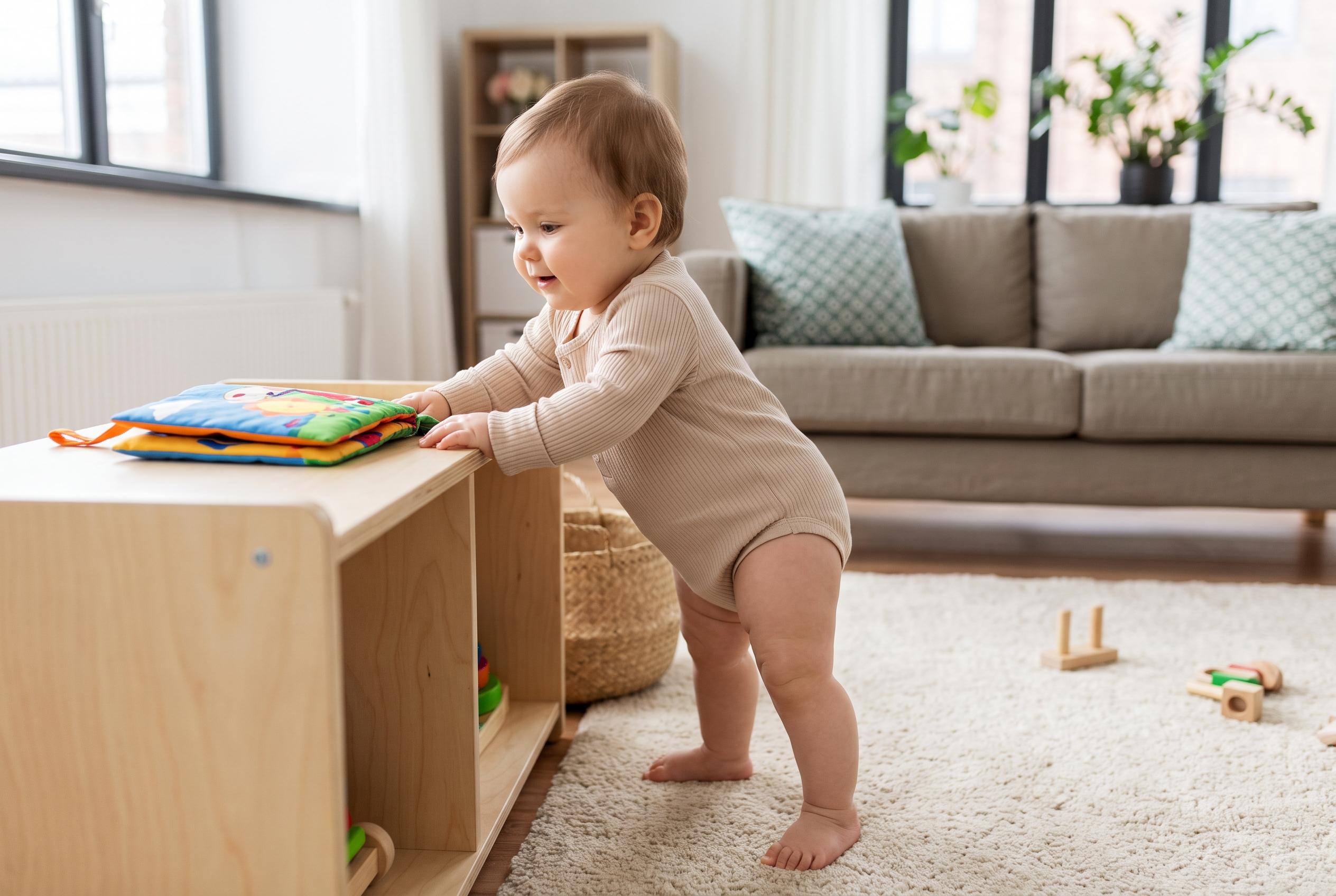
Later in the first year, movement becomes more vertical. The Benchmark Physio guide says many babies begin pulling to stand and cruising along furniture before taking independent steps, while CDC milestone materials continue to emphasise broad age ranges rather than a single deadline for each skill. That distinction matters for families, because some children do skip crawling and still develop normally. The point is less about a perfect sequence than about whether the child is gaining strength, balance and symmetry along the way.
There are, however, signs that should prompt a closer look. Benchmark Physio flags persistent one-sided movement, unusual floppiness, delayed sitting or not walking by 18 months as reasons to seek a paediatric physiotherapy review. The CDC similarly encourages parents to monitor developmental progress and act early if something seems off. A clinician can assess muscle tone, joint movement and reflex patterns, then suggest play-based exercises tailored to the child.
At home, the simplest support is often the most effective. The article recommends regular supervised tummy time, more floor play and less time in seats, swings or other baby “containers” that limit free movement. It also suggests small handling changes during daily routines, such as rolling a baby gently to one side during nappy changes to encourage trunk rotation. Paediatric guidance from the American Academy of Pediatrics and hospital systems broadly supports the same idea: varied, supervised movement helps babies practise the patterns they need for later development.
Disclaimer: This content is for informational purposes only and is not intended to be a substitute for professional medical judgment, advice, diagnosis, or treatment.