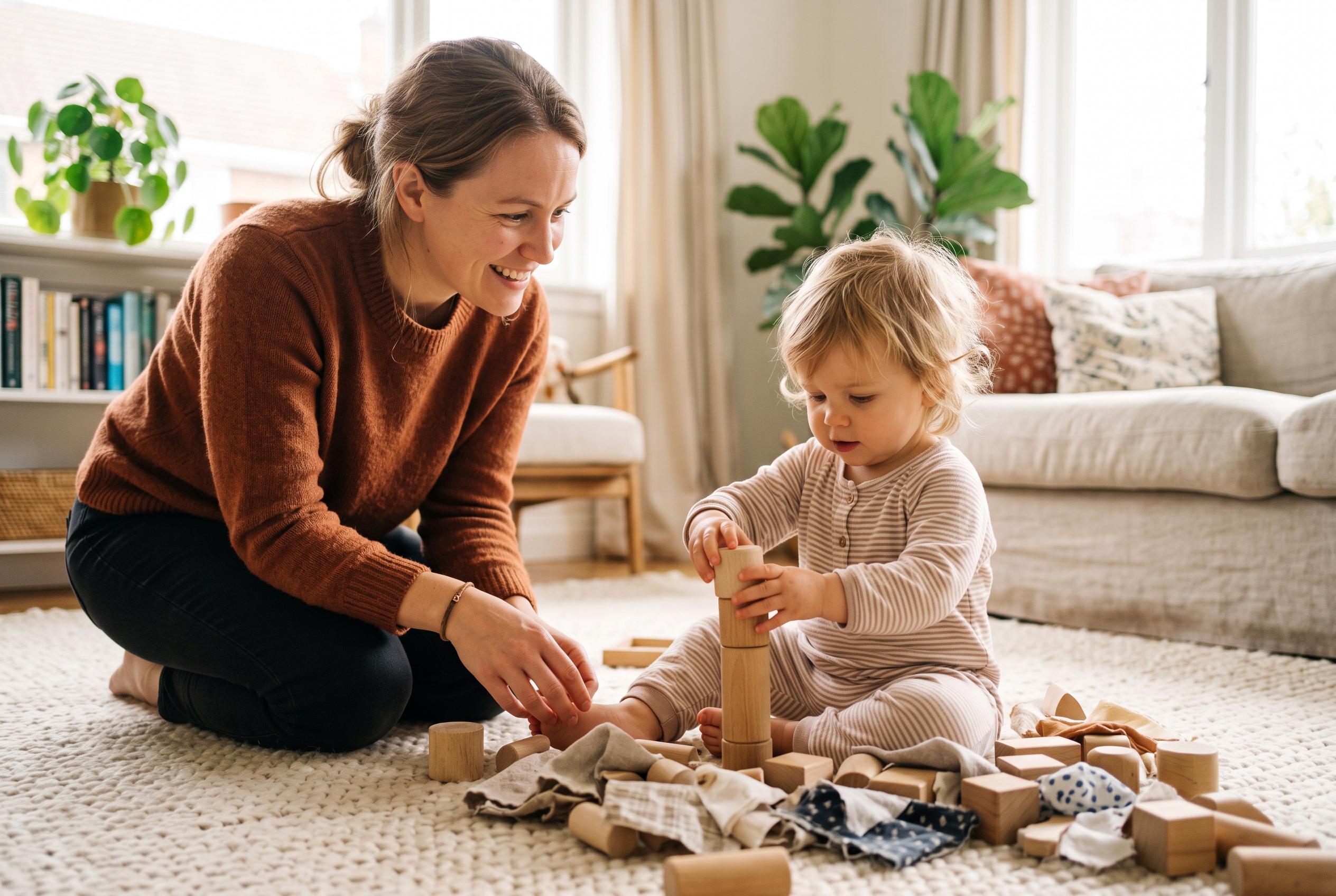

Child-development specialists emphasise the importance of talking, exploring, and daily interactions over formal lessons for one-year-olds, urging parents to focus on participation and responding to developmental milestones without unnecessary pressure.
For parents worrying that a first birthday should be followed by flashcards, timetables and neatly planned lessons, the advice from child-development specialists is much simpler: a one-year-old learns most from being talked to, included and allowed to explore ordinary life. The US Centers for Disease Control and Prevention says most babies by age one can do things such as wave “bye-bye”, put an object into a container, drink from a cup without a lid while an adult holds it, and walk while holding on to furniture. ZERO TO THREE, an early-childhood organisation, makes the same broader point: learning begins in everyday interaction, long before anything resembles school.
That does not mean every child should be marched through a checklist. The CDC says developmental milestones are behaviours that 75% or more of children can do by a certain age, and it warns families to pay attention if a child is not meeting milestones or has lost skills they once had. “You know your child best. Don’t wait,” the agency says, urging parents to raise concerns with a doctor, ask about developmental screening and, if needed, seek referral for specialist assessment and early-intervention services.
The most useful teaching at this stage is often verbal and responsive rather than formal. The CDC encourages parents to talk or sing through everyday tasks and to build on whatever a baby is trying to say. If a child says part of a word, the advice is to answer with the full idea. Raising Children Network says pointing is often a toddler’s way of starting an interaction and sharing an interest, while ZERO TO THREE recommends repeating sounds and words, telling stories and talking through errands, play and family visits. In other words, vocabulary grows out of back-and-forth attention, not drilling.
Books and songs help for much the same reason: they are repetitive. HealthyChildren, the American Academy of Pediatrics’ parent site, says reading helps toddlers learn new words and that hearing the same book repeatedly lets them anticipate what comes next. Raising Children says wanting the same game or story again and again is normal, and often how toddlers master a skill and learn what is likely to happen next. At this age, “reading” can be as simple as turning pages, pointing to pictures, lifting flaps or joining in with familiar lines and actions.
Parents are also being told not to fear mess quite so much. The CDC advises letting babies practise feeding themselves safe foods with their fingers, and to expect spills while they learn to use a cup with a small amount of water. Its guidance on movement is similarly practical: let children push boxes or push toys and practise walking with safe furniture, rather than using baby walkers, which it does not recommend. Raising Children says one- and two-year-olds are often determined to use spoons and cups, take off clothes and put on shoes for themselves, and that praise and encouragement build the confidence to keep trying.
Play, meanwhile, does not have to be costly or carefully curated. ZERO TO THREE suggests touching, banging, stacking and shaking as ways children learn how things work, and even bath time as a moment to notice ideas such as wet and dry or sinking and floating. Raising Children recommends unstructured play such as dancing, filling and emptying containers, pouring and scooping, and says toddlers need chances to move in a safe home environment more than they need organised classes. Its advice is particularly firm on water play: constant supervision is the only reliable way to keep a young child safe.
Emotional security is part of the lesson too. Robert Sege, writing for HealthyChildren, says routines around bath time, bedtime and meals give toddlers a sense of security that supports curiosity and exploration, and may mean fewer power struggles. A predictable bedtime pattern such as bath, brushing teeth and reading can help a child settle. Sege also argues that toddlers who feel included in family life often have fewer tantrums, suggesting simple games such as “I spy something red” on a walk or at the supermarket. The CDC’s behaviour advice points in the same direction: teach the behaviour you want, redirect quickly from unsafe situations, and stay calm enough to help a child calm down.
Social development at one is usually more tentative than many adults expect. Raising Children says toddlers often play near other children rather than directly with them, but that being around peers still helps them start learning social skills such as taking turns. Outdoor time has a similar double purpose, giving them room to explore and test growing physical abilities such as walking, running, kicking and throwing. Screens, by contrast, remain tightly limited in expert guidance. The CDC says screen time is not recommended for children younger than 2, apart from video calling with loved ones, while its broader toddler guidance cites the AAP recommendation to avoid screen media other than video chatting before 18 months.
Taken together, the advice is reassuring: most one-year-olds do not need more lessons so much as more chances to participate. Naming what you are doing, reading the same book again, letting a child carry a sock to the basket, offering a spoon, singing through hand-washing or pausing to look at a bird on a slow walk all count. But the reassurance comes with a clear public-health warning. If a child is not gaining skills, or stops using ones they already had, the consistent message from these organisations is to seek help early rather than assume time alone will sort it out.
Disclaimer: This content is for informational purposes only and is not intended to be a substitute for professional medical judgment, advice, diagnosis, or treatment.