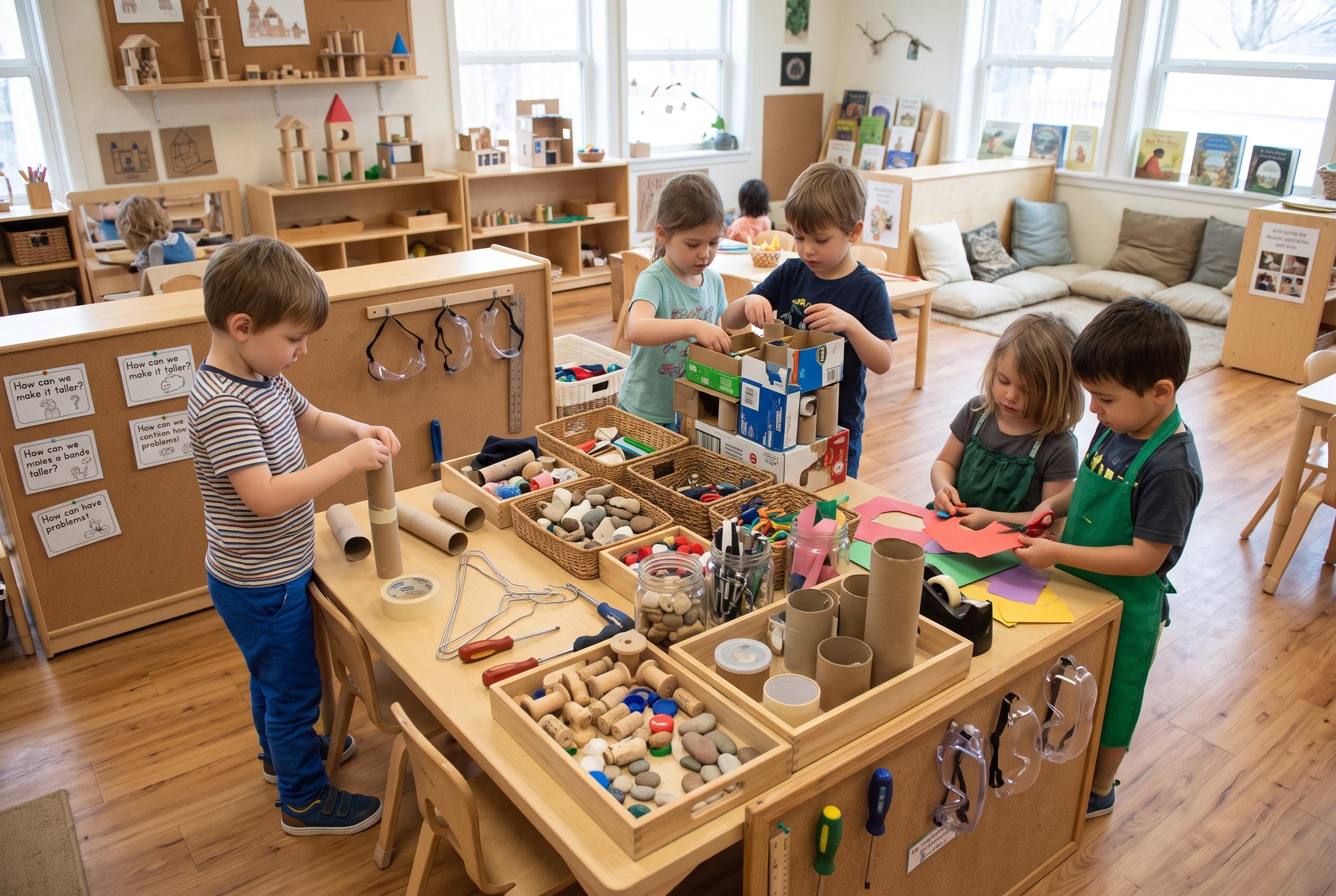

Innovative tinkering stations, inspired by Reggio Emilia principles, are being designed with safety and open-ended creativity in mind, using everyday materials and age-appropriate tools to foster problem-solving and confidence among children.
A tinkering station can give children a simple but powerful invitation: to test ideas, handle real materials and learn by doing. The concept, rooted in Reggio Emilia-inspired practice, is less about polished outcomes than about curiosity, problem-solving and the pleasure of figuring things out with their hands. The Carmel Mountain Preschool guidance says such spaces work well without expensive supplies, as long as the materials are open-ended and the setting is carefully prepared.
Parents and caregivers can start with everyday loose parts, including bottle caps, corks, cardboard tubes, wooden blocks, washers, nuts and bolts, fabric scraps and offcuts of wood. The Smithsonian’s Hirshhorn Museum and Sculpture Garden suggests mixing materials with different textures and properties, from cardboard and wood to wire, pipe cleaners, cotton balls and pasta tubes, so children can compare, combine and invent. The National Association for the Education of Young Children also recommends drawing on recyclables such as egg cartons and paper tubes to keep the space flexible and affordable.
Tools can be part of the experience, but only when matched to a child’s stage of development and used with close adult oversight. The Carmel Mountain Preschool article recommends child-sized hammers and drills, child-safe saws, rulers, measuring tapes, non-toxic glue, masking tape and safety goggles. PNC’s Grow Up Great programme likewise uses simple tool-based activities, such as taking apart a wind-up toy, to help children see how objects work. Across these approaches, the message is consistent: tools should be introduced deliberately, with clear demonstrations and strict limits on how they are handled.
Safety, more than anything, should shape the setup. Adults should model how to hold, carry and use each tool, keep sharp items and nails out of reach when not in use and stay close during hammering, sawing or drilling. The American Academy of Pediatrics warns more broadly that small parts and batteries can create choking or injury risks in children’s play materials, underscoring the need for supervision and age-appropriate choices. Done well, a tinkering station becomes a place where children build confidence as much as structures.
Disclaimer: This content is for informational purposes only and is not intended to be a substitute for professional medical judgment, advice, diagnosis, or treatment.