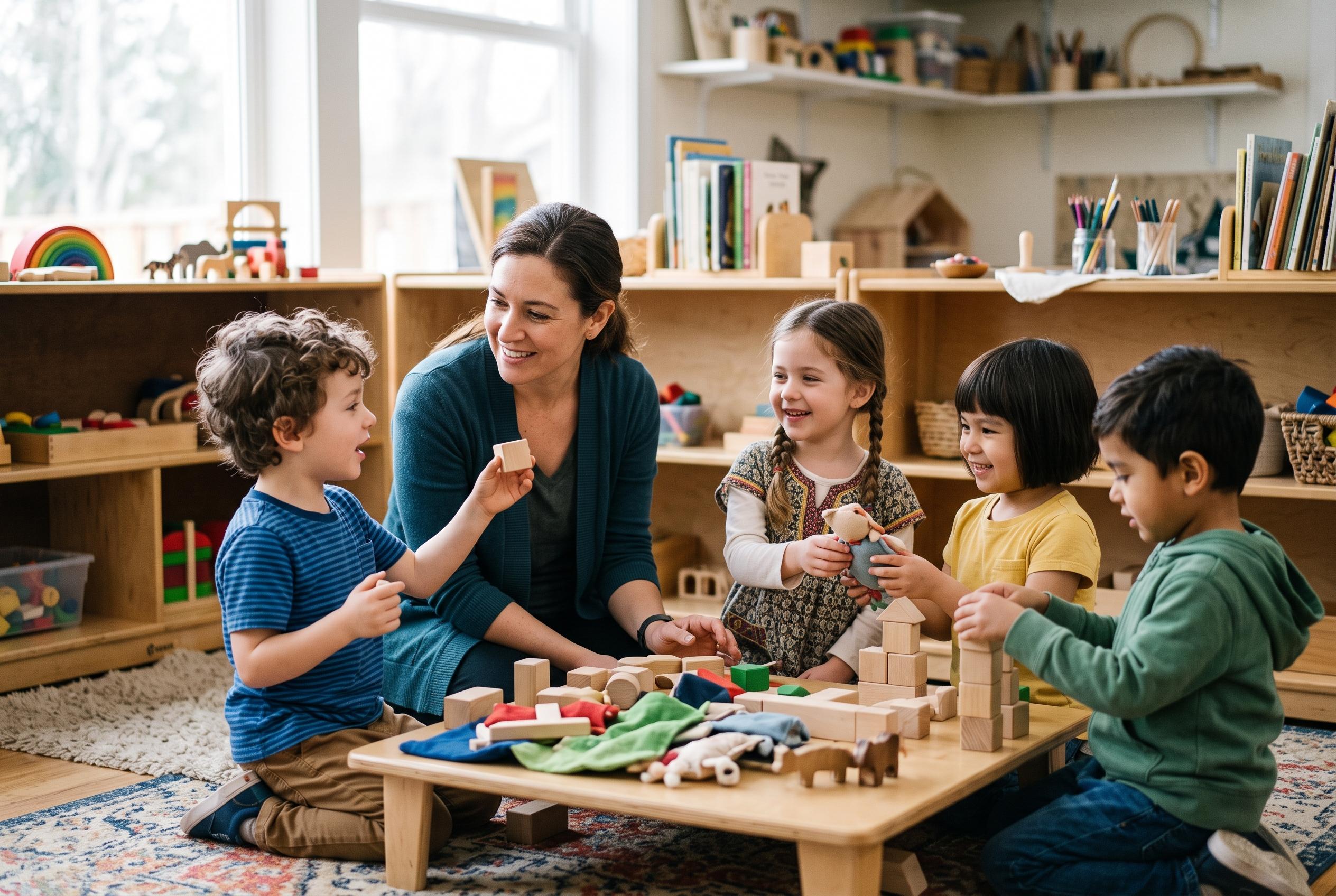

Laura Bornfreund urges a shift in kindergarten pedagogy to prioritise play, relationships, and developmental needs, challenging the emphasis on testing and academic acceleration.
Laura Bornfreund argues that kindergarten has drifted too far from what young children need most: time to play, build relationships and learn in ways that suit their age. In her new book, “Rediscovering Kindergarten: Embracing Play & Joy in Kindergarten”, the New America senior fellow traces how pressure from testing and accountability has reshaped early classrooms, and she makes the case that the first school years should look less like an academic race and more like a carefully supported introduction to learning.
Bornfreund’s view is rooted in a broader concern about the uneven experiences children bring with them on day one. Some arrive after high-quality pre-school, others from childcare settings and some with no formal early education at all, which can make the transition into kindergarten feel abrupt. She says the problem is not that children are not ready, but that many classrooms are not designed to meet five-year-olds where they are. Research and public guidance from child development and health organisations also emphasise that play supports cognitive, social, emotional and physical growth, helping children develop confidence, creativity and problem-solving skills.
One model she points to is Boston, where the early childhood department developed an open-source Focus Curriculum spanning pre-school through second grade. Bornfreund says it combines standards-based instruction with guided play, meaning teachers structure activities, choose materials and move through the room asking questions that deepen vocabulary and thinking. She sees that as the right balance: not unstructured free time, but purposeful play that still gives children room to explore, talk and learn together.
Her book also argues against the idea that delaying kindergarten is the answer for children who seem restless or out of step with the classroom. Bornfreund says the deeper issue is that kindergarten has become “unready” for five-year-olds, especially active social learners. She also stresses that trust between teachers and children is central, particularly in a year when many children are meeting new adults and classmates for the first time. In classrooms she visited while reporting the book, she found teachers greeting children by name, building routines and using short breaks, such as a dance session in Oklahoma, to help young learners reset before returning to work.
For families and policymakers, Bornfreund’s message is straightforward: ask what kindergarten actually looks like. She urges parents to ask about play, relationship-building and science, which she says has often been pushed out of the schedule. She also calls for more planning time between pre-K, kindergarten and first-grade teachers, and for stronger investment in early grades that are often funded as though they matter less than the rhetoric surrounding them suggests. Childhood development guidance from the federal childcare website and the American Academy of Pediatrics aligns with that view, describing play as a core part of healthy learning rather than a break from it.
Disclaimer: This content is for informational purposes only and is not intended to be a substitute for professional medical judgment, advice, diagnosis, or treatment.