

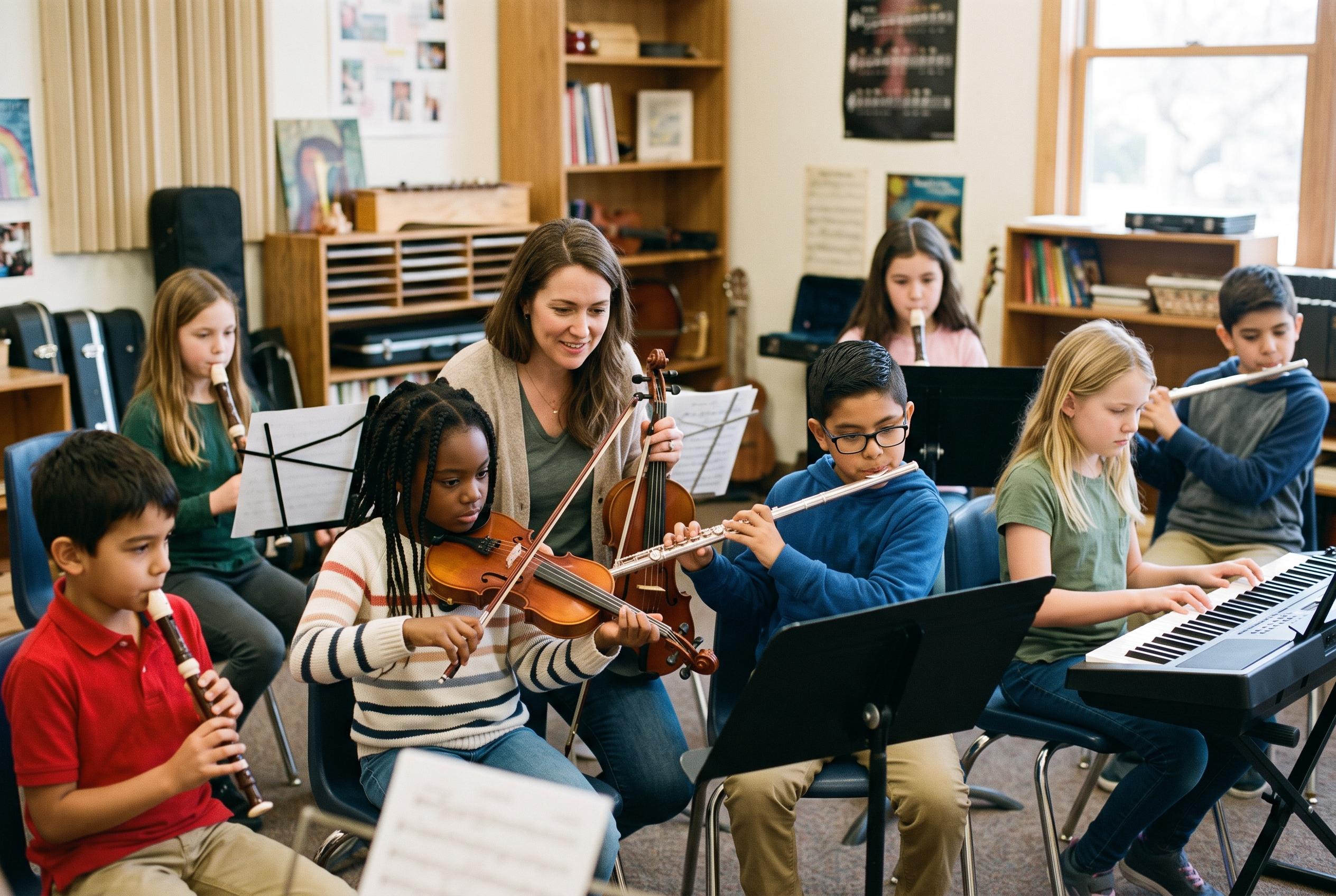

A review of 62 longitudinal studies suggests musical training can modestly improve the way children and adults process sound and language, while researchers caution that the effects are meaningful rather than dramatic.
A large review of nearly half a century of research suggests that music training can give children and adults a modest but meaningful boost in how they hear, process and interpret sound and language.
According to the systematic review and meta-analysis, researchers pooled 62 longitudinal studies published between 1974 and 2022 and found small positive effects on both auditory and linguistic measures. The evidence covered behaviour-based tests, such as listening and language tasks, as well as brain-activity measures, giving the findings more weight than simple comparisons between musicians and non-musicians.
The review drew on data from thousands of participants and found the same broad pattern across different study designs, training methods and control groups. In behavioural studies, 44 papers covering 3,241 participants assessed performance before and after music instruction. In brain studies, 27 papers involving 1,059 participants looked at neural responses, with some studies contributing to both strands of evidence. Because the studies followed people over time, the authors said they offered stronger clues about cause and effect than cross-sectional research.
The researchers stopped short of claiming that music lessons transform speech and hearing, but they said the results amount to early evidence that training in music can improve auditory and linguistic processing. That matters for parents and educators because these skills underpin everyday listening, classroom learning and language development, even if the gains appear small rather than dramatic. The review also adds to a broader understanding of neuroplasticity, the brain’s ability to adapt in response to experience.
For families considering music lessons, the takeaway is not that every child will become a better reader or listener overnight, but that regular musical training may support the brain systems involved in paying attention to sound, distinguishing speech and processing language. The authors said more research is still needed, particularly to test how different kinds of instruction work in practice and how long any benefits last.
Disclaimer: This content is for informational purposes only and is not intended to be a substitute for professional medical judgment, advice, diagnosis, or treatment.



