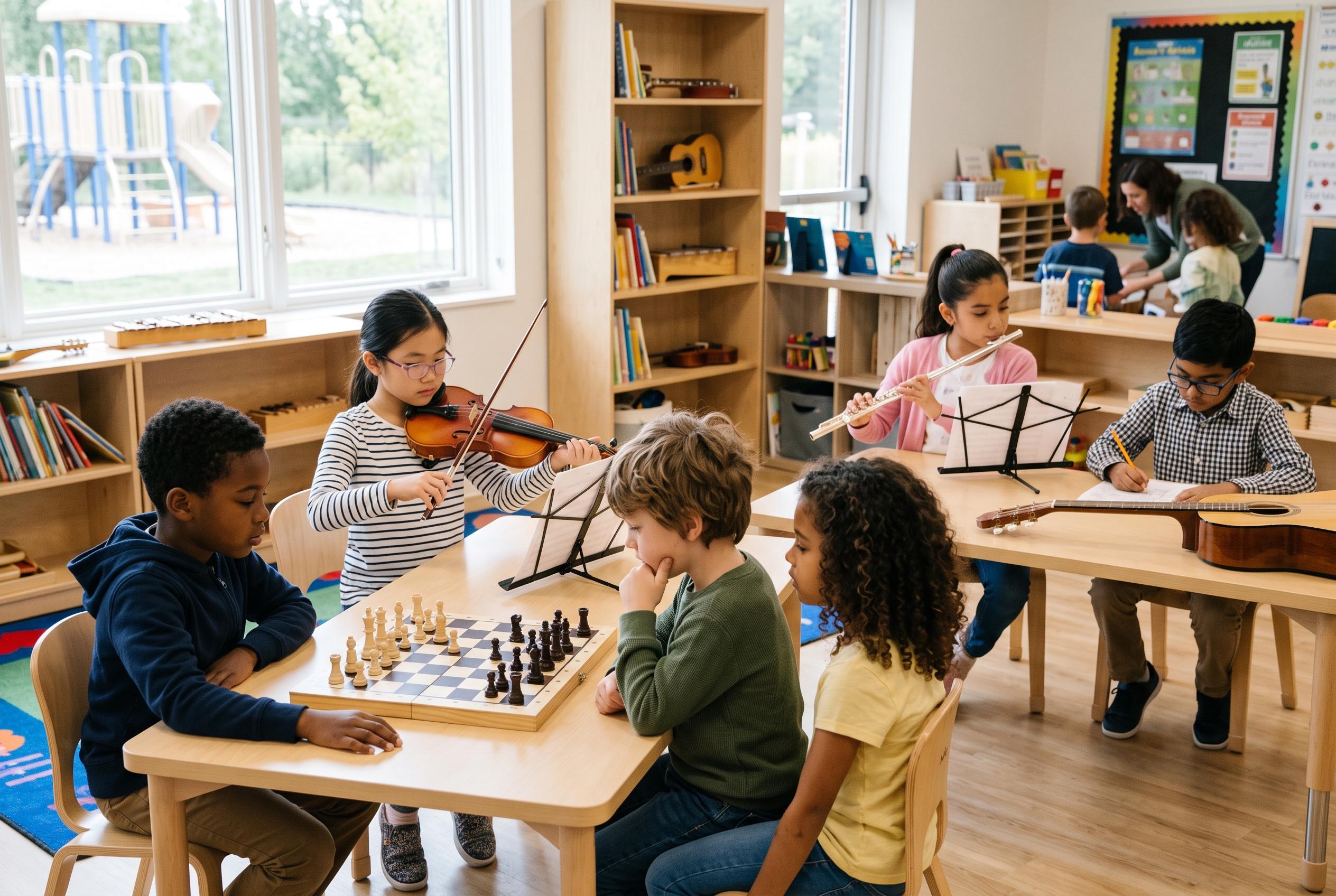

According to a Russian expert, engaging in music and strategy games can enhance children’s concentration, problem-solving, and classroom skills, though balance with rest and family time remains essential.
Music lessons and strategy games can do more than fill a child’s afternoons: according to a Russian education expert cited by NEWS.ru and carried by RIA Novosti, they may also help improve school performance by strengthening the habits children need for homework, classroom listening and steady concentration.
Shamil Akhmadullin, described as a pedagogical psychologist and author, said learning an instrument helps children break a difficult task into smaller steps, which mirrors the way they tackle school assignments. Music training can also sharpen auditory attention, giving children practice in listening carefully to a teacher and staying engaged with spoken instructions. Other music educators make similar points, noting that lessons often build focus, discipline, memory and confidence, while encouraging children to work through frustration and finish what they start.
Akhmadullin made a similar case for chess and other strategic games. He said they teach children to hold attention for longer, think through the likely consequences of a decision and return to a task after a setback. Chess-focused education sites describe the same benefits in broader terms, linking the game with planning, problem-solving, patience and cognitive development. Taken together, the message is that structured hobbies can support the same mental skills schools expect in the classroom.
But Akhmadullin also warned against filling a child’s schedule with too many clubs and classes. In practice, the value of extracurriculars depends on whether they leave room for rest, family time and unstructured play. That balance matters because activities that build self-regulation and confidence can lose some of their benefit if children are constantly rushed from one commitment to the next.
Disclaimer: This content is for informational purposes only and is not intended to be a substitute for professional medical judgment, advice, diagnosis, or treatment.