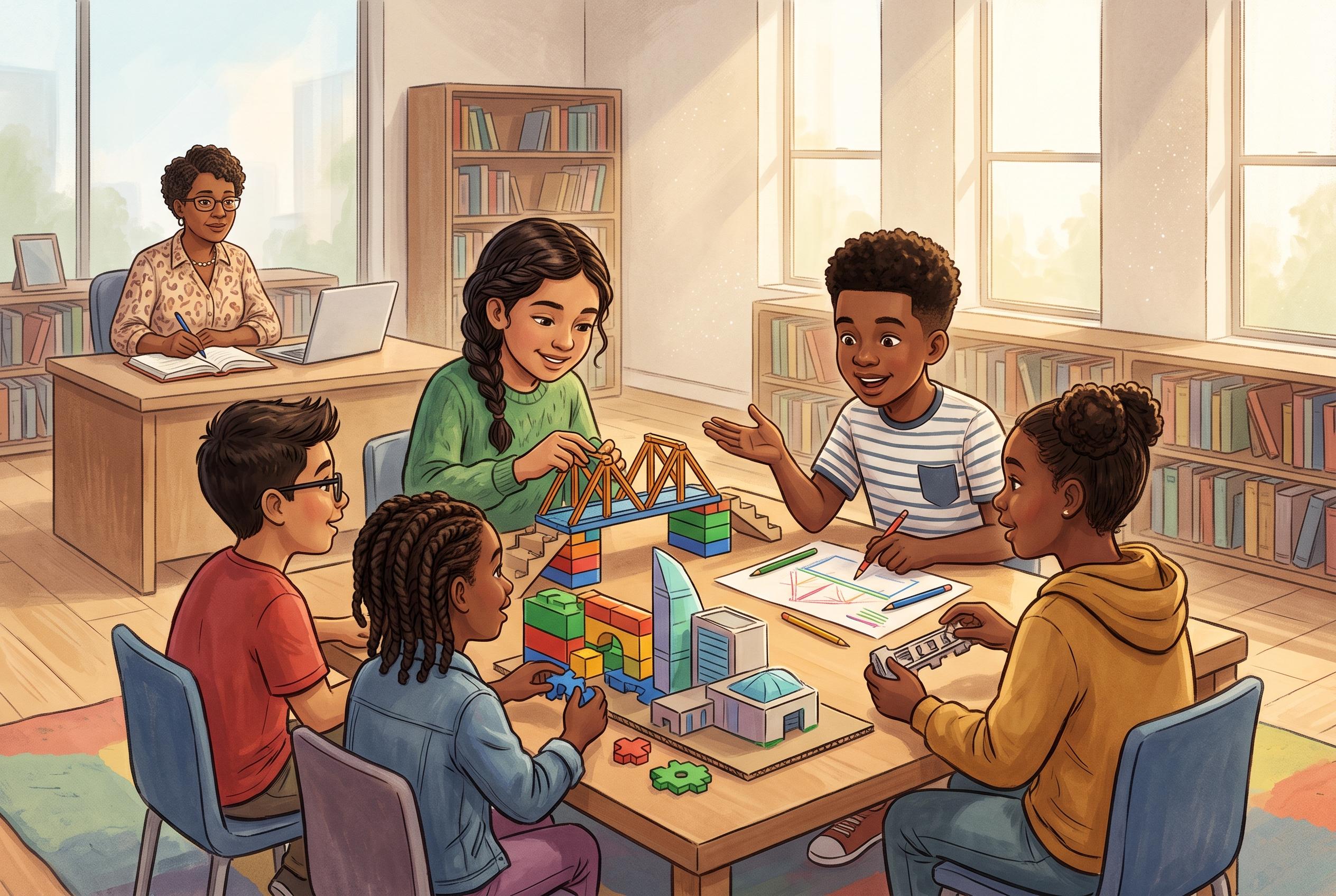

A comprehensive Miami-Dade study reveals that public school pre-K programmes, with qualified teachers, significantly enhance academic performance well into high school for low-income Latino and Black children, emphasising quality over setting choices.
A large study of children in Miami-Dade County suggests that preschool can shape academic outcomes well beyond the early grades, with public school pre-K linked to stronger performance through high school than family-based childcare.
The research, led by George Mason University and involving Florida International University associate professor Charles Bleiker, draws on a long-running Miami-Dade dataset that follows roughly 400,000 public school students. In the newer analysis, the team focused on 27,814 low-income children who attended public school pre-K, centre-based childcare or family-based childcare at age 4. The sample was largely Latino and Black, reflecting the district’s student population.
According to the findings, children who attended public school pre-K generally earned better grades and scored higher on standardised tests than those who had been in family-based childcare, and those differences were still visible years later. Earlier work from the same Miami project had already shown gaps in school readiness among the three preschool settings, but this latest analysis extends the comparison into adolescence.
Bleiker said the results point to the importance of more than just providing a place for children to spend the day. Public school pre-K was the only setting in the comparison that required teachers to hold a college degree, and he argued that stronger preparation may help explain the advantage. The study adds to a broader body of research suggesting that classroom quality, teacher support and management can have lasting academic effects. Harvard Graduate School of Education reported similar findings in a 2019 study, while National Bureau of Economic Research research on Boston’s universal preschool programme found gains in college attendance, graduation and discipline outcomes, though not in state test scores.
For parents, the lesson is not simply to choose one type of preschool over another, but to look closely at what happens inside the classroom. Stable staffing, a clear daily routine, responsive teaching and meaningful interaction may matter as much as the setting itself. Bleiker’s advice is to visit programmes, ask about teacher turnover and curriculum, speak with other families and pay attention to how a child seems to be coping. If a child appears unhappy or disengaged, he said, parents should be willing to look for a better fit.
Disclaimer: This content is for informational purposes only and is not intended to be a substitute for professional medical judgment, advice, diagnosis, or treatment.