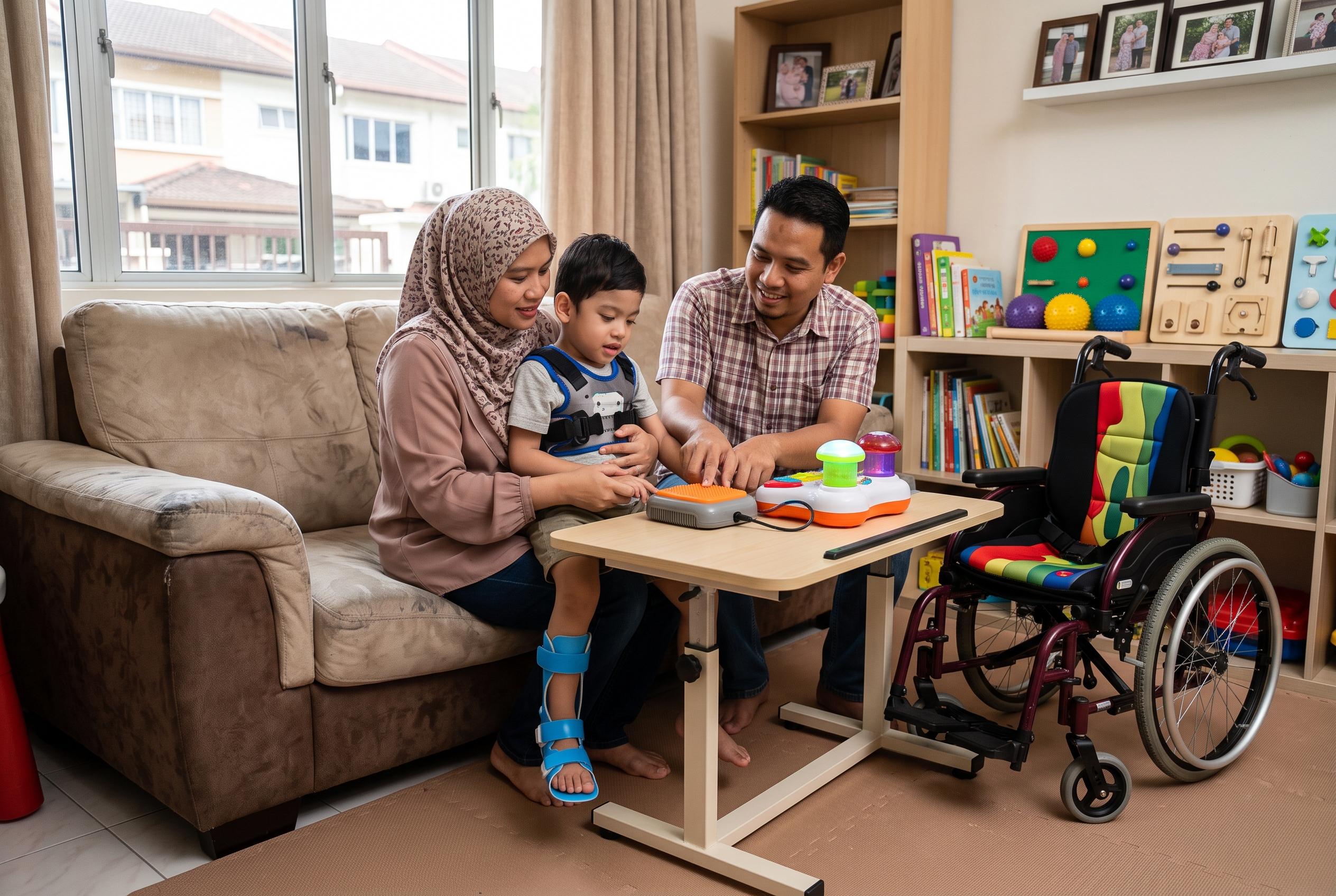

Families of children with disabilities in Malaysia face a support gap as early intervention services remain limited, highlighting calls to extend specialised care and improve guidance for families navigating the system.
For families of children with disabilities, the earliest years can be the most important , and the most difficult , because support is often fragmented, scarce and hard to find. In Kuala Lumpur, Mohd Amin Azuwar said the real struggle began after his daughter was diagnosed with Down syndrome, when his family had to work out on their own where to go for help, what early intervention meant and which services were available. He told Bernama that many parents are left to navigate the system without clear guidance.
That gap matters because early intervention can help children build communication, social and daily living skills before they start school. The US Centers for Disease Control and Prevention says acting early can improve learning and development outcomes, while Malaysia’s health authorities also stress early detection, intervention and ongoing support for children with special needs. In practice, this can include speech, physical and occupational therapy, behavioural support and parent training, depending on a child’s needs.
In Malaysia, the mismatch between demand and provision remains stark. As of July, around 17,000 children with disabilities under the age of six were registered with the welfare department, including about 13,500 children in the learning-disability category, yet there are only 11 registered specialised childcare centres nationwide. Amin said his daughter eventually secured a place at Taska Anak Istimewa Sindrom Down in Putrajaya, and he noted that one family even moved from Penang so their child could attend. Taska Ikhlas (OKU) Melaka founder Norashikin Ismail said many children still need structured support at five and six, particularly for communication, behaviour and self-management.
Several specialists and providers argue that extending specialised childcare access to age six could give children more time to practise the basics that help them settle into preschool or primary school. Universiti Pendidikan Sultan Idris lecturer Hasrul Hosshan said longer access could strengthen language, social and self-help skills, while also making it easier for some parents to stay in work. Norashikin said hospitals and clinics could do more to point families towards registered centres, intervention programmes and financial assistance, so that a diagnosis is followed by a clearer path rather than a search shaped by chance, distance and sacrifice.
Disclaimer: This content is for informational purposes only and is not intended to be a substitute for professional medical judgment, advice, diagnosis, or treatment.