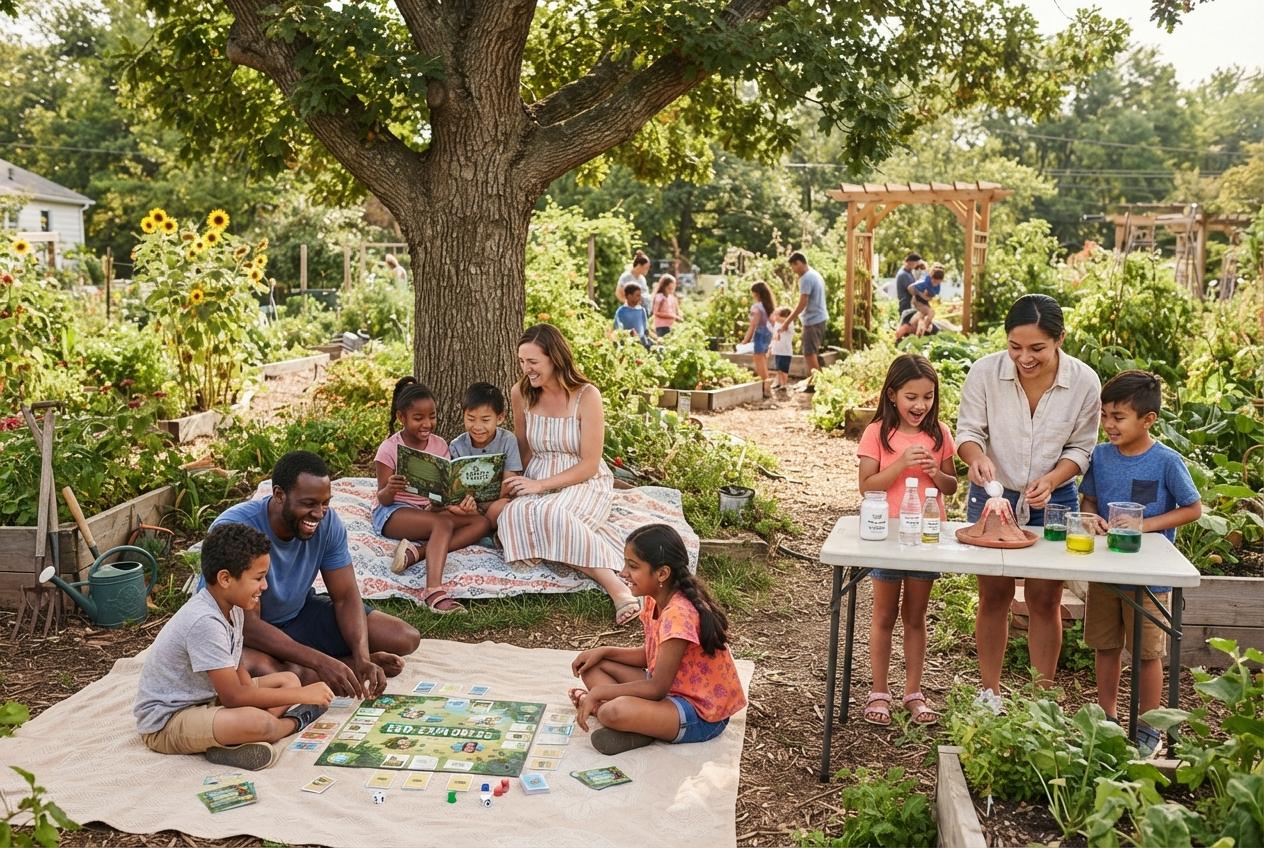

Parents can nurture curiosity and learning during summer through fun and relaxed activities like reading, games, and outdoor science experiments, blending education seamlessly into leisure time.
Summer holidays are meant for slowing down: muddy shoes by the door, late breakfasts, ice creams running down small hands and evenings that seem to stretch on forever. They should give children time to rest after a busy school term, follow their interests and enjoy being children. But there is no need for learning to disappear altogether. In small, relaxed moments, curiosity can stay alive without turning home into a classroom.
Reading is one of the easiest and most valuable habits to keep going. Research compiled by Healthline on reading to children says it can support language development, brain growth and stronger bonds between parent and child. That makes the holidays a good time to make books feel like a treat rather than a task. Read under a blanket, take a book to the park, listen to audiobooks in the car or let children choose freely from the library shelves.
A change of setting can make stories feel like an adventure. A garden den, a beach towel, a blanket fort or a torchlit corner at bedtime can all turn reading into something special. The point is not to count pages but to create the kind of experiences that make children want to come back to books on their own.
Maths can also slip naturally into daily life. Simple questions about apples, sandwiches, prices or pocket money keep number skills in use without any fuss. Board games and card games are especially useful for this. Families often turn to games such as Shut the Box, Yahtzee, UNO, dominoes, Snakes and Ladders, Monopoly and classic card activities because they build counting, strategy, arithmetic and number recognition while everyone is simply playing.
Online learning can have a place too, if families want it. Websites such as KidSpark, RoomRecess, EduKidsGames, Clickaroo and Kodomo Games offer free educational games aimed at younger children, covering subjects from maths and reading to spelling, geography and basic problem-solving. Used in balance, those kinds of tools can add variety without replacing hands-on play, outdoor time or conversation.
Writing, science and nature all work best when they are woven into real life. Children can keep summer journals, write postcards, invent menus, make treasure maps or interview grandparents. They can also bake, which brings in measuring, fractions, sequencing and timing, or experiment with simple science activities such as oobleck, rainbow milk or baking soda volcanos. Outside, they can count butterflies, identify birds, press flowers or keep a weather diary. The lesson is simple: learning does not need worksheets to matter. It can happen in a library, a kitchen, a garden or a game, as long as children are curious and the adults around them are willing to follow.
Disclaimer: This content is for informational purposes only and is not intended to be a substitute for professional medical judgment, advice, diagnosis, or treatment.