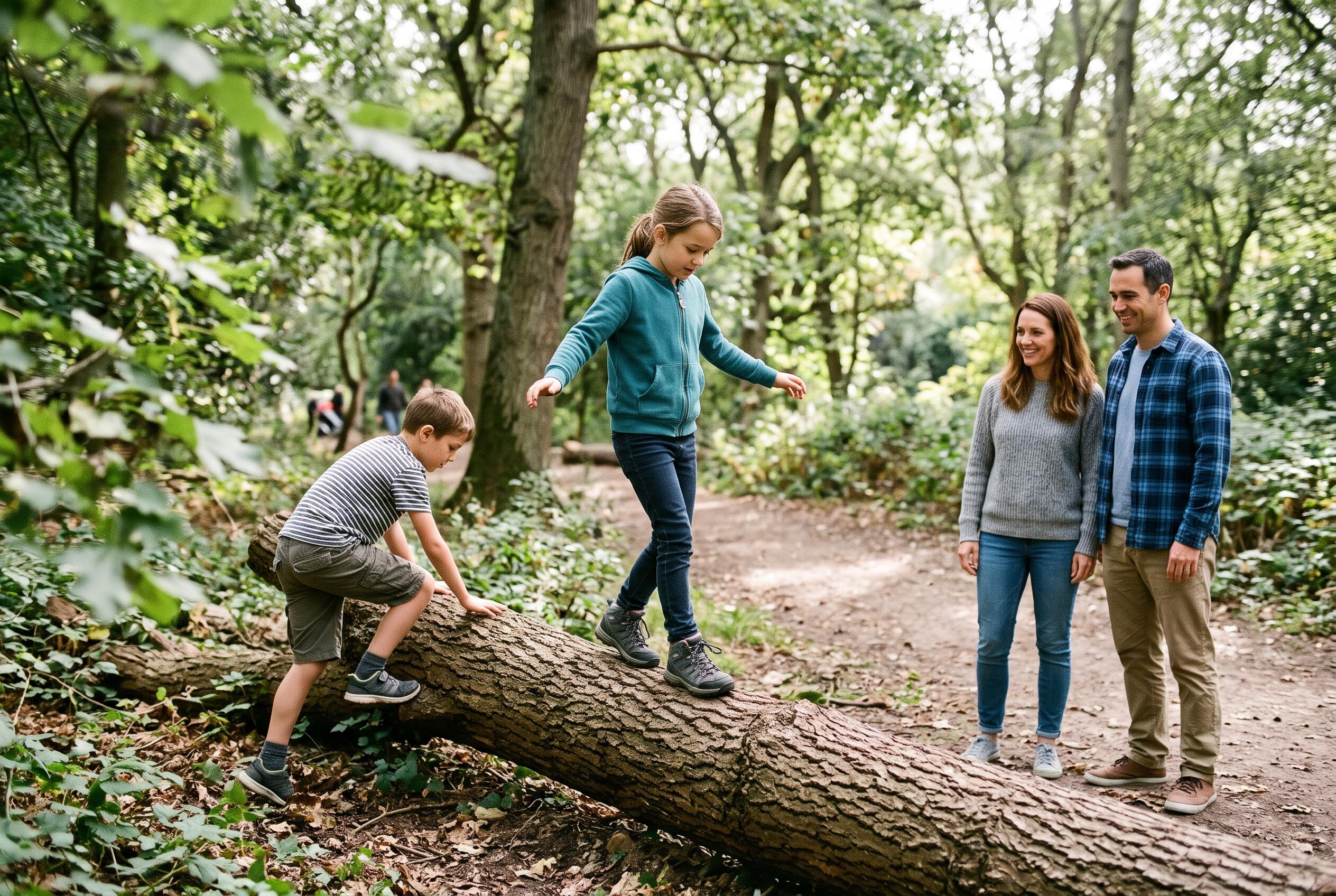

A review of 74 studies suggests adventurous play and earlier independence may support children’s physical health, wellbeing and thinking skills, while researchers warn against removing every element of uncertainty.
Parents should think twice before wrapping children in cotton wool, according to researchers who say that more adventurous play may support healthier development. In a large review published in PLOS One, a team from the University of Exeter and the University of British Columbia found that children who climbed trees, rode bikes downhill or played in streams tended to show stronger physical and mental wellbeing, alongside better learning and thinking skills.
The researchers examined 74 earlier studies on so-called risky play in children aged three to 12. They described it as exciting, challenging activity that gives children a sense of thrill, such as riding at speed, climbing, or playing in water. The review also suggested that children who spent more time moving around independently, even through simple routines such as walking to school on their own, were generally more physically active overall.
Helen Dodd, a child psychology professor at the University of Exeter, said children lose valuable opportunities when adults remove every element of uncertainty from play. She argued that a balance is needed: children should be protected, but not prevented from exploring manageable risks. Dodd said the current approach often leaves children with little gradual practice in independence before they suddenly have to navigate the transition to secondary school.
She suggested that independence should begin earlier, perhaps around the ages of eight to ten rather than waiting until about 11, which she said is more typical in many families. In her view, starting with shorter, safer trips such as walking to primary school could help children build confidence before the leap to greater responsibility. She also stressed that safe streets, pavements and lighting remain essential if children are to be given more freedom.
The review did not find that every form of risky play was beneficial. Play-fighting, for example, was sometimes linked with aggression, although the researchers said it was unclear whether the activity caused that behaviour or whether children who already leaned towards aggression were more likely to choose it. That uncertainty is one reason the team said more research is needed, even as the broader evidence points towards gains in physical health, mental wellbeing and social-emotional development.
Disclaimer: This content is for informational purposes only and is not intended to be a substitute for professional medical judgment, advice, diagnosis, or treatment.