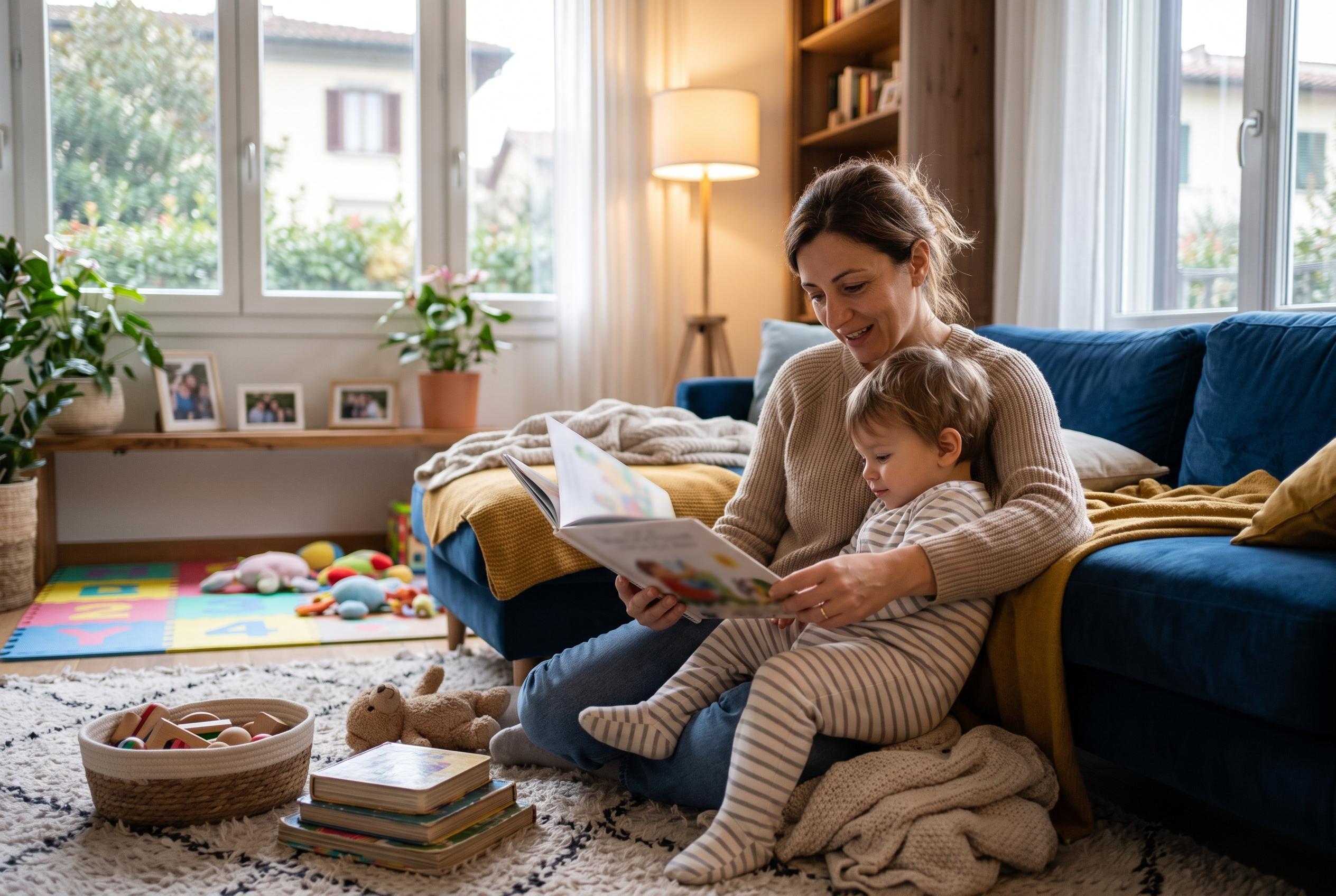

New data reveals that a significant proportion of Italian infants are not exposed to read-aloud activities, raising concerns about early language development and prompting nationwide efforts to improve early childhood literacy.
In Italy, more than half of babies aged two to five months were not exposed to read-aloud sessions in the week before researchers spoke to their parents, according to an article on Mamme.it based on data from the Istituto Superiore di Sanità. The finding lands on World Literacy Day and sits alongside a wider warning from the OECD, which says 37% of Italian adults do not reach the minimum literacy level, compared with 27% across OECD countries.
The picture varies sharply by region. Mamme.it reported that in Friuli-Venezia Giulia, 33.7% of babies in the two-to-five-month age group had not heard reading aloud in the previous week, while in Sicily the figure was 68.2%. The gap remains visible as children grow older: among those aged 11 to 15 months, 68.3% were exposed to reading, but 31.7% were not.
There was, however, a modest improvement compared with 2022. Exposure to reading in the two-to-five-month group rose from 41.7% to 46.7%, even as the share of mothers who had read at least one book in the previous year for reasons other than study or work fell from 55% to 51.8%, the article said.
The broader message is that early reading is not just a family habit but part of the foundations of language development. The OECD’s Education at a Glance 2025 also notes that early childhood education and care participation remains much lower for children aged zero to two than for those aged three to five, underlining how much of the earliest learning still depends on homes, services and local support.
According to Mamme.it, that is why the issue is now moving beyond the family setting. Fondazione Cariplo is backing the expansion of #ioleggoperché into nurseries nationwide after a four-year trial in 350 childcare centres in its own area, while its broader “Anita. L’infanzia prima” initiative aims to reach at least 22,000 children living in poverty by 2028 through support for parents, stronger services for children aged zero to six, better spaces and access to culture from birth.
Disclaimer: This content is for informational purposes only and is not intended to be a substitute for professional medical judgment, advice, diagnosis, or treatment.