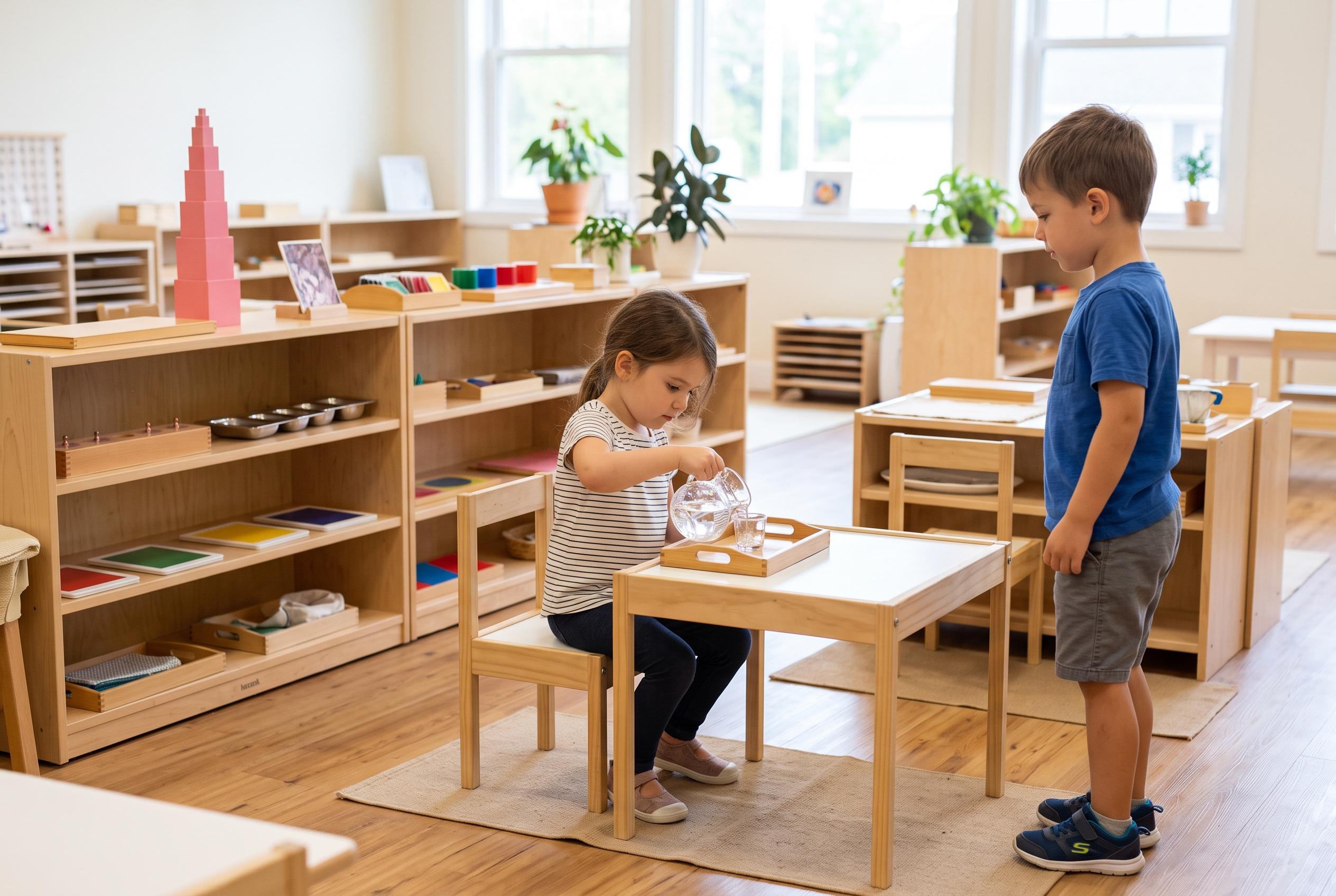

A new approach to Montessori normalisation emphasises proactive preparation and peer support to foster concentration, independence, and calm engagement from the start of the school year.
Montessori educators often treat normalisation as a slow, mysterious outcome, but the better view is that it begins with conditions, not with waiting. In the Montessori tradition, normalisation describes a child’s movement towards concentration, self-discipline, independence and calm engagement with meaningful work. Several Montessori organisations say that, when the environment is properly prepared and children are given developmentally appropriate tasks, that process can begin quickly rather than drifting through much of the school year.
The first requirement is safety. Montessori AMI and other Montessori educators emphasise that children settle when they feel secure, respected and free within clear limits. That means consistency from adults, real choices, interesting work and strong relationships in the classroom. The point is not to control children into order, but to create the conditions in which they can focus, cooperate and act with confidence.
A practical way to do that, the article argues, is to bring returning pupils back before new children arrive. The older children can refresh routines, help prepare shelves, restock materials and rehearse the social role they will play when newcomers enter. Montessori Theory and Green Spring Montessori both stress the importance of a prepared environment, and this approach extends that idea by turning returning pupils into active stewards of the room rather than passive bystanders.
Once the full class arrives, the classroom should remain rich with materials, not stripped back in the name of simplicity. The returning children can serve as hosts, greeting newcomers, showing them routines and modelling how to use materials with care. That peer support matters because, in Montessori settings, children often learn best from one another as much as from the adult. It also reinforces belonging: being trusted to help others strengthens a child’s own sense of place in the community.
The next stage is to extend uninterrupted work time and keep group gatherings brief. Montessori Parenting and Step by Step Montessori both describe normalisation as emerging through meaningful, freely chosen work, concentration and internal motivation. That is why the article urges teachers to protect the work cycle, keep lessons short and use grace-and-courtesy teaching in small, immediately useful doses. Children are more likely to absorb classroom expectations when those expectations are linked to real moments rather than delivered as abstract rules.
The classroom culture also has to be named clearly. The article makes the case for repeated, calm reminders that the room is a shared house where kindness is non-negotiable. Green Spring Montessori and NA Montessori both highlight the role of grace and courtesy, practical life work and adult observation in helping children settle into a stable pattern of behaviour. In that sense, normalisation is not just about quiet concentration; it is also about children learning to live well together.
By the fourth week, the signs of progress should be visible: longer periods of concentration, smoother transitions and less reliance on adult intervention. Montessori organisations note that normalisation is not a fixed deadline, but a developmental process that varies by group and setting. Even so, the article argues that much of the classroom’s foundation can be laid in the first few weeks if adults are deliberate, consistent and willing to treat children as capable partners in the life of the classroom.
Disclaimer: This content is for informational purposes only and is not intended to be a substitute for professional medical judgment, advice, diagnosis, or treatment.