

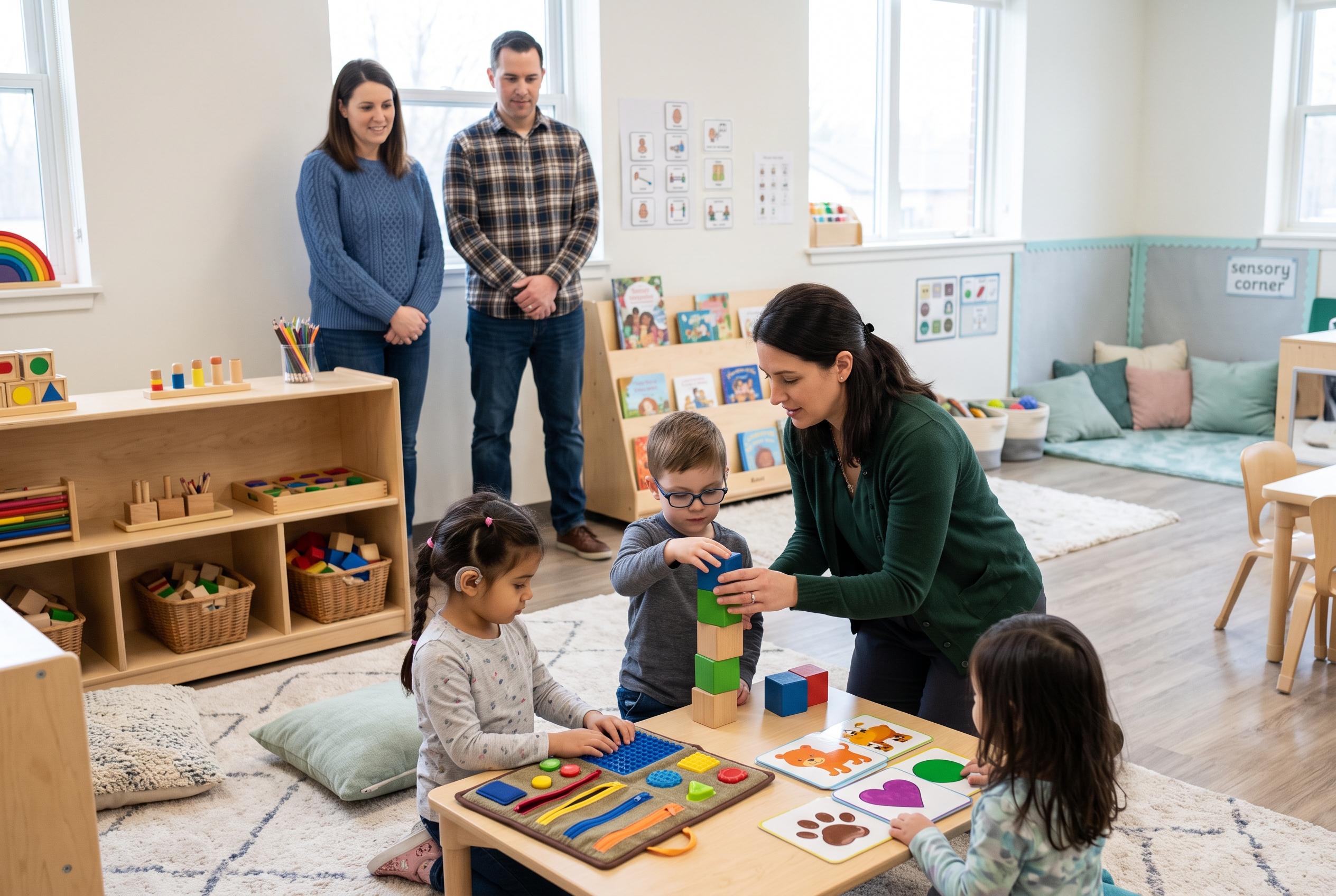

Choosing a preschool for a child with special needs requires careful evaluation of support, environmental fit, and staff expertise. Experts advise families to compare programmes using consistent questions, focus on services and staff stability, and observe classrooms to find the best match for a child’s unique needs.
Choosing a preschool for a child with special needs is less about glossy brochures than about fit, support and follow-through. Families are usually trying to balance classroom placement, staff expertise, service plans, adult-to-child ratios and whether the environment will help a child stay calm and engaged. The most reliable starting point is to confirm what services a child is actually entitled to, then compare schools with the same written questions and a simple scorecard, because the differences become clearer when every programme is judged on the same terms. According to special education guidance from school-district resources, public preschool services for eligible children can include speech, occupational and physical therapy, while the least restrictive environment principle means teams should consider a range of settings before settling on one.
The legal distinction between public and private provision matters early. In public school districts, preschool special education is typically tied to an evaluation and an Individualised Education Programme, or IEP, which sets out goals and services. Private preschools, by contrast, are not automatically required to provide those services, so any accommodations they offer should be documented clearly. That makes the first stage of the search as much about paperwork as pedagogy: families need to know whether their child is being considered for district services, what support plan already exists, and which needs must be met during the school day. First Cubby’s guide stresses that parents should weigh inclusive classrooms against more specialised settings based on the child’s profile, not on a general preference for one model over another.
Before visiting schools, it helps to write down the child’s non-negotiables in plain language. That list might include communication support, sensory breaks, help with toileting, mobility access, allergy procedures or a predictable routine. GreatSchools recommends asking practical questions about teacher qualifications, curriculum, discipline and safety, while Reading Rockets advises parents to look closely at how staff handle children who learn or behave differently. Both sources point to the same idea: the tour should test the school’s capacity to meet a child’s daily needs, not just its appearance or reputation. In particular, parents should ask who will communicate with them, how the school handles distress, and whether the classroom has enough structure for a child who needs routine to learn well.
Staffing is one of the clearest signals of quality. A classroom may sound suitable on paper, but if turnover is high or teachers lack relevant training, the experience can unravel quickly. Parents should ask how many adults are in the room, what training they have completed and how stable the teaching team has been. Mom’s Magazine notes that ratios, staff turnover and the daily schedule are among the most practical factors to review, and it also recommends starting the search months before enrolment because good programmes fill fast. That advice matters even more for children with special needs, where waitlists and capped seats can narrow options well before the school year begins.
Observation should go beyond the welcome tour. GreatSchools and Reading Rockets both encourage parents to watch how teachers speak to children, how children move through transitions and whether the room feels calm and organised. A polished classroom can still be the wrong fit if children spend long stretches waiting, if transitions are chaotic or if there is nowhere quiet for a child to reset. The key is to imagine the child in the ordinary parts of the day, such as arrival, group time, meals and rest, and to notice whether the adults are guiding those moments with consistency. If the answer to an important question is vague, or if staff say they will “figure it out”, that is usually a sign that the support is not yet in place.
In the end, the best preschool is not the one that sounds most welcoming in a brochure; it is the one that can explain, in writing, how it will support the child in real time. Families do best when they compare several schools, ask the same questions each time and make decisions from evidence rather than hope. For children with special needs, that usually means looking carefully at services, ratios, staff training and the daily rhythm of the classroom, then choosing the setting that can actually deliver the support a child needs to thrive.
Disclaimer: This content is for informational purposes only and is not intended to be a substitute for professional medical judgment, advice, diagnosis, or treatment.



