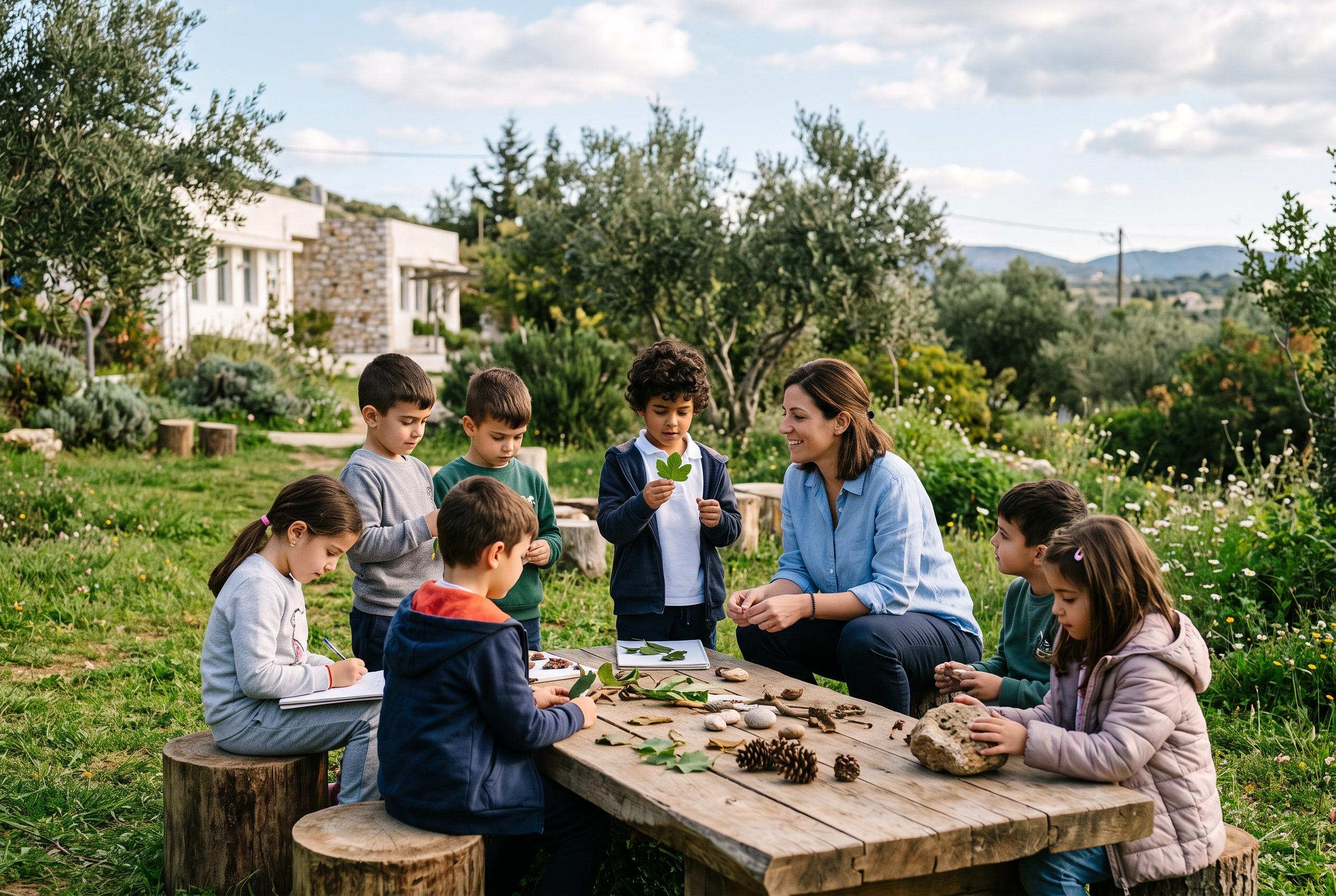

In Greece, a pioneering programme transforms schoolyards into dynamic outdoor classrooms, aiming to boost children’s confidence, movement skills, and connection with nature amid changing educational priorities following the pandemic.
A small child can see a branch as something to dodge or something to imagine. That question sits at the heart of a growing effort in Greece to bring early learning outdoors, treating schoolyards as extensions of the classroom rather than places for a break from it. In a programme led by the Panhellenic Association of Private Nursery Schools, 24 nurseries opened their doors to a model of teaching that moved part of the day outside and tested whether nature could become a routine part of learning, not an occasional add-on.
The initiative, called “Outdoor Classes: Places for Socialisation and Contact with Nature”, was developed after the pandemic, when educators say children had lost not only confidence but also basic movement skills. Natasha Papaprokopiou, an education sciences expert and former head of a preschool education department at the Athens TEI, told Kathimerini that lockdowns left some children unable to tumble or climb as they once could. She said the project also had to confront a stronger challenge: adult anxiety, especially among parents who worry that outdoor play means illness or injury.
To address that fear, the programme included training for teachers and information for families about the value of outdoor learning in the first five years of life. According to PASIPS, the project turned yards into teaching spaces with vegetable gardens, mud kitchens and outdoor reading corners, and included visits to nearby parks and small woods without a single accident being recorded. After a presentation event in Athens in May 2026, the association said it now plans to produce a practical guide and propose changes to the regulatory framework.
Maria Demopoulou, a climate education adviser and former official in the education ministry, argued that time in nature is not a luxury but a need. She told Kathimerini that children’s attention problems, restlessness and difficulty concentrating all point to the importance of regular contact with the natural world. She said schools should increase that exposure by redesigning outdoor areas so children can observe, collect and learn from living processes rather than seeing nature only on screens.
Not everyone frames outdoor learning as superior to classroom teaching. Maria Birbili, a professor in early childhood education at Aristotle University of Thessaloniki, said the point is not to demonise the classroom, but to recognise that children learn best in varied settings. Research on redesigned preschool spaces and field reports from Greek nursery school grounds supports that view, showing that hands-on, place-based learning can strengthen science education and encourage children to engage more actively with their surroundings. The broader lesson, educators say, is simple: the schoolyard can be more than a pause between lessons. It can be part of the lesson itself.
Disclaimer: This content is for informational purposes only and is not intended to be a substitute for professional medical judgment, advice, diagnosis, or treatment.