

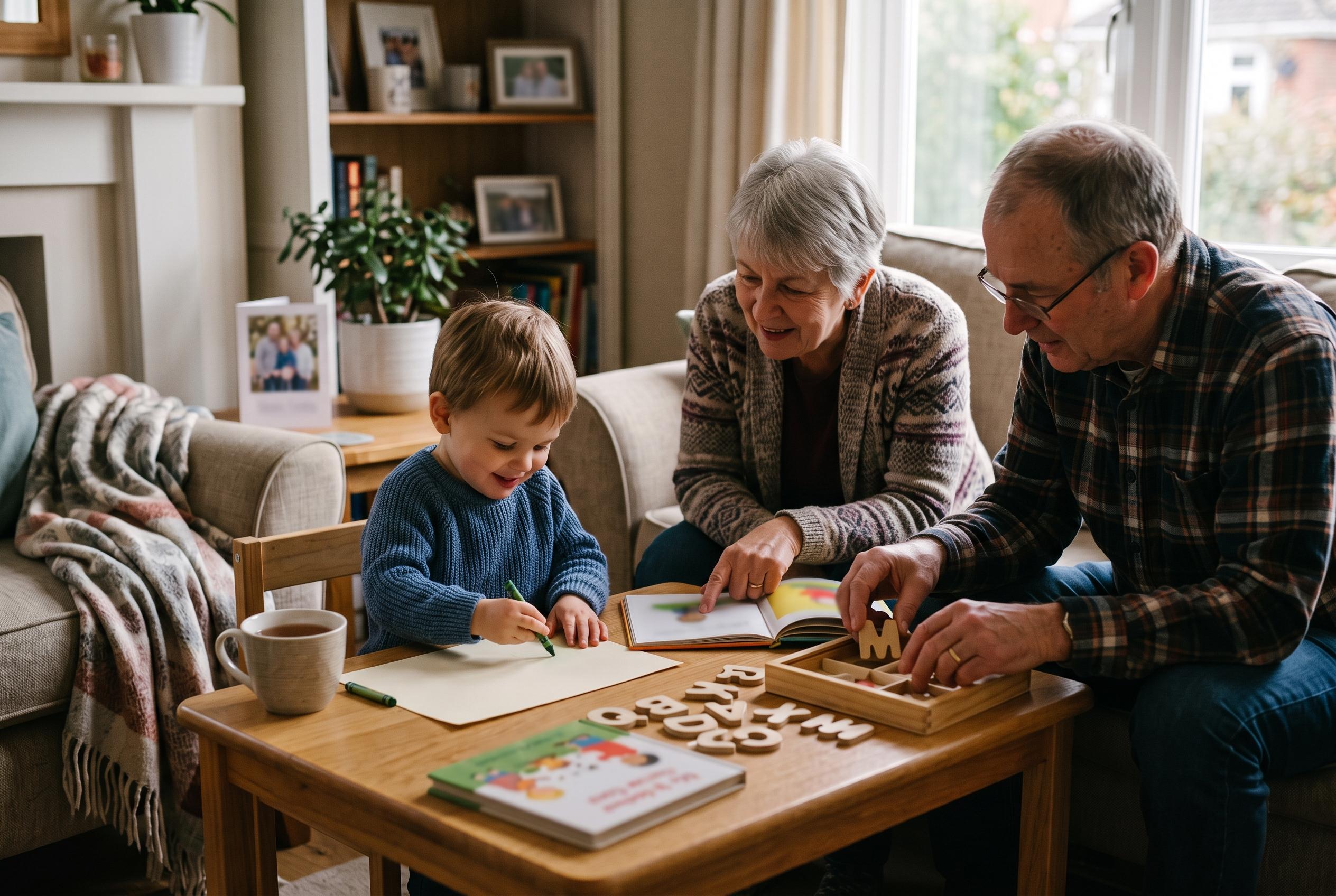

Research highlights how grandparents can leverage their patience and everyday routines to support children’s literacy, using playful activities and personalised connections outside formal lessons.
Grandparents can be powerful early literacy partners because they often bring something parents can struggle to spare: time, repetition and calm. Reading together, telling stories and making a child feel heard can do more than build skills; it can also create the kind of warm, memorable routines that make children want to keep coming back to books. Literacy groups and reading experts say that the steady presence of a grandparent can help children grow in confidence as well as fluency, especially when learning feels relaxed rather than formal.
One of the easiest ways to support letter learning is through familiar rhymes and shared reading. Songs help children hear the sounds inside words before they are asked to match those sounds to print, which is why nursery rhymes, picture books and other read-alouds can be so effective. The key is not to turn every moment into a lesson. A grandparent can pause on one word, point out its first sound and then connect that sound to a single letter. That keeps the experience playful while still building phonics awareness.
Old-fashioned picture-book routines still have value too, especially when they are adjusted to suit a young child’s attention span. Instead of asking a child to sit through a long session or name letters on demand, grandparents can let the child choose the book, search for one target letter on a page and close the book before the child loses interest. The Iowa Reading Research Center recommends that grandparents support literacy through regular reading, storytelling, home libraries and writing activities, all of which fit naturally into this kind of low-pressure approach.
Outside the book, everyday games can make letters more memorable. A child can hunt for cards hidden around a room, find objects that begin with a chosen sound or toss a ball back and forth while naming words that start with a specific letter. These simple activities are useful because they tie letters to movement and real-life objects, which can be easier for active children to remember than abstract drills. For children who like being outdoors, chalk, running and letter hunts can make practice feel more like play than study.
Short sessions work better than long ones for most young children. Grandparents may have more patience than busy parents, but that does not mean a child can focus for half an hour at a time. Ten minutes, repeated across the day, is often enough. If a child is tired or frustrated, it usually helps to change the activity rather than push through. That is especially important with letters that look alike, such as b, d, p and q, which typically need repeated practice across different settings before they stick.
It also helps when learning is tied to what the child already loves. A child who adores football, animals or vehicles will often pay more attention to a letter connected to those interests. Grandparents can use that enthusiasm to make letters feel personal and meaningful, not random. The same idea applies to family life more broadly: a grandparent who reads regularly, writes notes or helps with school routines can strengthen a child’s relationship with language in ways that extend well beyond letter recognition.
Technology can play a supporting role, but it should not take over. A shared app, used briefly and with adult guidance, can reinforce tracing and phonics, especially when it sits alongside books, talking and hands-on practice. The broader lesson from educators and family literacy advocates is straightforward: grandparents do not need to teach like classroom teachers. They are often most effective when they use what they already do well, which is to read, repeat, encourage and make a child feel safe enough to try again.
Disclaimer: This content is for informational purposes only and is not intended to be a substitute for professional medical judgment, advice, diagnosis, or treatment.



