

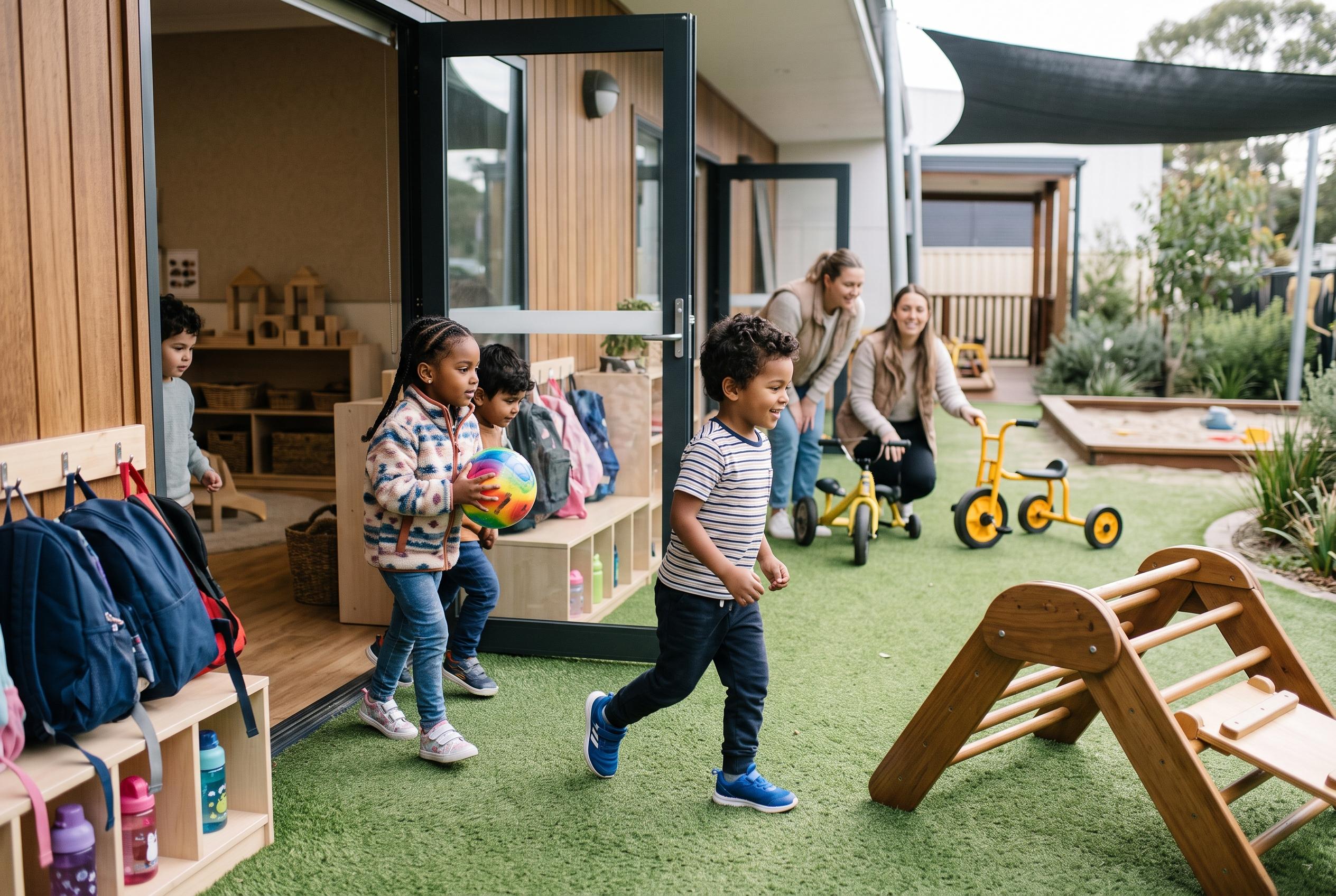

New international study establishes baseline step counts for three- and four-year-olds, offering a tool for health professionals to monitor and promote healthy growth through physical activity.
Children aged three and four take a median of 18,542 steps a day, according to the first international reference values for daily step counts in preschool-age children published in The Lancet Child & Adolescent Health. The research offers a potential new way for parents, doctors and public health workers to gauge how active young children are during a period that matters for growth and development.
The study drew on data from more than 3,500 children in 44 countries collected between 2018 and 2025. Children wore a step counter on their hip for at least three days, allowing researchers to build a global picture of movement in early childhood. The findings showed wide variation: among three-year-olds, daily step totals ranged from 1,124 for the least active children to 29,320 for the most active. Boys recorded higher median step counts than girls at both ages, and children in low- and middle-income countries, as well as those in rural areas, were generally more active than those in wealthier countries and cities.
The authors said the reference values could function in a manner similar to paediatric growth charts, giving clinicians an international benchmark against which to compare an individual child’s activity. That is particularly relevant because early childhood activity is linked to healthy development, while low activity has been associated with excess weight gain and delayed motor skills. A separate review of the evidence on young children’s movement, along with World Health Organisation guidance, underscores that regular physical activity is considered important for healthy growth at this age.
Even so, the researchers cautioned that the results should be interpreted carefully. The study was observational and captured activity over a relatively short period, so it cannot explain why the differences exist. The authors also noted that country-level samples were small in some cases, which means the findings may not represent every national population in full. Even with those limits, the work gives families and health professionals a clearer starting point for understanding how active preschool children typically are.
Disclaimer: This content is for informational purposes only and is not intended to be a substitute for professional medical judgment, advice, diagnosis, or treatment.



