

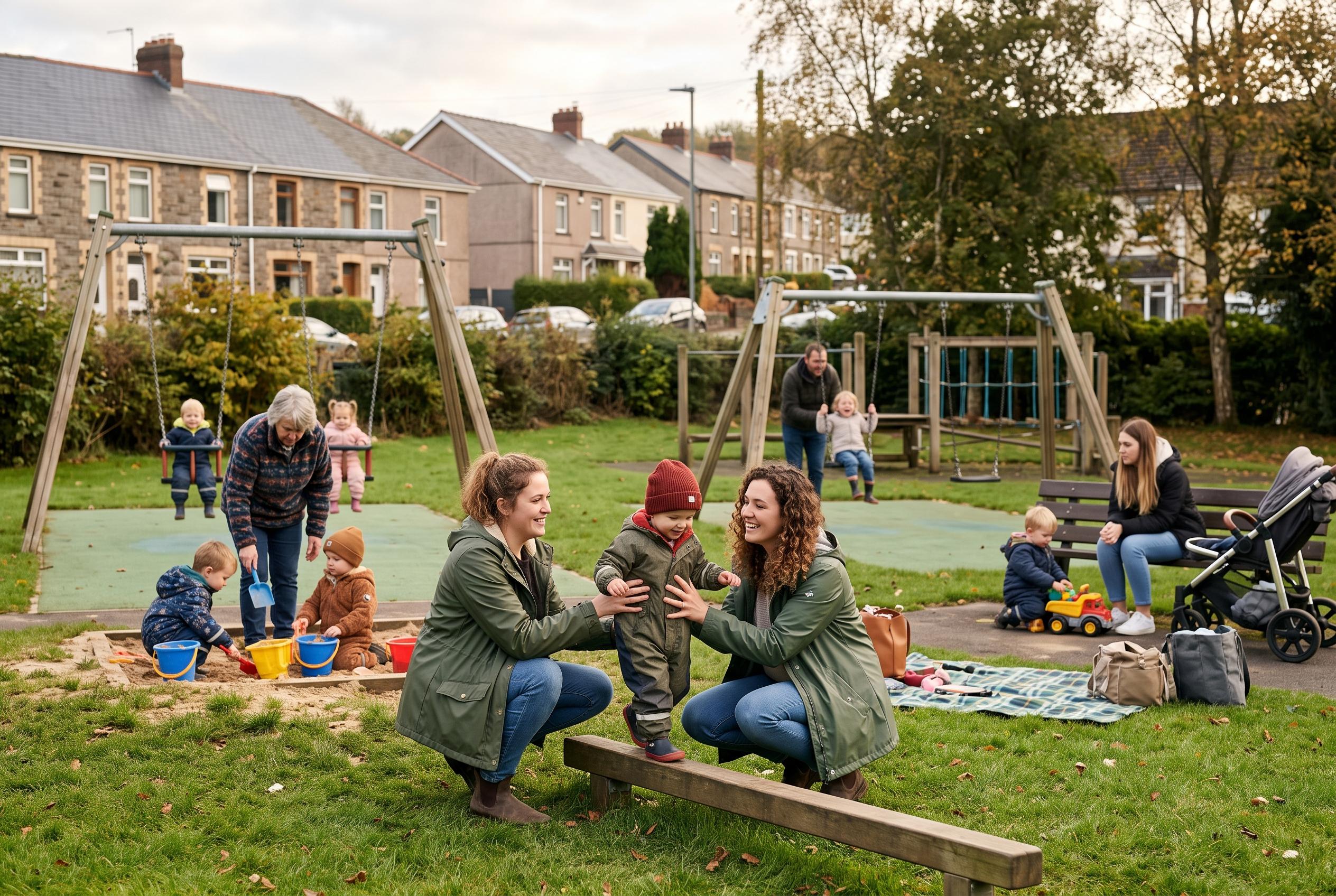

Children growing up in Welsh Flying Start communities were substantially less likely to enter care or receive a care and support plan by the age of five, with the biggest reduction among children of younger mothers.
A new study suggests that children born in Welsh Flying Start areas are far less likely to enter care in their early years than children growing up in similarly deprived neighbourhoods without the programme. Researchers from Cardiff University and the University of Bristol found that, by the age of four or five, children in Flying Start communities were more than 40% less likely to become looked after and 35% less likely to have a care and support plan. The findings add fresh evidence to a long-running debate over whether early-years support can ease pressure on child welfare services and improve outcomes for families living in disadvantaged areas.
The analysis covered more than 126,000 children born between 2012 and 2017 across 16 Welsh local authority areas. To make the comparison as fair as possible, the researchers looked at neighbourhoods that narrowly qualified for Flying Start alongside those that just missed out, allowing them to compare communities with very similar levels of deprivation. According to Cardiff University, the study used administrative data and was designed in advance, a step that gives greater transparency to the analysis.
The strongest effects were seen among children born to younger mothers. For those whose mothers were 21 or under at the time of birth, the rate of entering care was around 65% lower if they lived in a Flying Start area. The researchers did not find evidence that the programme changed the number of children placed on the Child Protection Register, suggesting that its influence may be more closely tied to preventing escalation into formal care rather than altering all forms of safeguarding intervention.
Flying Start, introduced by the Welsh Government in 2006, offers a package of support in some of Wales’s most disadvantaged communities. Its services include funded part-time childcare, enhanced health visiting, parenting support and help with speech, language and communication. The programme has been running for around 20 years, but its effect on children’s social care outcomes had not previously been examined in detail at this scale.
Dr Meng Le Zhang, the study’s lead author at Cardiff University’s CASCADE centre, said the findings showed the value of neighbourhood-based support that combines different services in one place. Speaking to Nation.Cymru, Zhang said many parents may prefer help that is available to all families locally rather than support that follows a formal referral and assessment process, which can feel stigmatising. The researcher also pointed out that group activities such as parenting classes, baby massage and breastfeeding groups can offer both practical advice and social support from experienced professionals.
Disclaimer: This content is for informational purposes only and is not intended to be a substitute for professional medical judgment, advice, diagnosis, or treatment.



