

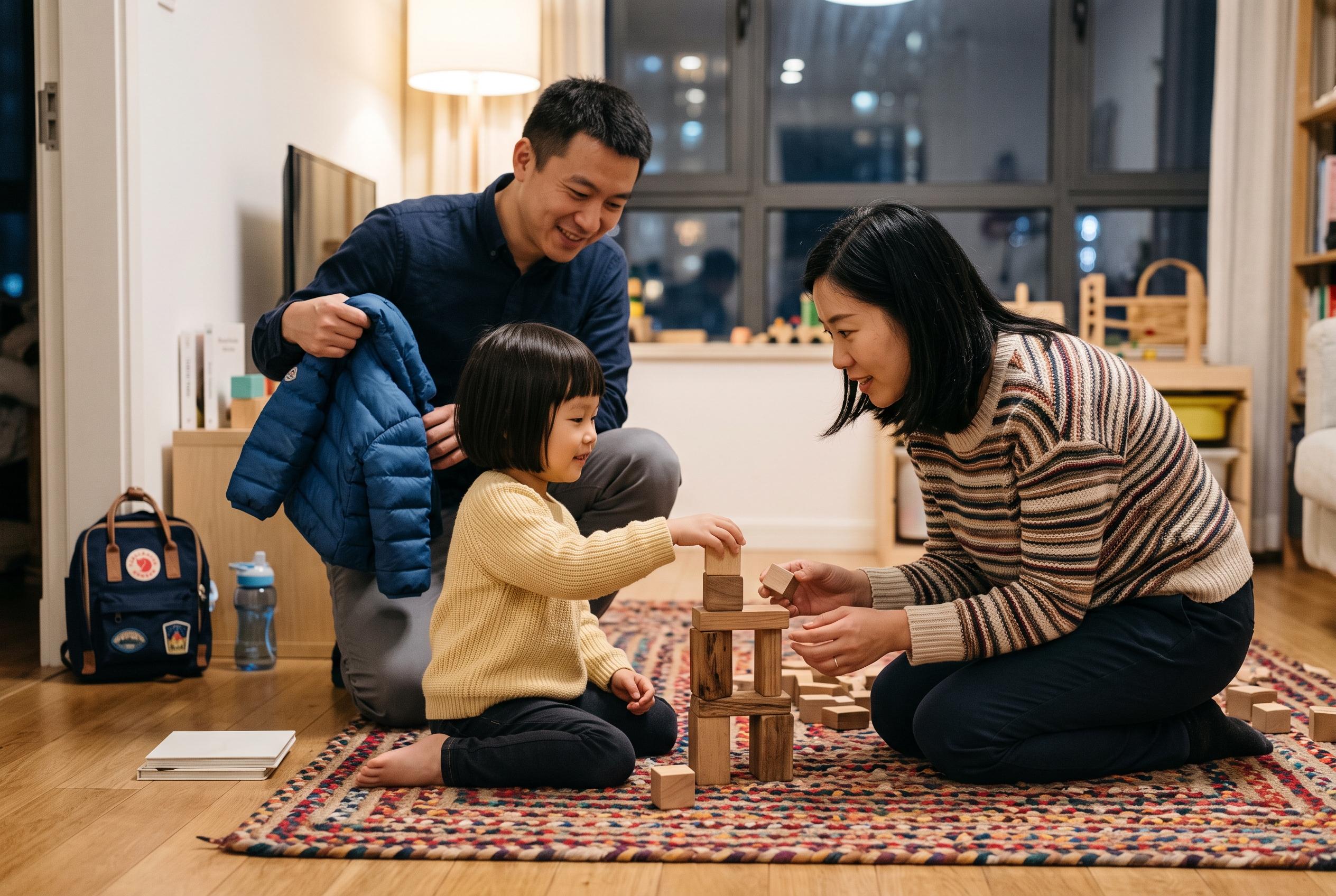

A new study based on families in Shanghai reveals that distinct patterns of parental engagement in preschool influence children’s psychological traits and social adjustment, highlighting the importance of both parents’ roles in early development.
Parental involvement has long been linked to children’s learning, but a new study suggests that the pattern matters as much as the amount. Drawing on families with preschool children in Shanghai, researchers found that home-based involvement by mothers and fathers tends to cluster into distinct combinations, with some households showing strong participation from both parents and others relying far more heavily on one. The findings add nuance to earlier work showing that parental educational involvement, especially support at home, can aid children’s academic and broader developmental outcomes.
The study, published in a peer-reviewed journal, sits within a broader body of research that defines parental involvement as a set of educational behaviours that can take place at home, at school, or through home-school communication. Previous reviews and meta-analyses have found that home-based support, such as helping with learning activities and providing structure, is associated with stronger academic motivation and achievement, while also helping children adjust socially. The new paper extends that idea into the preschool years, where family routines and everyday interactions are especially influential.
The researchers analysed data from 672 intact families with children aged two to seven, recruited from nine kindergartens in Shanghai in March 2025. They asked mothers and fathers to report independently on four forms of home-based involvement: guidance, discussion, language and cognitive activities, and participation in household tasks. Using latent profile analysis, they identified four family patterns: low involvement from both parents, high father-low mother involvement, low father-high mother involvement, and high involvement from both parents.
That profile approach reflects a family-systems view of parenting, rather than treating mothers and fathers as separate influences. It also fits the bioecological model, which argues that development is shaped by repeated, close-range interactions in children’s immediate surroundings. In practice, that means the quality and frequency of everyday exchanges at home may be more important than a single measure of overall parental engagement. The study’s authors argue that this helps explain why combined mother-father patterns can reveal more than traditional one-variable analyses.
The largest group in the sample was the high father-low mother profile, accounting for 36% of families. Another 26% showed high involvement from both parents, while 20% fell into the low father-high mother group and 18% into the low-involvement category. In the first profile, fathers were more engaged than mothers across all four home-based dimensions. In the second, both parents were strongly involved and broadly matched each other. In the third, mothers reported substantially more engagement than fathers. In the lowest-profile group, both parents were relatively disengaged, though mothers still tended to score higher on several measures.
The children’s outcomes differed by profile. Those in the high-involvement group generally showed the most favourable levels of hope and persistence, two of the study’s positive psychological traits, while children in the low-involvement group scored lowest. Gratitude followed a slightly different pattern: children in the high-involvement and low father-high mother groups did best, suggesting that strong maternal engagement may be especially relevant for this trait in the preschool years. The study links these traits to the emotional support, encouragement and structure that children receive during repeated home interactions.
Social adjustment showed a similar divide. Children in the low-involvement group had more emotional difficulties, fewer prosocial behaviours, more conduct problems and more peer difficulties than children in the other profiles. By contrast, children in the high-involvement and low father-high mother households tended to show better prosocial behaviour. The authors suggest that when at least one parent is consistently supportive, that may partly offset a lower level of involvement from the other parent.
The family relationship findings were more specific. Mother-child closeness was strongest in the high-involvement and low father-high mother groups, pointing to the particular importance of maternal engagement for the emotional bond in early childhood. Father-child closeness was highest when both parents were highly involved, with the high father-low mother group also doing relatively well. The pattern suggests that children may benefit from both a broad base of support and from the distinct contributions each parent brings to the home environment.
The study has limits. The peer-relationships measure had relatively weak internal consistency, and many of the child outcomes relied on maternal report, which can introduce bias. The sample was also drawn mainly from urban Shanghai, so the findings may not apply equally to other regions or to rural families. Even so, the results add weight to a growing consensus in the research literature: parental involvement at home matters, and the division of that involvement between mothers and fathers can shape children’s development in different ways.
For parents and caregivers, the practical message is straightforward. Preschoolers appear to do best when home learning is not left to chance, and when both parents, where possible, are engaged in ordinary routines such as conversation, guidance, play, shared tasks and learning support. For families in which one parent is less involved, the study suggests that stronger participation from the other parent may still provide meaningful benefits, particularly for children’s social adjustment and emotional development.
Disclaimer: This content is for informational purposes only and is not intended to be a substitute for professional medical judgment, advice, diagnosis, or treatment.



