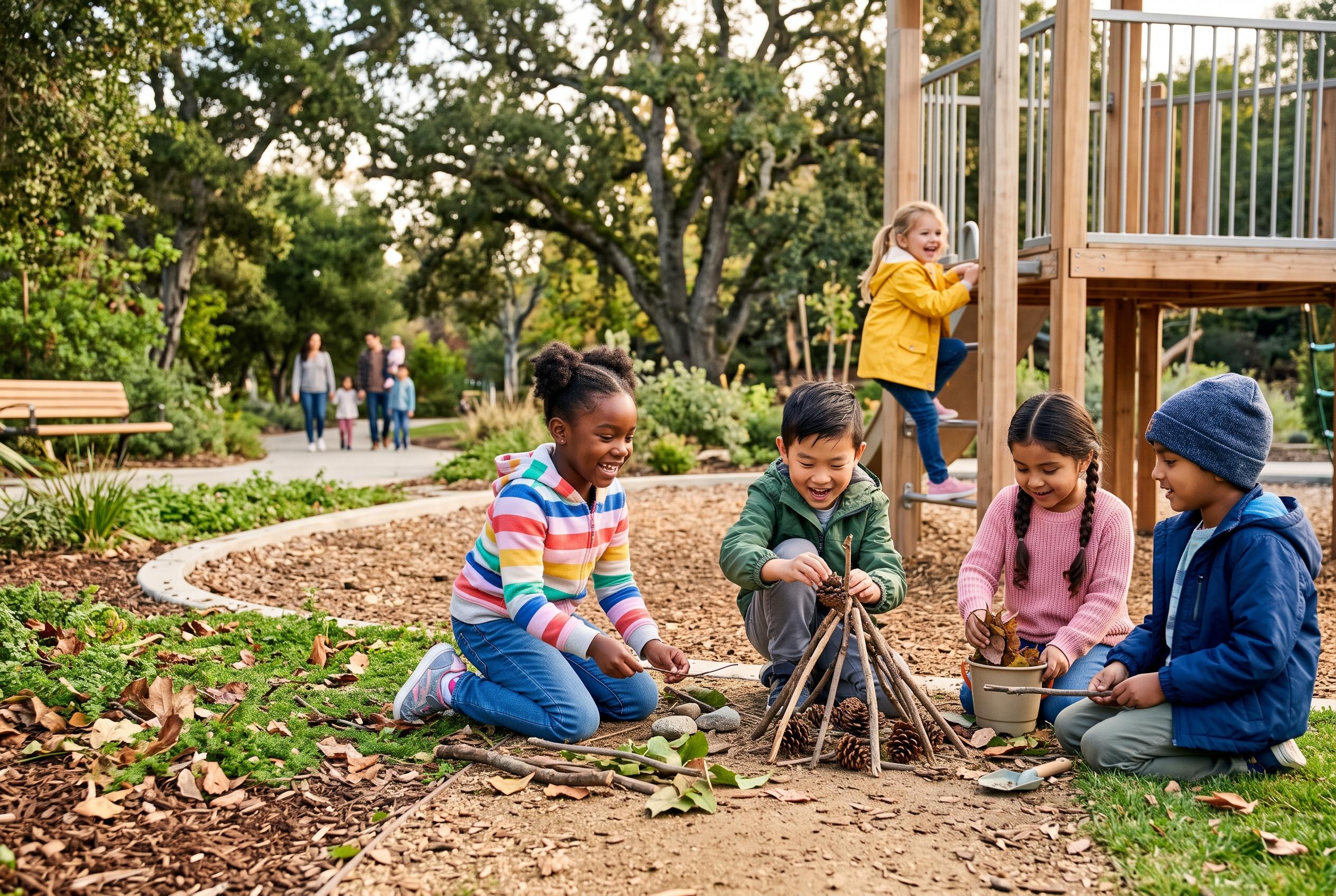

With experts highlighting the critical benefits of outdoor activities for children’s physical, cognitive, and social growth, recent warnings about decreasing outdoor play highlight a growing need for parents to prioritise regular outdoor time to support healthy development.
Outdoor play may look simple, but experts say it supports children’s development in ways that screens and timetables cannot. The American Academy of Pediatrics says time outside helps children build movement skills, lower stress and strengthen curiosity, while UNICEF has warned that outdoor play is becoming less common even as its benefits remain wide-ranging. For parents and carers, the message is straightforward: regular time outdoors is not a luxury, but part of healthy growth.
One of the biggest gains comes from physical development. Running, jumping, climbing and throwing all help children develop balance, coordination and strength. UCLA Health says outdoor activity can also increase overall movement, which supports healthy growth, while the American Academy of Pediatrics links active play with better motor development and lower obesity risk. Even smaller actions, such as picking up stones or handling leaves, help children practise the hand-eye coordination they will later need for tasks such as writing and using tools.
Outdoors also gives children room to think for themselves. Medical News Today says open-ended play encourages exploration and problem-solving, and the American Academy of Pediatrics notes that natural environments can spark creativity and critical thinking. A child working out how to balance on a log or imagining a game with a stick is not just keeping busy; they are testing ideas, making decisions and learning to manage small risks in real time. That kind of unstructured learning can be difficult to replicate indoors.
There are social benefits too. When children play together in a park, garden or playground, they have to negotiate rules, share space and settle disagreements without constant adult direction. Medical News Today says these interactions help build social skills, while UNICEF says outdoor play can improve learning outcomes and emotional health. The Bump adds that simple outdoor games, such as races, scavenger hunts or fort-building, can also support emotional regulation and cooperation.
Parents do not need elaborate plans to make this happen. A walk around the block, time in the back garden or a regular visit to a local park can all add up. Healthline says outdoor time may also support mental well-being for both children and parents, and UCLA Health notes that sunlight exposure helps the body produce vitamin D. In practice, the most important step is consistency: making outdoor play a normal part of the day rather than an occasional treat.
Disclaimer: This content is for informational purposes only and is not intended to be a substitute for professional medical judgment, advice, diagnosis, or treatment.