

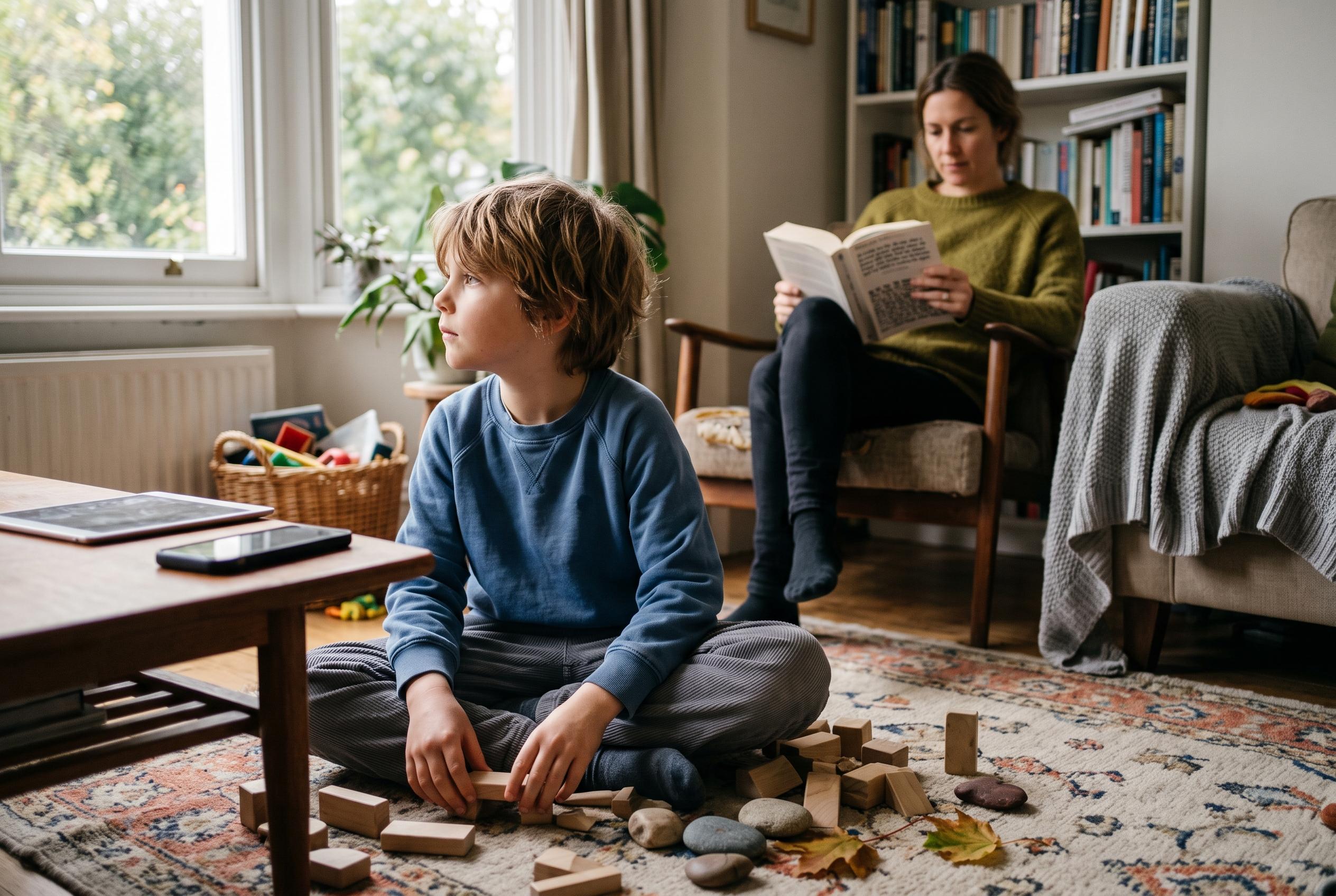

Experts highlight the surprising benefits of allowing children unstructured downtime in a digital age, arguing that brief periods of boredom promote resilience, creativity, and independence amid relentless screen time.
Children’s boredom may feel inconvenient in the moment, but experts say it can play a useful role in development. In an age of cartoons, apps, after-school clubs and round-the-clock digital distractions, many children rarely have to sit with empty time. Yet paediatric guidance and child-development specialists increasingly argue that occasional unstructured time can help children learn how to entertain themselves, solve problems and think independently.
The American Academy of Pediatrics says play supports cognitive, social, emotional and physical development, and recommends that children have time for unscheduled, independent, non-screen play. That distinction matters. Boredom itself is not a magic ingredient for creativity, but it can create the pause children need to notice their surroundings, test ideas and decide what to do next rather than waiting for adults to organise every moment.
When children are left with a stretch of free time, they often begin inventing their own activities. A child may draw, build a fort, make up a game or tell stories with toys. Those simple acts require planning, choice and persistence. The Child Mind Institute says learning to manage boredom can help children practise frustration tolerance, flexibility, organisation and problem-solving, skills that also support schoolwork and group projects.
Still, boredom should not be confused with neglect or with some guaranteed route to imagination. A 2024 review of studies on boredom and creativity found mixed results, with no clear proof that boredom directly causes creativity. The more practical lesson for parents is that children need room to respond to boredom, not to be abandoned to it. Allowing manageable periods of open-ended time gives them a chance to try, fail and try again without an adult stepping in at once.
That process can also help children discover their own interests. Free time may lead one child towards music, another towards gardening, another towards storytelling or building. The value lies not in turning every hobby into a lesson or future career, but in giving children a chance to notice what holds their attention. The Kids Mental Health Foundation and other child-wellness groups say this kind of self-directed activity supports resilience, independence and creative play.
Boredom can also strengthen emotional regulation. Children do not always enjoy waiting or uncertainty, and many will protest when they are told there is nothing planned. But learning to tolerate that discomfort is part of growing up. Instead of rushing to fill the silence, parents can acknowledge the feeling and invite children to think through a solution. That small shift teaches children that frustration is manageable and temporary.
The digital age makes that lesson more important. Phones, tablets and television are always available, and they can quickly become the default answer to restlessness. The American Academy of Pediatrics has warned that screens can crowd out active play and direct interaction, which are vital for healthy development. That does not mean technology has no place in family life. It does mean screens should not be the only tool children know for dealing with unstructured time.
Parents do not need expensive equipment or elaborate plans to make this work. A few safe household materials, books, building blocks or outdoor spaces can be enough. Very young children need closer supervision, and children with additional support needs may need more guidance, but the goal is the same: to create a safe setting in which children can make choices for themselves. Just as importantly, adults should resist turning every spontaneous activity into an assignment. A child who is drawing, building or pretending does not always need instruction; sometimes they simply need space.
Seen that way, boredom is not a failure of parenting or a sign that children are being deprived of stimulation. Used well, it can be a useful pause in a crowded day, one that gives children room to practise independence, stretch their imagination and build confidence in their own ideas. The aim is not to make childhood dull, but to leave enough empty space for children to learn how to fill it themselves.
Disclaimer: This content is for informational purposes only and is not intended to be a substitute for professional medical judgment, advice, diagnosis, or treatment.



