
New insights challenge common misconceptions about early maths learning, emphasising concrete experiences, number sense, and the importance of fostering a positive attitude towards maths from toddlerhood.
Parents are told from the start to read aloud, sing nursery rhymes and build language every day. Far less attention is given to numbers, which often leaves early maths reduced to flashcards and rote counting. That is a mistake, because the foundations of mathematical thinking are built long before a child can handle written sums. They begin with patterns, quantities, comparison and everyday problem-solving.
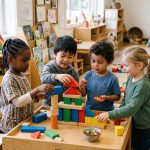
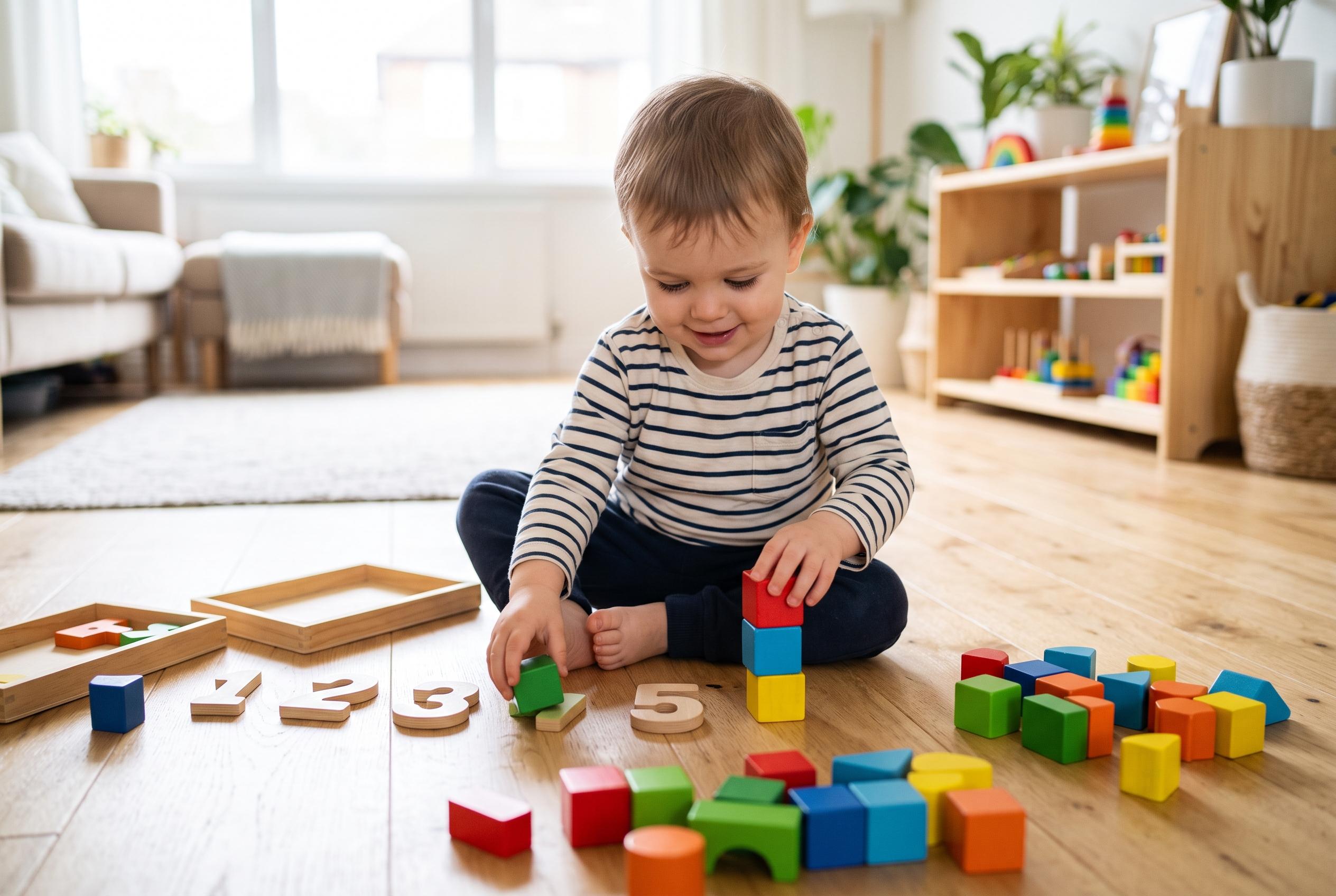
One of the most persistent misconceptions is that counting aloud equals mathematical understanding. A child who can recite “one, two, three” may simply be repeating a sequence, not grasping what those numbers mean. The stronger foundation is number sense: knowing that numbers represent quantities and relationships. It also includes recognising shape, space and stability, which is why a child balancing blocks or sorting objects is already doing maths in a meaningful way.
Another myth is that some children are simply born with a “math brain” and others are not. Research from Carnegie Mellon University led by Jessica Cantlon has found no meaningful difference in mathematical ability between boys and girls, and other studies have challenged the idea that biology decides who succeeds in numeracy. The trouble with the “natural talent” story is that it can become self-fulfilling. If children think struggle means they are not cut out for maths, they are more likely to disengage when work becomes harder.
That matters because early maths is not just another subject on the timetable. Research cited in education studies has shown that early numeracy is a strong predictor of later academic success, in some cases more so than early reading ability is. That does not diminish literacy. It does suggest, though, that maths deserves the same steady attention parents already give to books.
Parents are also often told to stop children using their fingers once they start school. Yet research on finger-based strategies shows that gestures, touching and finger counting can support number learning rather than weaken it. Neuroscience and education studies have suggested that fingers help children connect physical experience with abstract ideas, which is especially useful when they are learning addition, subtraction and place value. In other words, hands are not a sign of weakness; they are part of the learning process.
Flashcards can also create the illusion of progress without building real understanding. A child may memorise that three plus two equals five, but that is not the same as understanding quantity. Educational research points instead to subitising, the ability to recognise small groups of objects instantly without counting one by one. Dice, dominoes and simple household tasks, such as asking a child to pick out exactly three apples, build a far more durable grasp of number than drilling cards alone.
Some of the most damaging myths are cultural rather than educational. The notion that boys are naturally stronger at maths than girls has been repeatedly challenged by studies showing similar ability across genders. One large-scale study reported by Live Science found that boys and girls entered school with comparable skills, with a gap appearing only after formal schooling began. That suggests the problem may lie less in ability than in classroom expectations, social cues and the messages children absorb about who numbers are “for”.
Toddlers, too, are capable of more than many adults assume. They understand ideas such as “more”, “less”, “all gone” and “fair share” long before they can write equations. The mistake is not expecting too much of them; it is teaching too early through symbols instead of concrete experience. A half biscuit, a divided toy pile or a shared snack can teach basic mathematical logic far more effectively than a worksheet.
Parents who feel anxious about maths need not be perfect to help their children. In fact, children learn a great deal from hearing adults think aloud about everyday numbers: measuring flour, counting stairs, comparing prices or working out a restaurant bill. The point is not to turn family life into a lesson plan. It is to notice that maths is already everywhere, and that the best early teaching often happens quietly, through ordinary routines.
Disclaimer: This content is for informational purposes only and is not intended to be a substitute for professional medical judgment, advice, diagnosis, or treatment.