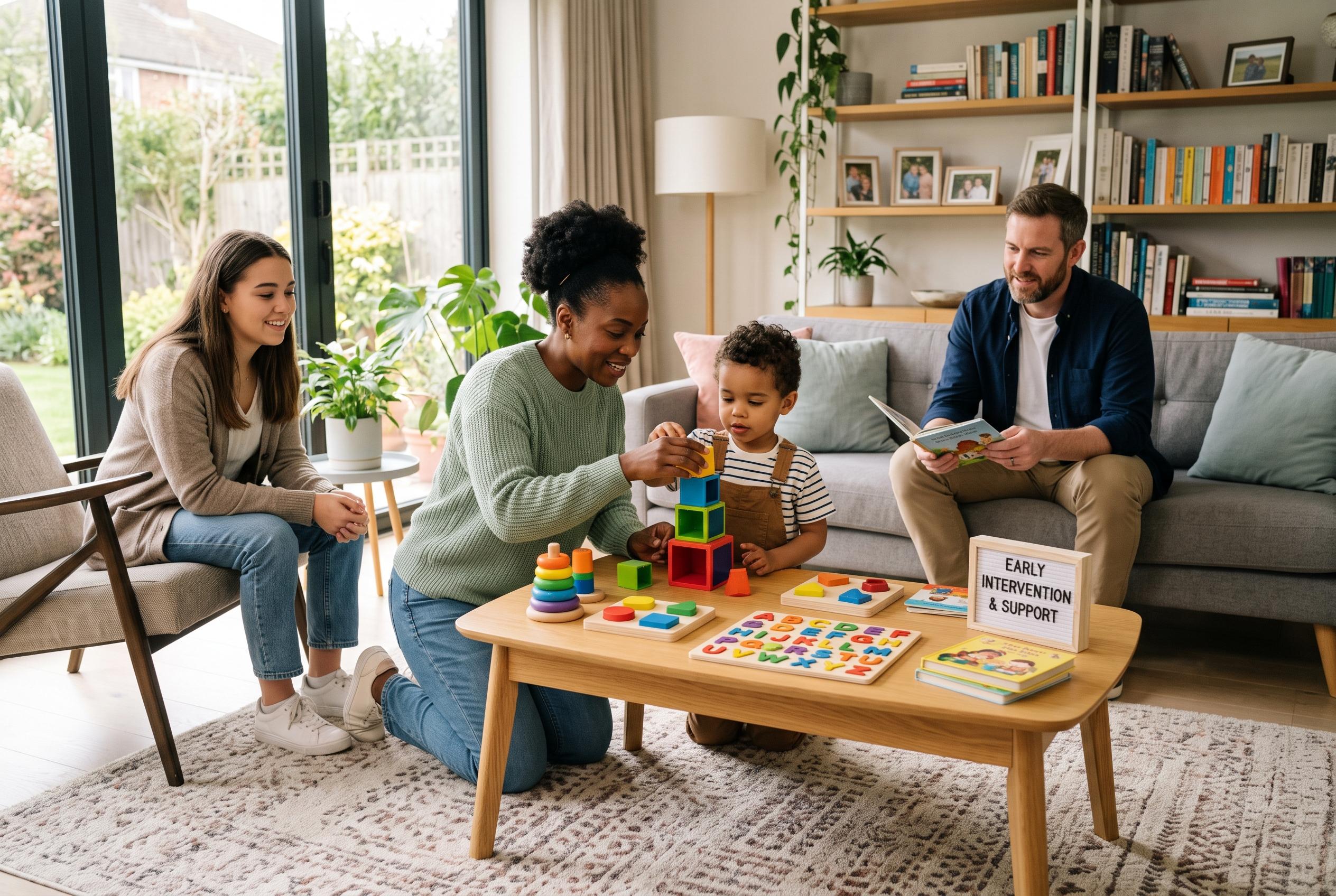

Families are encouraged to monitor early childhood development closely and seek timely support, with guidance from organisations like Total Communication and the CDC, to ensure children receive the help they need without delay.
Worries about development often begin with small moments: a relative saying a child will “catch up”, a teacher suggesting patience or a parent lying awake wondering whether concern has gone too far. Total Communication says that uncertainty is common, but it does not mean families have to wait before seeking help. Early support, the Singapore practice says, is not the same as a judgement that something is wrong; it can simply offer a clearer view of what a child needs and what kind of support may help.
The key question is not whether a child is slower in one area than another child, but whether their development shows a pattern. The Centres for Disease Control and Prevention says milestones are useful reference points, but they are not a diagnosis. Parents are encouraged to look at whether a child is gaining new skills, understanding others, using gestures or words to communicate, showing interest in social interaction, applying skills across settings and retaining abilities they have already learned. A loss of skills or slower progress across several areas is also worth paying attention to.
The CDC also says parents and professionals should not wait for concerns to become severe before acting. Developmental monitoring throughout early childhood, along with formal screening when there are concerns, can help identify children who may benefit from support sooner. The agency’s milestone guidance and family resources are designed to help parents track development and start conversations with healthcare professionals when something feels off. In Singapore, families can also use the Child Health Booklet as a guide to developmental and childhood health checks.
For many parents, the harder fear is not missing a delay but causing one. Total Communication notes that many families quietly blame themselves, wondering whether they used too much screen time, introduced too many languages or simply did not do enough. But developmental differences are shaped by many factors and do not automatically reflect parenting. Speech therapy or other intervention does not have to mean a child has a lasting problem; it can be a practical way to build communication, support play and give parents strategies to use in daily routines.
A useful first step, the practice suggests, is to write down three observations about a child’s communication, including strengths and concerns, and bring them to a paediatrician, preschool teacher or speech and language therapist. The American Academy of Pediatrics recommends developmental surveillance at well-child visits, with standard screening at 9, 18 and 30 months and autism screening at 18 and 24 months, or whenever concern arises, guidance that is reflected in the CDC’s updated developmental advice. Sometimes an assessment reassures families that a child is developing within an expected range. Sometimes it points to targeted help. Either way, it replaces guesswork with a clearer next step.
Disclaimer: This content is for informational purposes only and is not intended to be a substitute for professional medical judgment, advice, diagnosis, or treatment.