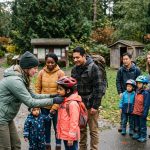

First 10’s zones and hubs bring schools, early learning providers and community groups together to make the move into kindergarten more connected for children and families.
School districts often think of kindergarten as the beginning of a child’s education, but advocates for early learning say the real work starts much earlier. David Jacobson, director of First 10, an Education Development Centre initiative focused on early childhood partnerships, argues that districts can do more for children and families by building relationships with early learning providers and community organisations before children reach school age.
The case for that approach is rooted in continuity. Jacobson’s recent paper for the Stanford Centre on Early Childhood says children move through a critical developmental period from birth through the early primary years, yet the institutions serving them frequently operate in separate silos. When pre-K and kindergarten teachers share information, compare expectations and build on familiar routines, he says, children encounter a smoother transition and families are more likely to feel confident about the school system.
That matters for more than just classroom practice. Jacobson says school systems facing falling enrolment, driven by lower birth rates, school choice and shifting immigration patterns, cannot afford to wait until a child arrives in kindergarten to begin building trust with families. Instead, he says districts should work with early childhood providers, libraries and family-serving groups to align expectations, reduce barriers and strengthen attendance.
First 10 describes two ways to organise that work: zones and hubs. A zone brings together multiple elementary schools, early childhood programmes and community partners within a shared area, while a hub centres the same work on a single elementary school. Jacobson says the model gives districts a practical structure for treating younger children as future students and early learning providers as essential partners rather than separate systems.
The approach is already being used in places such as Sheepscot Valley Regional School Unit 12 in Maine, where First 10 helped identify gaps in alignment between pre-K and kindergarten and in communication about incoming pupils. According to the Stanford paper, the district broadened transition meetings beyond children with disabilities so that all pre-K children moving into kindergarten could be discussed. Teachers also began visiting one another’s classrooms, which helped extend pre-K’s role within school leadership and planning.
In Russellville, Alabama, the work led to annual reciprocal classroom visits between pre-K and kindergarten teachers, followed by joint professional learning across community preschool, Head Start, district pre-K and kindergarten settings. The Stanford commentary says that for the first time educators across those settings reviewed standards together, identified challenges and aligned their teaching strategies.
First 10 communities also use The Basics, a public health framework built around five simple messages for parents and carers: maximise love and manage stress; talk, sing and point; count, group and compare; explore through movement and play; and read and discuss stories. In Woonsocket, Rhode Island, the messages are being shared with parents during paediatric visits and at kindergarten welcome events, while the city also uses play-and-learn sessions and Passport to Kindergarten activities to familiarise children and families with school. In Conestoga Valley, Pennsylvania, the district has created a “Kindergarten Express”, a themed series of transition events that includes a kick-off, showcase, screening, summer meet-and-greet, camp and orientation.
Jacobson says the point is not a one-off welcome event but a connected experience that helps children and adults feel secure. As he put it, “We want safe, stable, and predictable experiences across the day, across years and across settings.” When pre-K and kindergarten are linked in that way, he says, children are more settled, learning is reinforced and families encounter a system that feels coherent.
Disclaimer: This content is for informational purposes only and is not intended to be a substitute for professional medical judgment, advice, diagnosis, or treatment.