

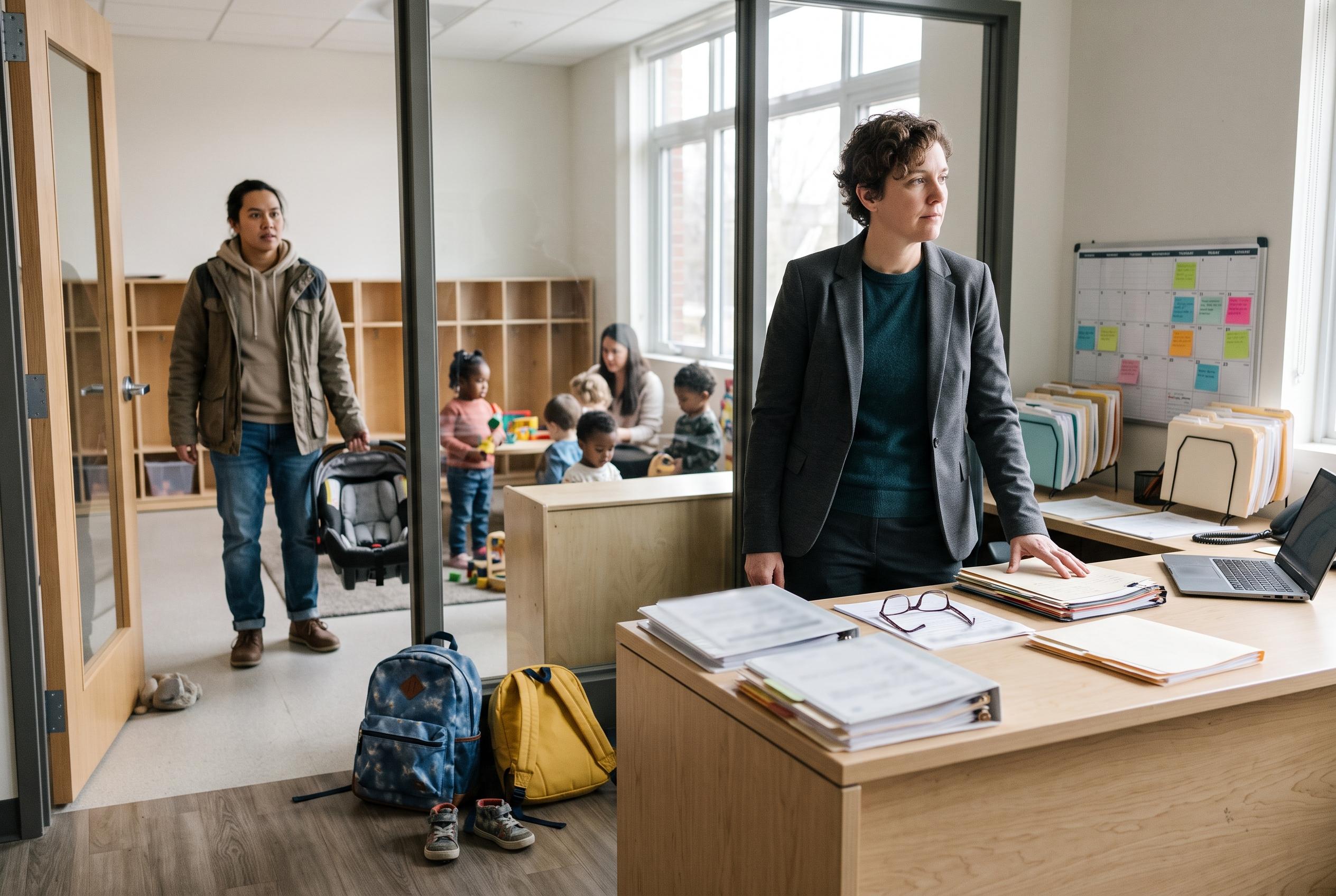

Hundreds of thousands of children remain on waitlists for publicly funded childcare across 23 states and D.C., highlighting ongoing systemic challenges and workforce shortages that are further hampering families’ access to early years support.
Hundreds of thousands of children who qualify for publicly funded childcare are still waiting for help, leaving families to navigate long delays, patchy state systems and rising private fees. According to reporting by the Associated Press, the problem stretches across 23 states and the District of Columbia, where eligible children remain on waitlists even as parents struggle to return to work or education. The scale of the backlog has turned childcare access into a broader test of how seriously states and the federal government are willing to treat early years provision. The Associated Press reported that the issue intensified after pandemic-era aid expired in 2024, exposing how dependent many families had become on temporary funding.
The reasons vary by state, but the pattern is familiar: not enough money, not enough staff and not enough places. The Los Angeles Times reported that some states have increased funding in an effort to reduce the pressure, yet demand still exceeds supply in many communities. The Washington Post linked the backlog to the end of emergency support in 2024 and to political disagreements over how much governments should spend on childcare. In practical terms, that means eligible families can still be pushed into limbo for months, even when they meet the rules for assistance.
Workforce shortages are a major part of the bottleneck. Childcare centres cannot expand if they cannot hire and keep enough educators, and early years staff are often paid poorly relative to the responsibilities they carry. That shortage is especially damaging for infant and toddler places, which require more adults per child and are therefore costlier to provide. NBC Boston noted that the waitlists are not confined to one region or type of community, with urban, suburban and rural families all affected in different ways.
For parents, the consequences are immediate and often expensive. Delays in securing subsidised care can force one parent to cut hours, postpone a return to work or school, or rely on informal arrangements and higher-cost private care. The Washington Post reported that the burden has been particularly acute for households already under financial strain, while the AP said the backlog is also rippling into the wider economy by making it harder for employers to keep schedules stable and fill vacancies. Mothers are still more likely than fathers to absorb the caregiving fallout, which can widen pay gaps and slow career progression.
The policy choices are relatively clear, even if the politics are not. Experts and advocates cited in the reporting say governments could move faster by stabilising subsidy funding, raising childcare wages, simplifying application systems and improving outreach to families who are eligible but not yet enrolled. EdSurge reported that the end of pandemic-era aid exposed structural weaknesses in the childcare system rather than creating them. The longer the waitlists persist, the more they resemble a chronic failure of capacity rather than a temporary administrative backlog.
Disclaimer: This content is for informational purposes only and is not intended to be a substitute for professional medical judgment, advice, diagnosis, or treatment.



