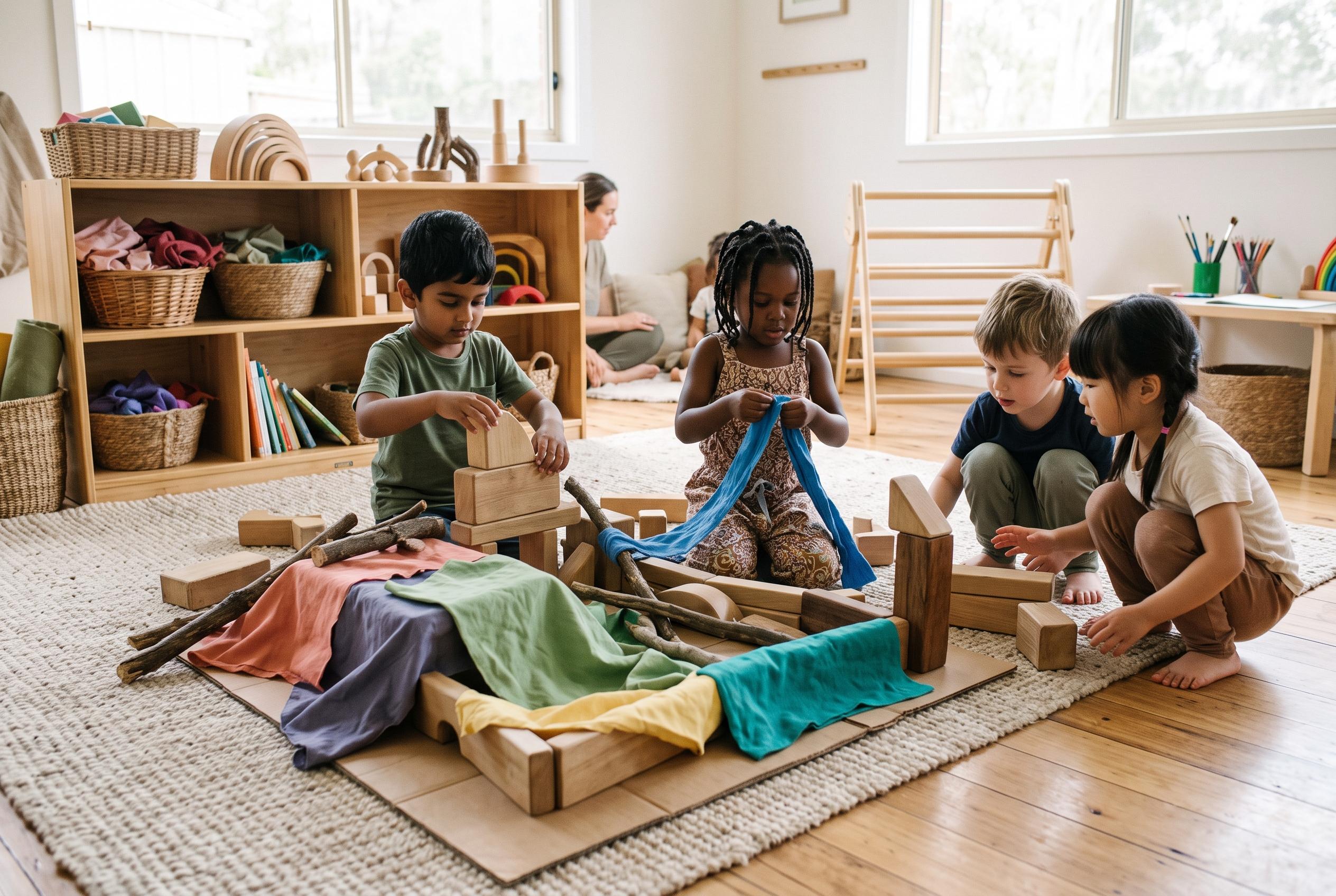

Specialists emphasise that unstructured, child-led play is vital for cognitive, emotional, and social growth, providing advantages that screens cannot replace and warning against over-scheduling children’s lives.
Play is not a distraction from childhood; it is one of the ways children learn to think, move, relate and cope. Behind something as ordinary as a cardboard box turned into a house, or a sheet turned into a tent, there can be powerful developmental work taking place, according to specialists in child neurodevelopment in Argentina.
Professionals at Siete Sentidos, an institute in General Roca that works with babies, children and teenagers in the Alto Valle, say play helps shape the brain at the same time as it exercises language, movement, emotions and thought. They describe it as a biological need and a central driver of learning, not simply a pastime. The American Academy of Pediatrics has likewise argued that play supports healthy cognitive, physical and emotional development, while helping children build confidence and resilience.
The value of play is especially clear in unstructured, child-led activity. In free play, children decide what a game means, negotiate rules, solve problems and adjust when something does not work. That process strengthens executive functions such as memory, impulse control and flexible thinking. UNICEF says this kind of play encourages creativity and problem-solving, while US child welfare guidance notes that both structured and unstructured play can support physical, social and intellectual growth.
The Siete Sentidos team also warns against treating boredom as a problem to be eliminated at once. In many homes, they say, children’s days are packed with lessons, sports and activities, leaving little time for spontaneous play. Yet waiting through a quiet moment can be what opens the door to imagination and initiative. Dartmouth Health has made a similar case, saying child-led play helps children manage emotions, build resilience and gain independence.
Screens complicate that picture further. Tablets, phones and video games can have a place in family life, but specialists say they cannot replace the bodily, social and sensory experience of playing face to face. Children learn to read expressions, tolerate frustration, make deals and resolve disputes through direct contact with other people, not through a screen. Simple materials such as boxes, cloths, blocks, balls and household objects can be enough to spark that kind of learning. The message from child-development experts is straightforward: the best support adults can offer is often not direction, but time, space and attention.
Disclaimer: This content is for informational purposes only and is not intended to be a substitute for professional medical judgment, advice, diagnosis, or treatment.