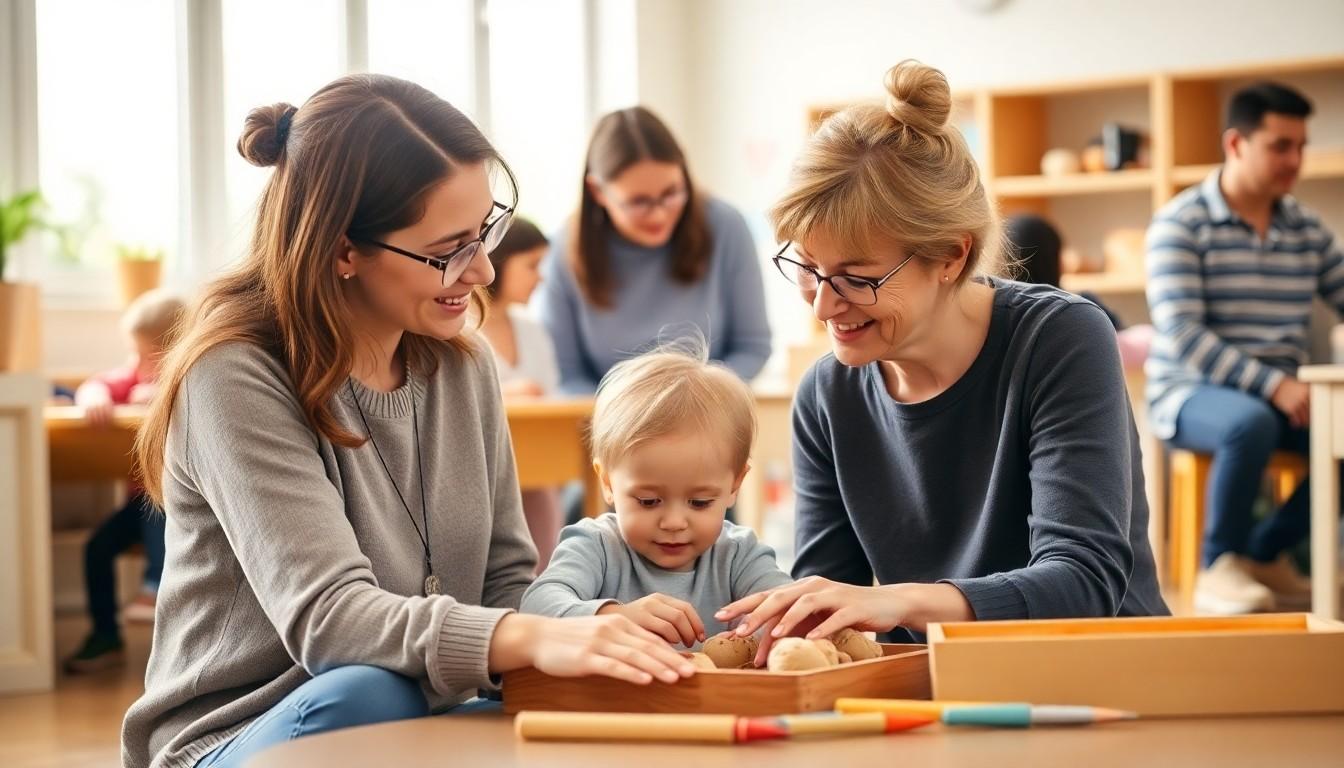

A holistic approach to early Catholic education advocates integrating faith, care, and community through developmentally appropriate practices, emphasising relationships and family partnerships to foster lifelong values.
In Catholic early education, the most effective programmes are often those that treat faith, development and community as one whole rather than separate priorities. Barbie Perdomo, an early childhood specialist with the Archdiocese of Miami, argues that the earliest years are not simply preparation for later schooling but a formative stage in which children begin to understand who they are and where they belong. Her central point is that prayer, care, relationships and daily routines can become part of faith formation when they are built into the rhythm of the classroom rather than added on at the edges.
That approach is increasingly supported by child development research. A study published in Child Development on the FinnBrain Birth Cohort found that executive functions – the mental skills that help children manage attention, memory and self-control – develop along distinct pathways from infancy to age 5, which suggests that young children do not all learn in the same way or at the same pace. Other research published in PMC has shown that secure early attachment supports social communication and broader emotional and cognitive growth, reinforcing the idea that relationships are not a side issue in early childhood education but a foundation for learning.
Perdomo says that understanding those developmental differences should shape how Catholic schools teach the youngest children. In her view, programmes for infants, toddlers and preschoolers should not imitate elementary classrooms with long group lessons, worksheets or expectations of extended sitting still. Instead, teachers need to work through movement, repetition, conversation, play and gentle routines. She also says school leaders should support staff with training in early childhood development and faith integration, alongside mentoring and collaborative planning, so that teachers can better match their practice to the age and needs of the children in front of them.
The practical result, she argues, is a classroom where faith is experienced rather than merely explained. Prayer at circle time, blessings before meals, songs during transitions and visible reminders of Catholic identity can help children encounter gospel values in concrete ways. Perdomo also stresses that the classroom environment matters: accessible materials, calm routines, time for exploration and opportunities for reconciliation all help children learn dignity, gratitude, kindness and belonging. In that setting, she says, even a conflict between children can become a moment of formation if it is handled with patience and respect.
She also places families at the centre of the picture. Catholic teaching holds that parents are the primary educators of their children, and Perdomo says early childhood programmes work best when they build genuine partnership with home rather than treating parents as outsiders. For school leaders, she says, the stakes are larger than readiness for kindergarten. Strong early childhood programmes can shape the culture of a Catholic school for years by creating a community in which children feel known, families stay connected and mission is visible from the very beginning.
Disclaimer: This content is for informational purposes only and is not intended to be a substitute for professional medical judgment, advice, diagnosis, or treatment.