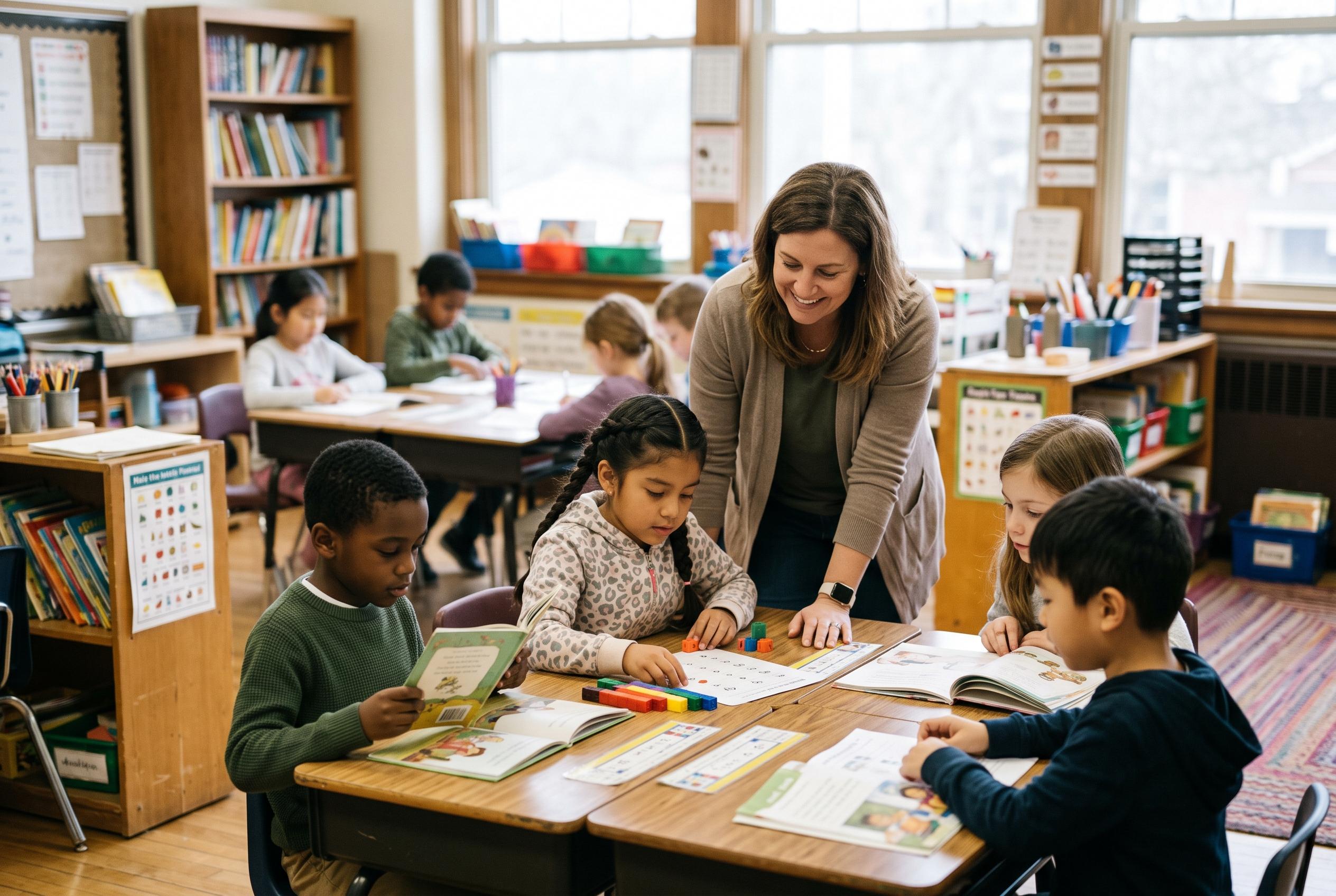

A study of more than 1.6 million pupils found that transitional kindergarten was linked to stronger reading and maths results years later, with the largest gains among low-income children who also attended subsidised pre-school.
Children who attended transitional kindergarten in California went on to post stronger reading and mathematics results in third and fourth grade, according to new research from UC Berkeley and the Learning Policy Institute, with the sharpest improvements among low-income children whose parents spoke English at home. The findings add fresh weight to the case for early education, suggesting that the benefits of public pre-school can continue well beyond the first years of primary school.
The brief, entitled “Who Benefits from Universal Prekindergarten? Examining the Complementary Effects of Three California Education Reforms”, draws on a Stanford-commissioned study that tracked more than 1.6 million pupils across 6,100 schools and 935 districts who entered kindergarten between 2011 and 2014, following their progress through 2019. Researchers found that children in the cohorts affected by California’s Kindergarten Readiness Act scored nearly a full year ahead in reading and about two-thirds of a year ahead in maths by third and fourth grade, compared with similar earlier cohorts.
The gains were especially clear for children from low-income households. According to the brief, those pupils scored about seven months ahead in both reading and maths if they attended transitional kindergarten. The strongest results came when children also had state-subsidised pre-school at age three, followed by transitional kindergarten at age four, a pattern the researchers said points to the value of a linked early-learning system rather than any single programme in isolation.
Rucker Johnson, a UC Berkeley professor and co-author of the study, said in a press release that “This combination of public preschool at 3 and 4 years of age dramatically helped young children build stronger reading and math skills”. Elena Silva, president and chief executive of the Learning Policy Institute, said the research showed that early learning investments “aren’t isolated levers, but parts of a connected pipeline”. The benefits were smaller for children from higher-income families, who may already have had access to private pre-school, and were also more modest for low-income children whose parents spoke languages other than English unless they had the combined pre-school and TK route. The researchers said the effects were stronger and lasted longer in schools with greater resources, reinforcing the argument that programme quality and school context matter as much as access.
Disclaimer: This content is for informational purposes only and is not intended to be a substitute for professional medical judgment, advice, diagnosis, or treatment.