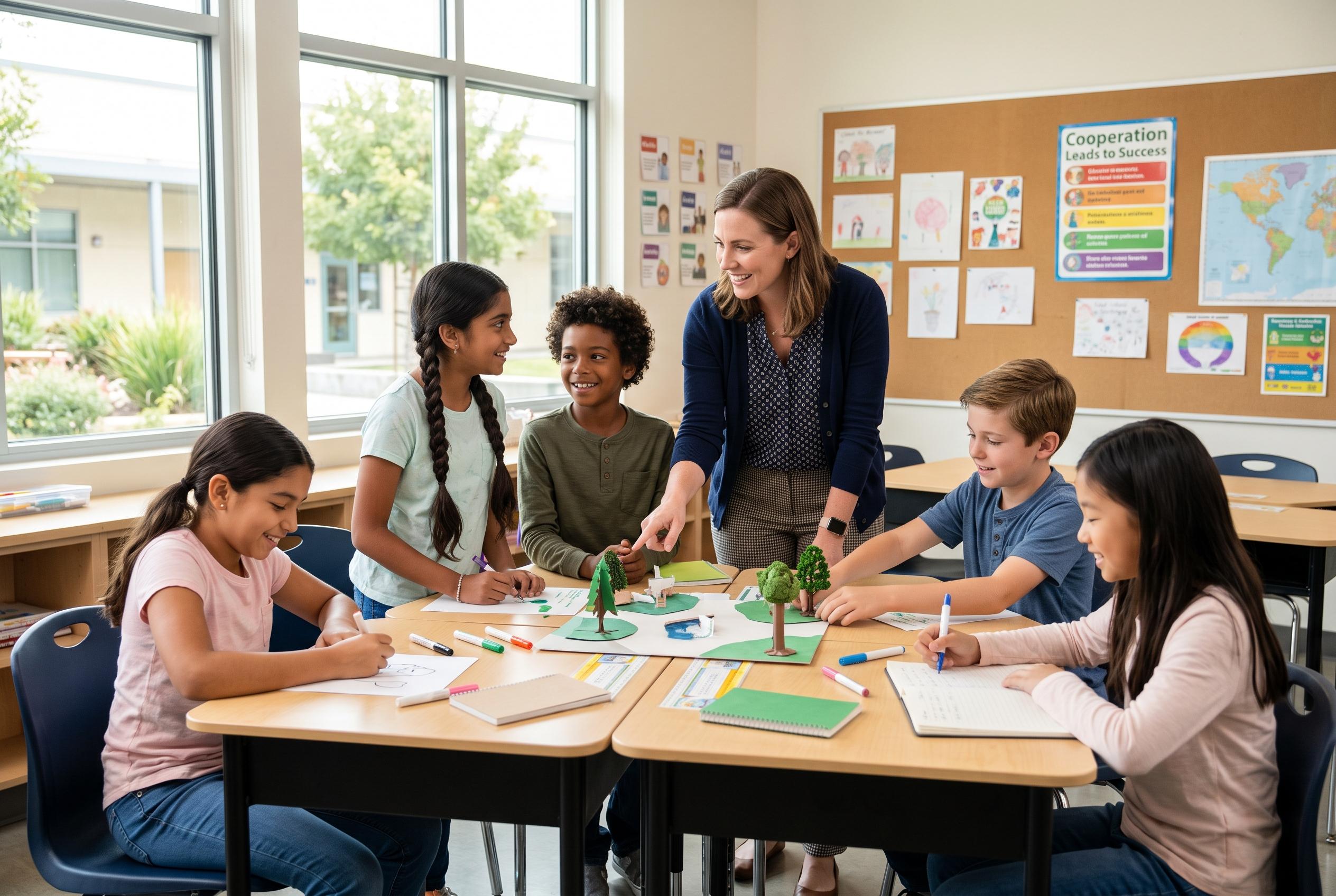

Research indicates that fostering positive relationships, consistent behaviour, and psychological safety in classrooms enhances student achievement, attendance, and motivation, underscoring the importance of a supportive school environment.
The start of a school year often sends teachers back to lesson plans, standards, room layouts and routines. Yet, as education writers and school climate researchers have long noted, those practical tasks matter most when they sit inside a classroom where students feel known, respected and secure. A positive environment does not replace academic rigour; it makes it possible.
That begins with relationships. Educators who greet students by name, ask about their interests and families, notice when a child is missing and follow up with caregivers send a clear signal that each student counts. Former president Theodore Roosevelt captured that idea in the line, “People don’t care how much you know until they know how much you care.” In practice, that means connection has to come before correction, and trust has to exist before students can be pushed to do their best.
Research and state guidance point in the same direction. The California Department of Education says supportive relationships and clear expectations are linked with stronger achievement, better attendance and fewer social-emotional problems, while crisis prevention educators note that a healthy school climate is associated with higher engagement and improved academic outcomes. Studies published in Frontiers in Psychology have also found that when students experience psychological safety, meaning they feel able to take interpersonal risks without fear, participation and learning improve.
Culture also depends on consistency. Students do better when expectations for behaviour, attendance, participation and work quality are steady and predictable. Catholic Schools NSW says respectful behaviour reduces disruption, protects teaching time and supports stronger teacher-student relationships. For teachers, that means being fully present, planning lessons that invite effort, adapting instruction when students need more support and bringing a calm, positive presence to the room each day. The message is simple: when adults create a classroom that is safe, structured and encouraging, students are more likely to grow in confidence, resilience and motivation.
Disclaimer: This content is for informational purposes only and is not intended to be a substitute for professional medical judgment, advice, diagnosis, or treatment.