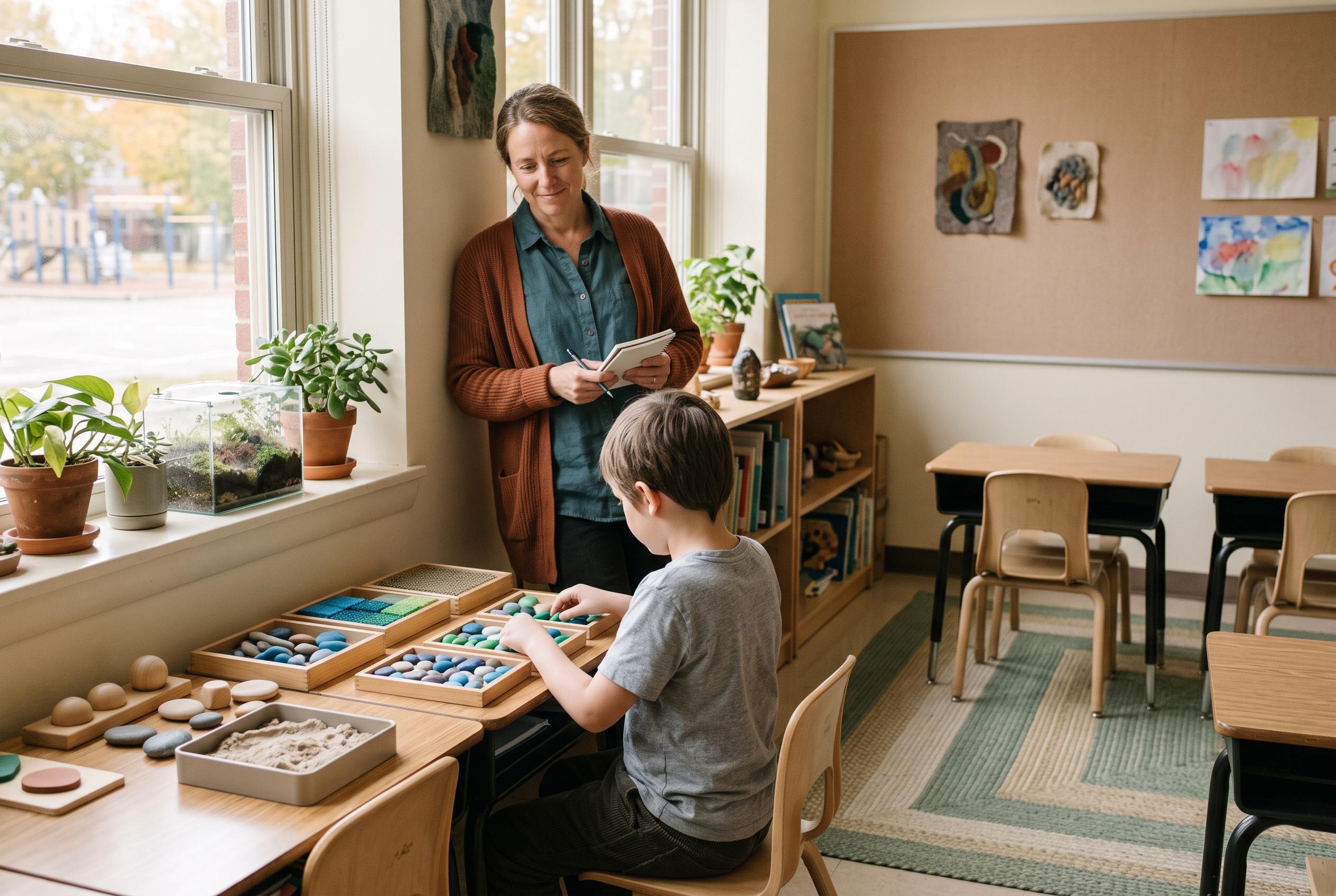

Educators can foster a safe, trusting environment for autistic pupils by prioritising patience, observation, and respect during the early weeks of the new school year, supporting meaningful engagement and learning.
The start of a new school year can leave educators trying to do everything at once: set routines, begin IEP work, introduce visual schedules and establish expectations, all while learning the personalities of children they have only just met. For autistic pupils, that first stretch matters especially because comfort, predictability and trust shape whether a classroom feels safe enough for learning to begin.
One of the simplest ways to build that trust is to watch before you lead. Rather than immediately turning every activity into a teaching moment, educators can spend time noticing what a child chooses, repeats and enjoys when left to explore. Research on autism support in educational settings suggests that consistency, patience and small, relationship-based interactions, such as greeting students by name and spending one-to-one time with them, can help create openness and warmth.
That same principle applies when joining in play. The Hanen Centre advises adults to observe a child’s interests, enter the activity without taking it over, and wait for a response. That can mean commenting on a spinning wheel, building alongside a child, or joining a repeated sequence rather than trying to redirect it. Interest-led interaction can create a more natural back-and-forth, while also showing the child that their preferences matter.
It also helps to respect the way autistic children play, rather than assuming it must look more typical to be meaningful. A child may line up objects, focus on movement, or repeat the same pattern over and over. Guidance for educators from specialist autism resources suggests treating play as a skill to be understood and supported, then gently expanded only after the adult has joined at the child’s level. That approach can support language, flexibility and social development without asking the child to give up what feels regulating or enjoyable.
Perhaps most importantly, connection and regulation are part of the same relationship. When teachers notice rising noise, offer headphones, allow space or stay quietly nearby during distress, they send a clear message: the child’s body signals are being heard. A growing body of education research suggests that these kinds of patient, responsive interactions help build trust. For families and teachers alike, the aim is not compliance for its own sake, but a classroom experience in which autistic children feel known, respected and safe enough to learn.
Disclaimer: This content is for informational purposes only and is not intended to be a substitute for professional medical judgment, advice, diagnosis, or treatment.