
Lizzie Assa highlights how fostering independent play by stepping back supports children’s confidence, resilience, and social skills, with implications for parents and educators alike.
Independent play is doing more than keeping a child occupied. As Lizzie Assa, founder of The Workspace for Children, argues, it is one of the earliest places where children begin to build self-trust. When a child is allowed to lead the game, solve small problems and decide what happens next, they practise confidence in a form that can later show up in much bigger moments, from bouncing back after a fall to managing time without constant direction.
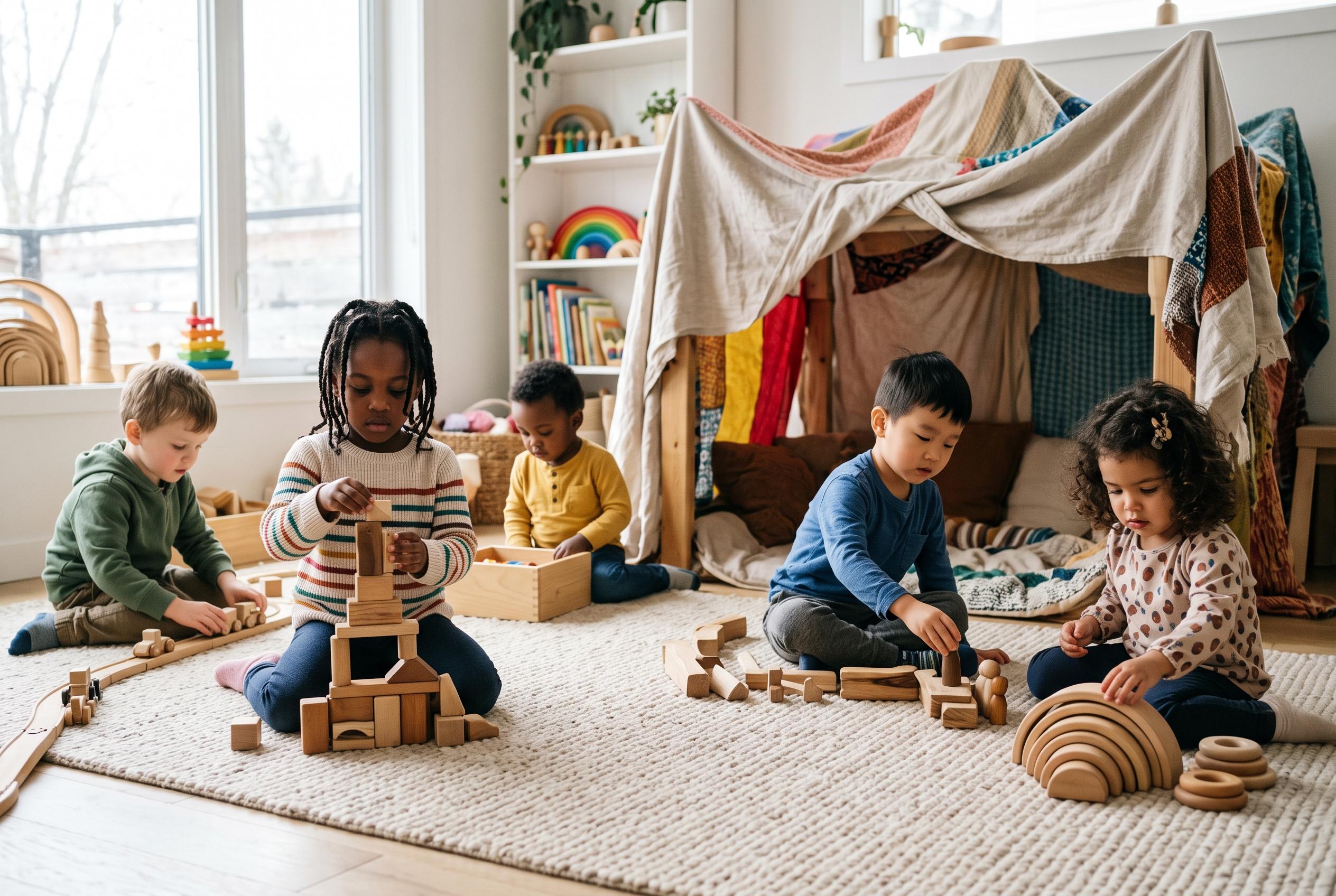
That approach requires restraint from adults, which is often the harder task. Assa says parents do not need to become the storyteller, director or constant entertainer. Instead, they can support play by stepping back, answering a child’s invitation with curiosity and resisting the urge to complete every tower, script every scene or fix every frustration. The CDC has made a similar case in its guidance for parents, saying child-led play works best when adults limit questions and instructions and give children consistent time and space to lead.
Assa also pushes back on the idea that “enough” parenting means constant input. In her view, enough can be as simple as a few undistracted moments of real connection each day, a calm car ride home or a home set up so a toddler can reach a cup and try for independence. That thinking lines up with advice from WebMD, PBS KIDS for Parents and Psychology Today, which all stress routine, open-ended toys, realistic expectations and clear boundaries as ways to help children build autonomy. Healthline and the American Academy of Pediatrics have likewise noted that unstructured play supports emotional, social and cognitive growth.
For teachers, Assa says the goal is not to pile on more activities but to build a classroom culture that feels safe, familiar and responsive. She favours sturdy, open-ended materials such as crayons, blocks, dough, dolls and loose parts, which can be used in different ways as children grow. Rather than organising lessons around distant themes, she encourages educators to talk about what children actually experienced that day, because those conversations tend to hold attention and make children feel known.
She also sees healthy risk-taking as essential. Children, she says, need chances to test themselves, get it wrong and try again, provided adults help them stay safe. That may mean turning a sharp warning into a shared rule, or explaining a boundary in a way a child can understand and help shape. The result, Assa suggests, is not just safer play but a stronger community, where children learn to look after themselves and one another.
Some of the most powerful moments, she adds, are the ordinary ones adults tend to rush past: a toddler pouring water, a preschooler ordering at a bakery, a child trying something a little beyond their current skill. In those moments, the lesson is not perfection. It is capability. And that, Assa believes, is where self-trust begins.
Disclaimer: This content is for informational purposes only and is not intended to be a substitute for professional medical judgment, advice, diagnosis, or treatment.