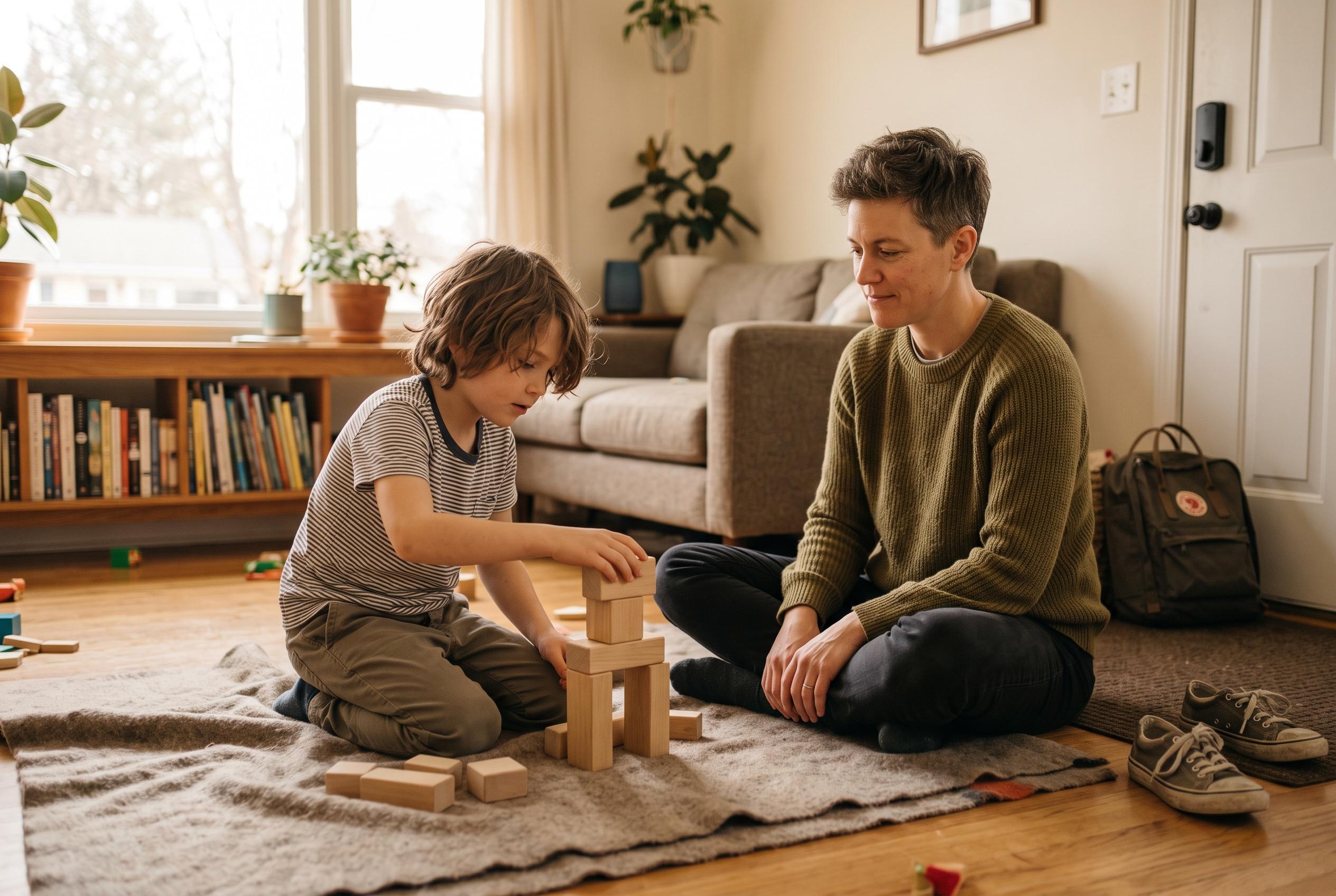

Expert advice urges parents to reconsider the rush to fill every spare moment with activities, highlighting the importance of downtime and unstructured play for children’s mental health and creativity.
Parents often assume that a fuller diary means a better childhood, but the latest episode of “Parental Control” argues for a more careful balance. In the discussion, Ellie Thompson speaks with education specialist Katharine Radice about a question many families quietly wrestle with: how many clubs and activities are enough before enrichment starts to look like overload?
Radice, who has more than 20 years’ experience working with teenagers, families and schools, brings a broad perspective shaped by classroom teaching, senior leadership and pastoral work in Cambridge. The episode draws on her experience advising schools in the UK and overseas, and on her work as the author of “The Parent’s Guide to Exam Stress”. The conversation explores why parents often feel pressure to fill every spare hour, even when children may simply need more rest, more choice and more time to think.
That tension is familiar to child-health experts. Children’s Hospital Colorado has warned that overscheduling can contribute to stress and burnout, while limiting the kind of unstructured play that helps build creativity and problem-solving skills. WebMD and GreatSchools have both noted that extracurricular activities can still be valuable, supporting confidence, belonging, social development and, in some cases, academic performance. The challenge, the episode suggests, is not whether activities matter, but how many can be sustained without crowding out downtime.
The discussion also raises a point many parents find harder to accept: boredom is not always a problem to be solved. It can give children room to unwind, explore interests on their own terms and recover from the pressure of constant performance. Radice’s message is ultimately a restrained one , clubs can enrich a child’s life, but a packed timetable should not become the default measure of a happy or successful upbringing.
Disclaimer: This content is for informational purposes only and is not intended to be a substitute for professional medical judgment, advice, diagnosis, or treatment.