


A nine-year-old’s decision to stop eating animal products need not become a battle over the family table. Parents can respect emerging convictions while teaching nutrition, flexibility and informed choice.
A nine-year-old deciding to stop eating animal products can leave parents torn between respect and practicality. On the one hand, there is a desire to support a child’s ethical instinct. On the other, there is the ordinary job of feeding a family, broadening a child’s palate and making sure nutrition does not narrow along the way. The challenge is less about whether a child may hold a moral view than how much room that view should be given at this age.
Developmental psychology suggests that this kind of reasoning is not unusual. Lawrence Kohlberg’s theory of moral development, as summarised by Simply Psychology, describes younger children as often thinking first in terms of rules, rewards and punishment, before gradually moving towards a more complicated understanding of fairness, social expectations and principle-based judgement. In that light, a child who objects to meat may not simply be being difficult. She may be testing out an emerging moral framework and trying to align what she eats with what she believes.
That does not mean parents should hand over complete control of the dinner table. Alison Gopnik, in “The Gardener and the Carpenter”, argues that children are not projects to be engineered into a fixed outcome. Her view, echoed in commentary on the book, is that parents do better when they create a supportive environment in which children can explore, rather than forcing a predetermined result. Applied to food, that approach means making space for a daughter’s values without treating her current preferences as a final verdict on what she will eat for the rest of her life.
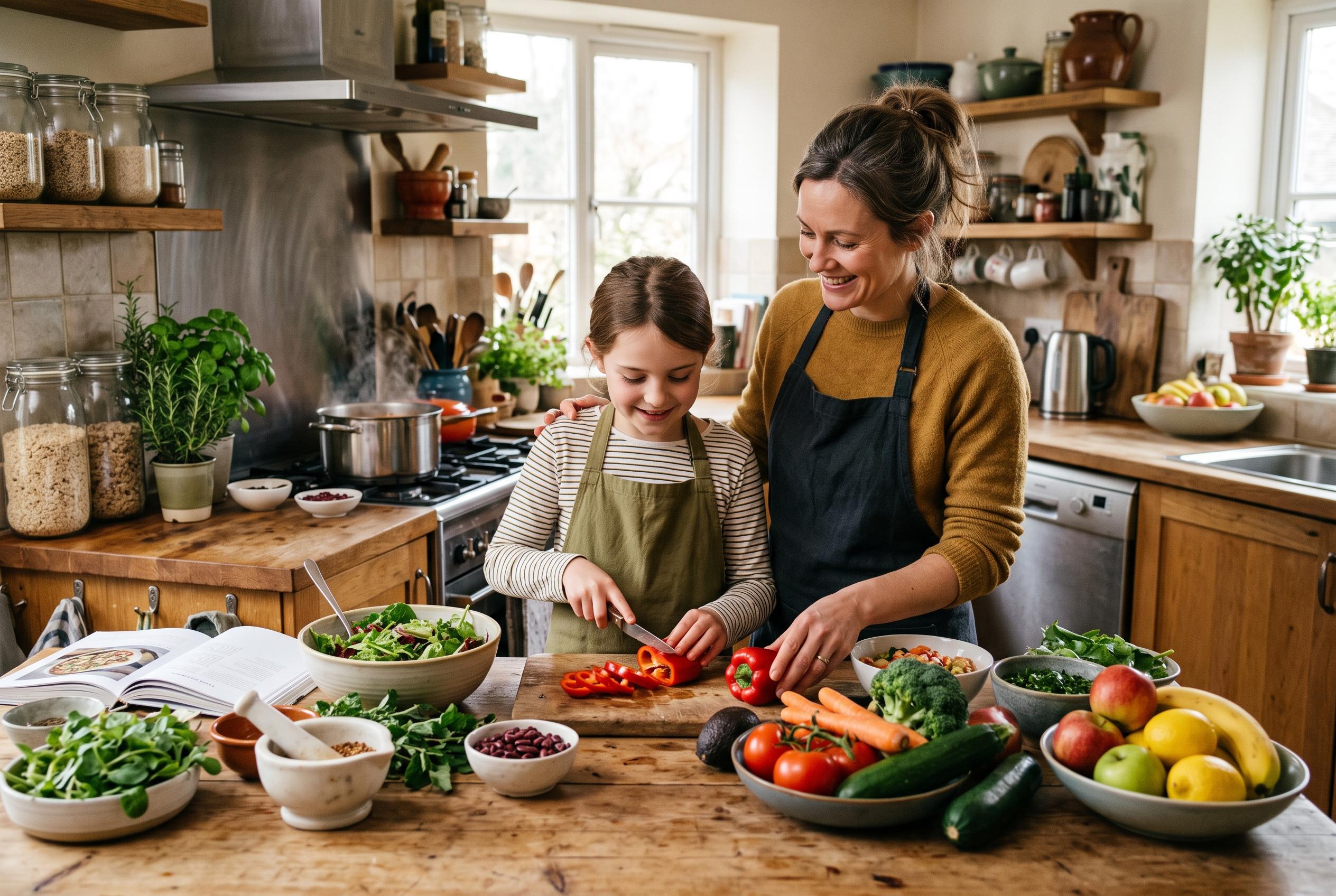
The practical response, then, is not to mock the vegan turn or to make it a battleground. Parents can acknowledge the conviction behind it and still talk plainly about what a meat-free diet requires. That includes discussing protein, iron, calcium and B12 in age-appropriate language, and helping a child understand which foods can supply those nutrients. It may also mean encouraging her to help choose and prepare meals, so the family kitchen becomes a place of learning rather than refusal.
The broader point is that a child’s ethics often develop faster than her habits. A nine-year-old may be responding sincerely to ideas about animals, fairness and harm, but she is still learning how those ideas fit into daily life. Rather than pushing her back towards beef and chicken, or treating veganism as a permanent identity, parents can use the moment to teach flexibility, balance and informed choice. In some families, that may even open the door to new recipes and tastes for everyone at the table.
If the child later changes her mind, that will not mean the lesson failed. Development is rarely linear, and food choices are especially likely to shift as children grow older, encounter new arguments and revisit old ones. What matters most is that the child learns her convictions are worth taking seriously, and that adults around her can help her pursue them without turning mealtimes into a test of loyalty.
Disclaimer: This content is for informational purposes only and is not intended to be a substitute for professional medical judgment, advice, diagnosis, or treatment.



