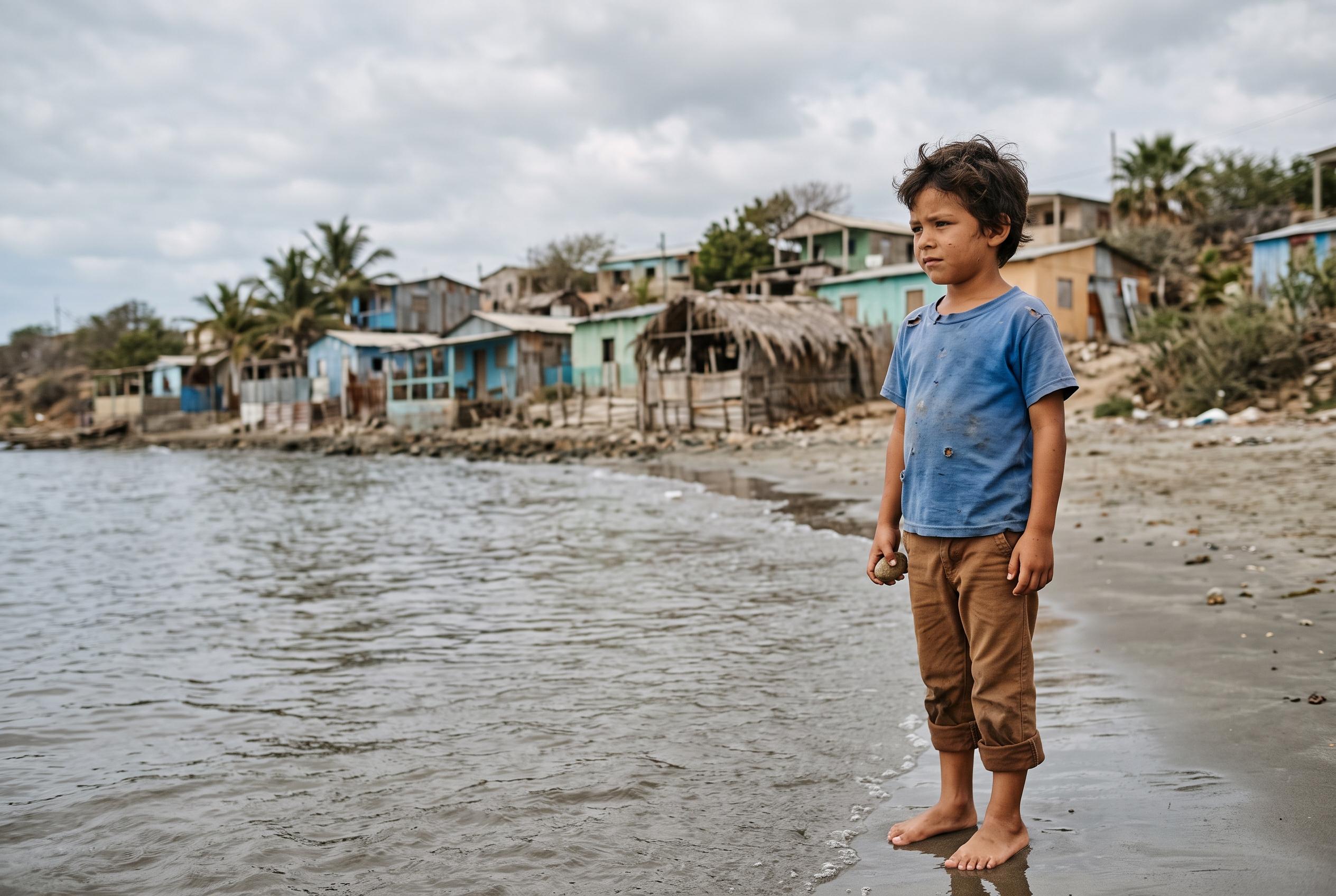

New research links marine heat waves to increased risks of malnutrition and child mortality in coastal areas of low- and middle-income countries, highlighting a growing climate-related threat to vulnerable populations.
Marine heat waves, or prolonged spells of unusually warm ocean water, may be harming child health in coastal communities across low- and middle-income countries, according to research led by Penn State and the University of North Carolina at Chapel Hill. The study, published in the Proceedings of the National Academy of Sciences, links exposure to these events with higher risks of acute malnutrition, wasting, stunting and death among children. Researchers say the findings point to a growing climate threat that extends well beyond the sea itself. The study’s authors argue that warming oceans can disrupt fish stocks, a key source of protein and micronutrients in many coastal diets, while also hitting household incomes and food prices.
Brian Thiede, a Penn State sociologist and co-author of the paper, said the effects may be felt both directly and indirectly. He said marine heat waves can alter fish populations, reduce nutrient quality and increase mortality among marine life, which can weaken food supplies for fishing communities. He added that these shocks can also reduce earnings for fishers and make food and health care harder to afford. The researchers say this matters because many coastal populations depend on the ocean not just for food, but for work and trade as well.
To examine the link, the team combined children’s and women’s health data from 9,813 coastal sites in 36 countries with global sea-surface temperature records. They then tracked heat-wave exposure in nearby waters over the months and years before health outcomes were measured. According to the paper, a one-standard-deviation rise in marine heat-wave exposure over two years was associated with a 5.4% increase in the odds of child mortality, a 6.5% rise in wasting and an 8.8% rise in stunting. The effect was strongest in places that rely heavily on small-scale fishing, as well as in urban areas, where price shocks can still quickly affect what families can buy.
The authors say the results strengthen the case for treating coastal communities as a distinct group in climate and health policy. They suggest that nutrition support, safety-net programmes and early-warning systems that use marine temperature forecasts could help target aid before conditions worsen. UNICEF has separately warned that heatwaves are already intensifying hunger, illness and disruption for children around the world, and the new study adds a marine dimension to that risk, showing how warming oceans can ripple through food systems and child survival in poorer countries.
Disclaimer: This content is for informational purposes only and is not intended to be a substitute for professional medical judgment, advice, diagnosis, or treatment.