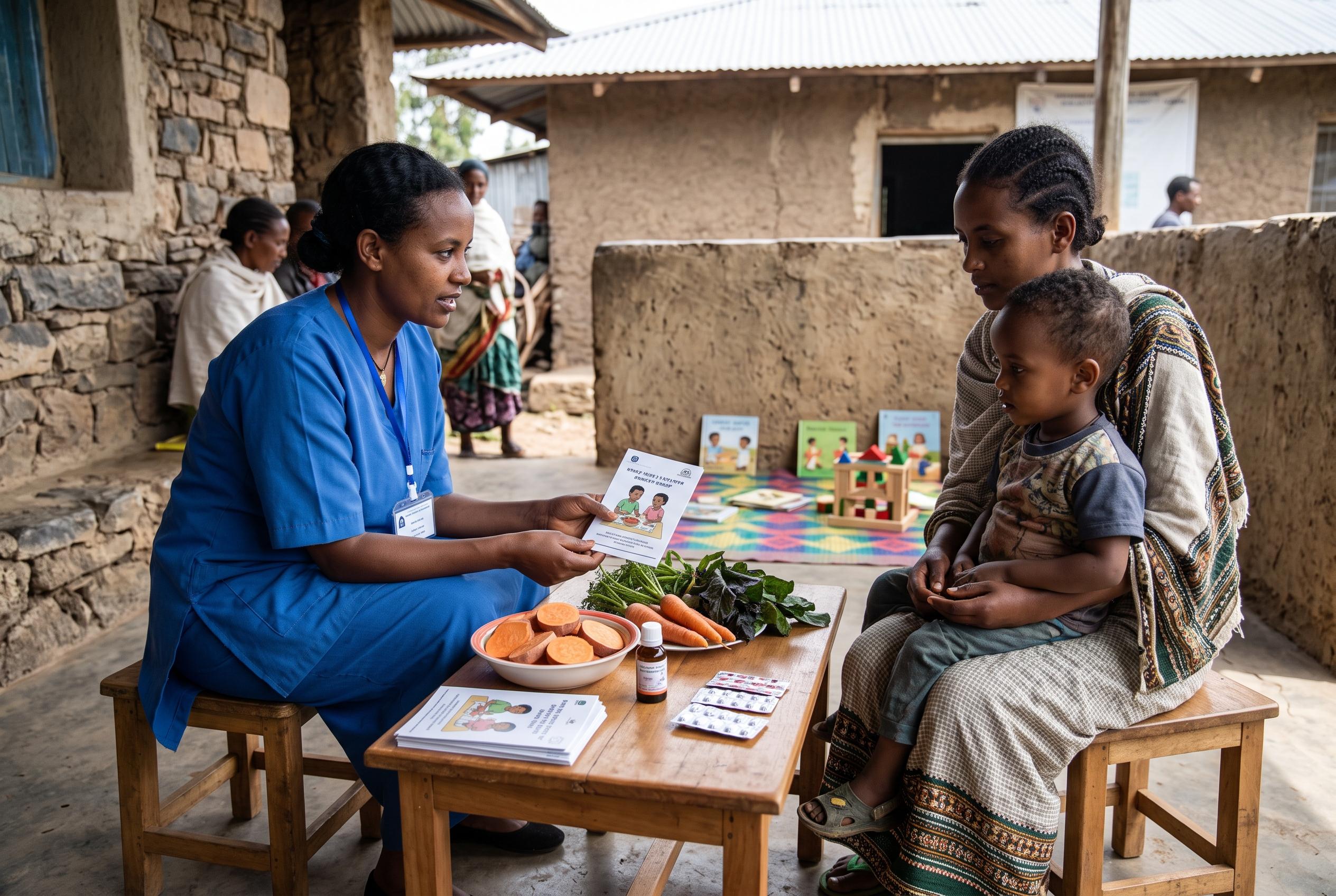

A community-based study in north-west Ethiopia reveals ongoing clinical vitamin A deficiency among preschoolers, highlighting age-related risks and missed opportunities for postnatal nutrition interventions.
Clinical vitamin A deficiency remains a public health concern among preschool children in Finote Selam Town in north-west Ethiopia, according to a community-based study published in Wiley. Researchers found the condition in 3.7% of children aged 24 to 59 months, a level that falls within the World Health Organization’s range for a moderate public health problem. The study relied on clinical eye examinations rather than blood tests, so it captures visible disease rather than the full burden of low vitamin A status.
The survey covered 591 children and recorded 22 cases in total. Night blindness was the most common sign, followed by Bitot’s spots, with one case of superficial corneal ulceration. There were no cases of conjunctival xerosis, corneal xerosis or corneal scarring. The authors said the findings point to the need for practical prevention measures and for larger biochemical studies to measure serum retinol, the laboratory marker that reflects vitamin A stores more directly.
The study also found that risk rose with age. Children aged 48 to 59 months were more likely to have clinical vitamin A deficiency than those aged 24 to 35 months. Illness in the previous two weeks was also associated with higher odds, as was the absence of postnatal care visits by the child’s mother. The researchers argued that routine postnatal contact could be used more effectively as a checkpoint for child nutrition and eye health.
The new findings fit into a broader Ethiopian pattern. A national survey published in PubMed reported much higher levels of deficient serum retinol, along with visible signs such as Bitot’s spots and night blindness, while also showing that older children and boys were at greater risk. A later systematic review and meta-analysis likewise found that vitamin A deficiency indicators in Ethiopian preschool children frequently exceeded WHO thresholds. Other Ethiopian studies have highlighted uneven vitamin A supplementation coverage and wide regional differences in access to vitamin A-rich foods, suggesting that local dietary patterns and health-service contact remain central to prevention.
Disclaimer: This content is for informational purposes only and is not intended to be a substitute for professional medical judgment, advice, diagnosis, or treatment.