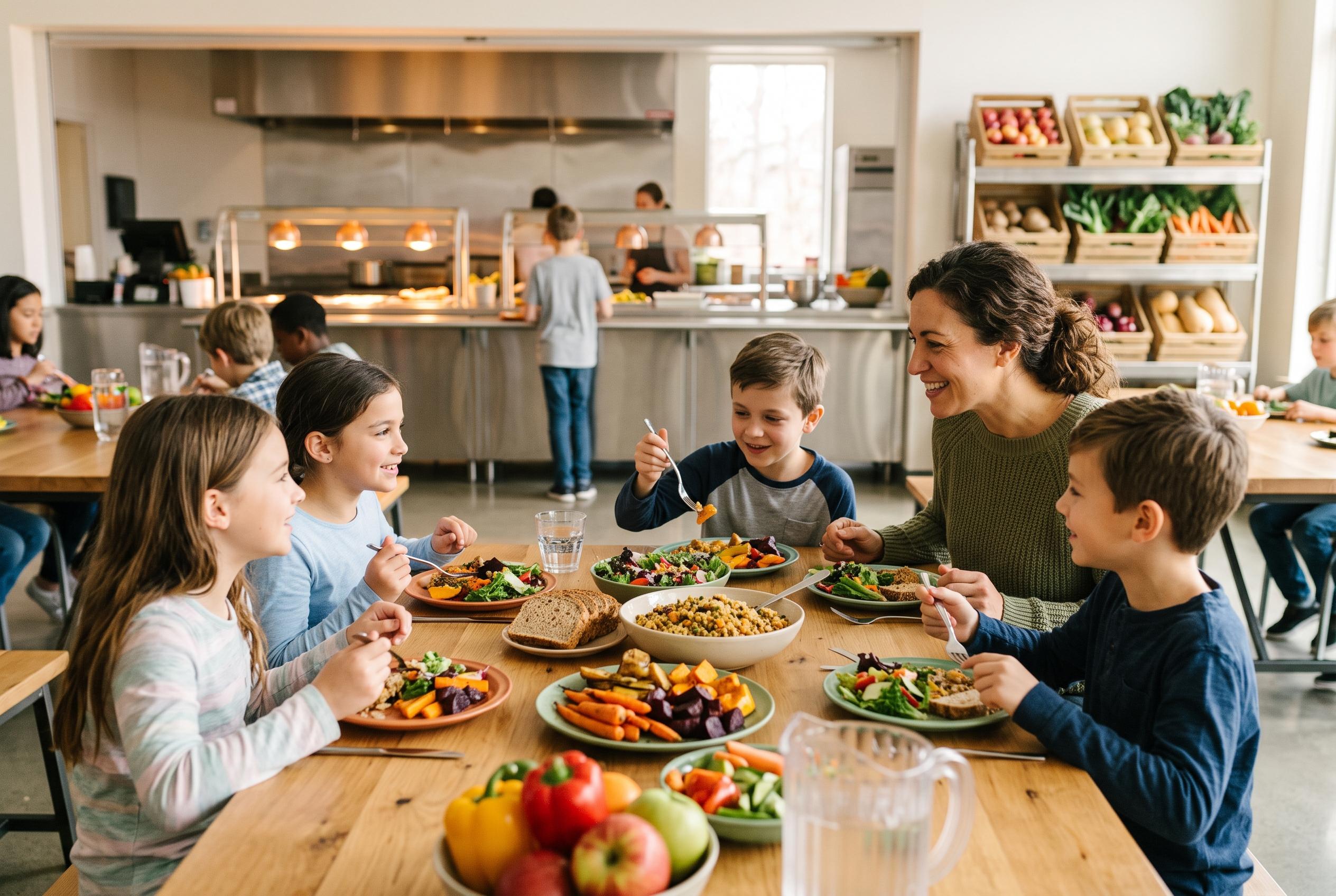

The US Department of Agriculture and Health and Human Services introduce a multifaceted £70 million programme to enhance school cafeterias, promote local produce, and improve children’s nutrition through infrastructure upgrades and strengthened farm-to-school connections.
The US Department of Agriculture and the Department of Health and Human Services have launched a new push to reshape school meals, tying together local farm purchases, kitchen upgrades and a broader drive to serve what the agencies describe as more nutritious food to children. Announced in Washington on Monday, the initiative, called Harvest to Hallways, was unveiled by Agriculture Secretary Brooke L. Rollins and Health Secretary Robert F. Kennedy Jr. alongside farmers, students, chefs and school nutrition staff.
At the centre of the plan is up to $70 million for school cafeteria infrastructure, money that could help districts buy cold storage, stoves and other equipment, improve food safety and expand breakfast programmes. The Agriculture Department also plans to step up outreach on an existing procurement route known as the Local Option, which can allow schools to be reimbursed for buying locally produced foods. Officials said they will pair that effort with webinars and other guidance so more districts can use it.
The department is also promising up to $25 million in additional Patrick Leahy Farm to School Grants for fiscal 2026. That programme has already supported projects connecting schools with nearby producers, including work in Pennsylvania that the USDA said reached 175 schools and nearly 300,000 students. Earlier this year, the department said it had awarded nearly $20 million to projects aimed at bringing more local food into school meals while widening markets for farmers and food producers, and in July it said the fiscal 2026 grant round had become the largest single-year investment in the programme’s history.
The initiative also reaches beyond farm procurement. USDA and HHS want more states to adopt the Pledge for Healthier School Meals, which is aligned with the 2025-2030 Dietary Guidelines for Americans. HHS said it will put $30 million into research to identify cost-effective ways to improve the nutritional quality of school meals. Rollins said the goal is to make it easier for schools to serve American-grown food, while Kennedy said the effort is meant to bring “real, nutrient-dense food” back into cafeterias.
Disclaimer: This content is for informational purposes only and is not intended to be a substitute for professional medical judgment, advice, diagnosis, or treatment.