

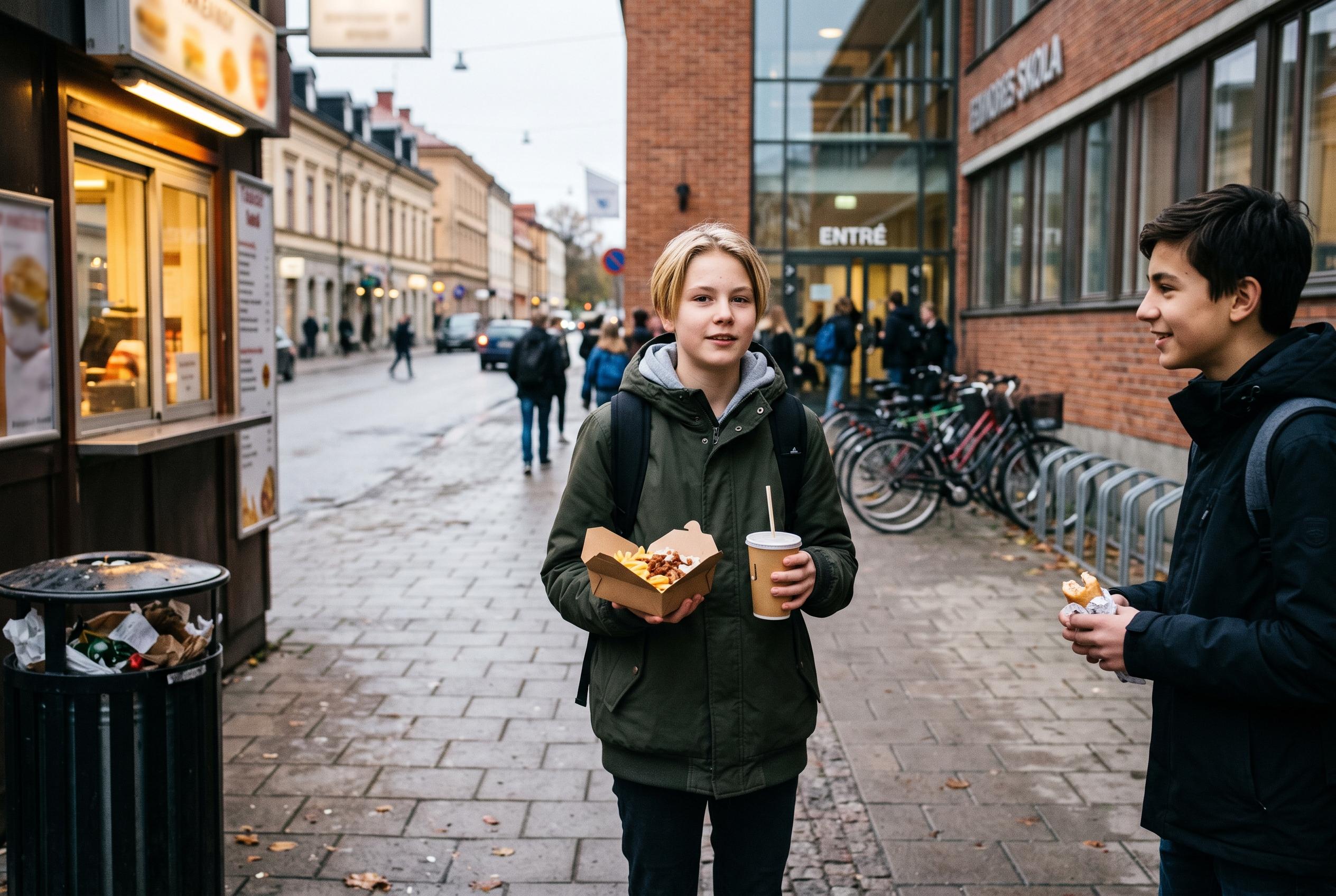

A Swedish study reveals that over 20% of teenagers’ meals during school hours are eaten off campus, with these choices more likely to be unhealthy, highlighting the importance of understanding food environment influences beyond school premises.
Researchers in Sweden say a substantial share of adolescents’ eating and drinking during the school day happens beyond the school gates, with those choices more likely to be unhealthy than meals and snacks taken on campus. The findings, from Karolinska Institutet and published in BMC Public Health, add detail to a question that school nutrition policy often overlooks: not only what pupils eat, but where they eat it.
The study followed 483 students aged 13 to 19 at two schools in central Stockholm. Between 2019 and 2021, and again in 2024, the teenagers submitted 4,562 photographs of food and drinks through research apps. Each image was tagged with time and GPS data, allowing the team to map eating patterns during school hours and separate food consumed inside school from food taken elsewhere.
According to the researchers, 21% of all meals and drinks reported during the school day were consumed outside school grounds. Those off-site choices were also less healthy: 65% of the items eaten away from school were classified as unhealthy, compared with 43% of food and drink consumed on school property. Hanna Wieslander, a doctoral student at Karolinska Institutet, said the results show that a large part of adolescents’ daytime intake happens away from school, underscoring the importance of the wider food environment.
The study also found clear differences in what students chose in different settings. Meals eaten at school were more likely to contain several components of a full meal and to include vegetables and fish, although they also contained more red and processed meat than food eaten elsewhere. Snacks were often judged unhealthy regardless of location. Drinks followed a similar pattern: water was the main beverage at school, while sugar-sweetened drinks appeared more often outside school. The researchers said the existence of free school meals does not necessarily mean pupils will eat them on site, and they suggested that future work should examine why teenagers decide to eat in or out of school and how surrounding food outlets shape those decisions.
Disclaimer: This content is for informational purposes only and is not intended to be a substitute for professional medical judgment, advice, diagnosis, or treatment.



