

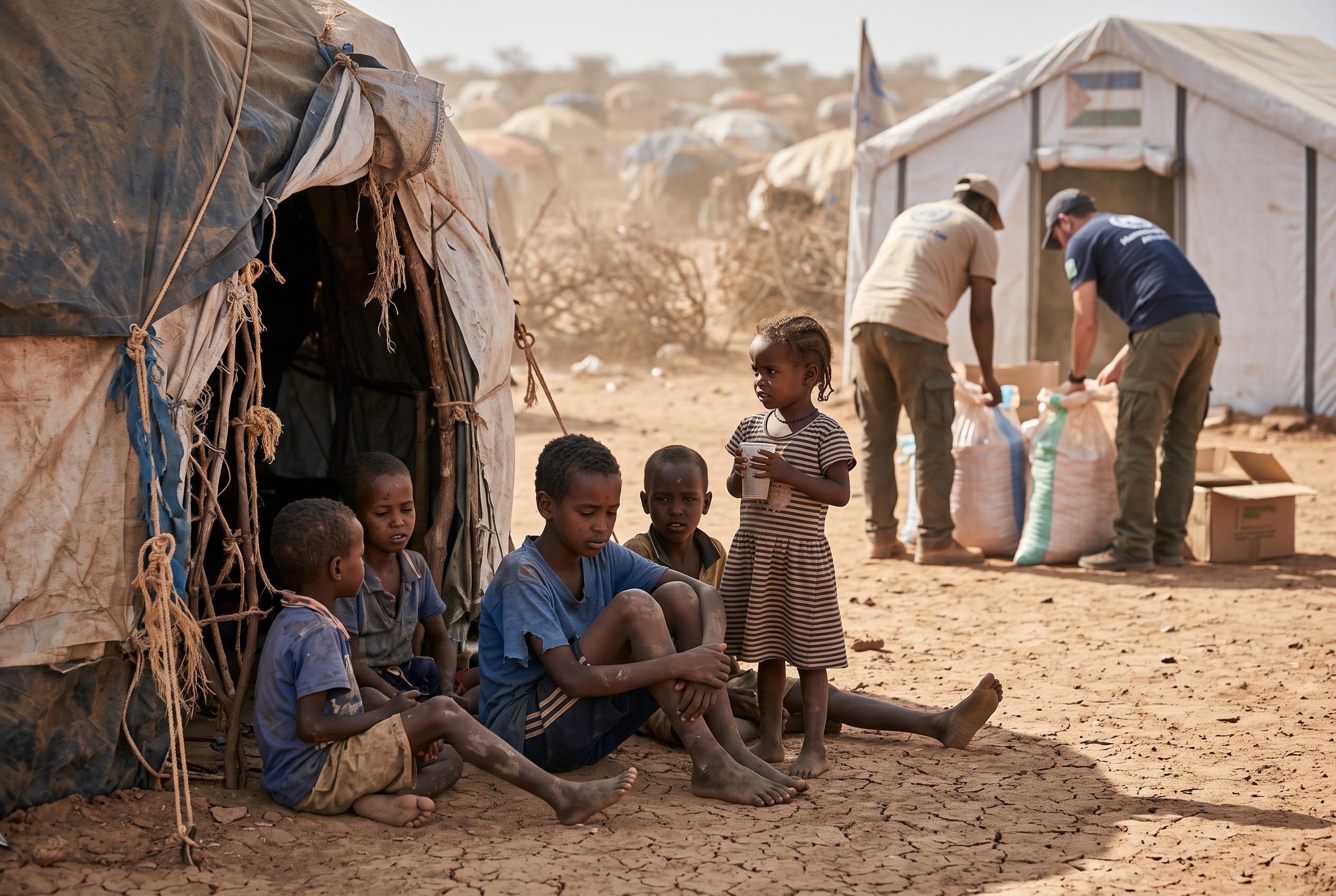

Acute malnutrition has crossed famine thresholds in two South Darfur displacement camps, with aid agencies warning that war, drought and blocked relief routes are pushing more children towards death.
The International Rescue Committee has warned that famine risks are widening across parts of Sudan, as acute malnutrition among children has crossed the famine threshold in two displacement camps in South Darfur and child deaths in assessed locations have reached emergency levels. The aid group said the latest alert from the Integrated Food Security Phase Classification points to worsening hunger in parts of Darfur and Kordofan, deepening fears that the country’s war and climate shocks are pushing more families towards catastrophe. UNICEF and the World Food Programme said last year that famine had already been confirmed in North Darfur’s Zamzam camp, where more than 400,000 displaced people have been sheltering.
According to the International Rescue Committee, more than three years of fighting, together with severe drought intensified by El Niño, have emptied food stores, driven up prices and left millions of Sudanese with shrinking access to basic supplies. The group estimated that about 825,000 children under five face severe acute malnutrition, a life-threatening condition that requires urgent therapeutic feeding and medical care. It also said more than 5 million people in Sudan are already living with emergency levels of hunger, while aid agencies are struggling to meet needs that now outstrip their capacity.
The warning comes against the backdrop of a wider hunger crisis that the IPC flagged in June, when it said 14 areas in Sudan were at risk of famine, including parts of Darfur, Kordofan, Al Jazirah and Khartoum. In August, the United Nations and UNICEF confirmed famine in North Darfur’s Zamzam camp, the first such confirmation in the region in more than seven years, and later reporting by the Associated Press said famine was spreading to other camps in North Darfur and to the Western Nuba Mountains.
Aid workers say the danger is being driven by more than drought alone. Fighting has disrupted farming for four seasons, forced producers from their land, damaged markets and roads, and made it harder for relief convoys to reach isolated communities. In North Darfur, delayed rains and dry conditions have ruined large tracts of farmland, while in areas around Tawila, where more than 650,000 displaced people are already sheltering, additional arrivals could further stretch limited water, food and health services. The IRC’s Sudan director, Richard Data, said the El Niño shock is pushing people “directly towards hunger” after years of war, and he urged donor governments to move quickly on food, health and nutrition funding.
The broader message from aid agencies and the United Nations is that emergency relief alone will not be enough if the war continues. The IRC says convoys and aid workers still face attacks and restrictions, while civilians struggle to reach markets, farms and clinics safely. The UN has called on both sides of the conflict to stop attacks on civilians and civilian infrastructure, respect humanitarian law and allow safe, sustained and unhindered access for aid deliveries. It has also urged donors to provide steadier funding for malnutrition treatment, healthcare, water and sanitation, and cash support rather than relying on short-term responses.
Disclaimer: This content is for informational purposes only and is not intended to be a substitute for professional medical judgment, advice, diagnosis, or treatment.



