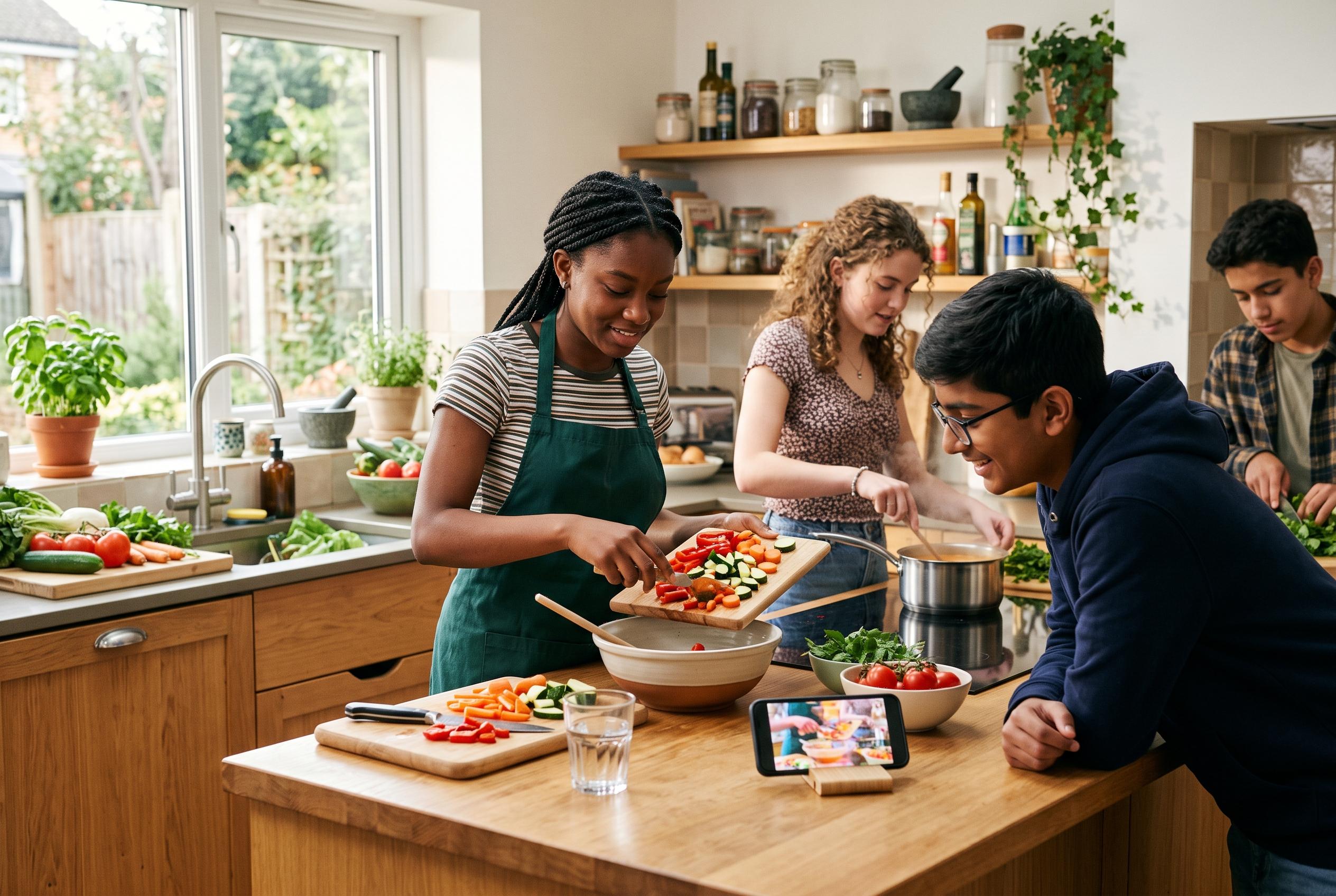

Research indicates that TikTok’s short-form food videos can both stimulate cravings and promote healthier eating among teens, highlighting its complex role in shaping young people’s dietary attitudes.
A new study suggests that TikTok is doing more than filling teenagers’ spare time: it may also be shaping what they want to eat. Researchers at the University of Minnesota, writing in the Journal of Nutrition Education and Behaviour, found that adolescents in focus groups said food clips on the app often left them feeling hungry, curious or eager to try whatever they had just seen. The study was small, but it points to a larger question about how short-form video is affecting young people’s attitudes towards food. According to the University of Minnesota and the Vice report on the study, the teens described a steady stream of recipe clips, restaurant reviews, viral food challenges and “what I eat in a day” videos.
The focus groups, which included 25 teenagers, mostly aged 15 and 16, suggested that the app’s recommendation system can intensify that effect. Once users engage with a few food videos, more of the same content tends to follow, creating a cycle that can make food seem constantly present. Some participants said that seeing dishes from other cities or countries created a strong desire to try them immediately, even when they were far beyond reach. The teens also said that creators with large followings gave food content an added sense of credibility, although many could still recognise sponsored posts when they appeared.
The findings sit alongside a broader effort at the University of Minnesota to understand Gen Z’s eating and activity habits. The school’s public health team has launched a larger, National Institutes of Health-funded study that will draw on a national sample of 2,000 young people to look at the factors shaping diet and exercise. That work reflects growing concern over weight-related health issues among adolescents and young adults, while also acknowledging that social media is only one part of a much larger picture.
Other research suggests TikTok’s influence is not wholly negative. A separate University of California, Santa Cruz study found that short food videos can encourage teenagers to learn about healthier eating, cook with family and make longer-term changes to their diets. Taken together, the studies suggest the platform can work in opposite directions: it can stir cravings and curiosity, but it can also nudge young users towards more thoughtful food choices when the content is credible, practical and shared in a family setting.
Disclaimer: This content is for informational purposes only and is not intended to be a substitute for professional medical judgment, advice, diagnosis, or treatment.