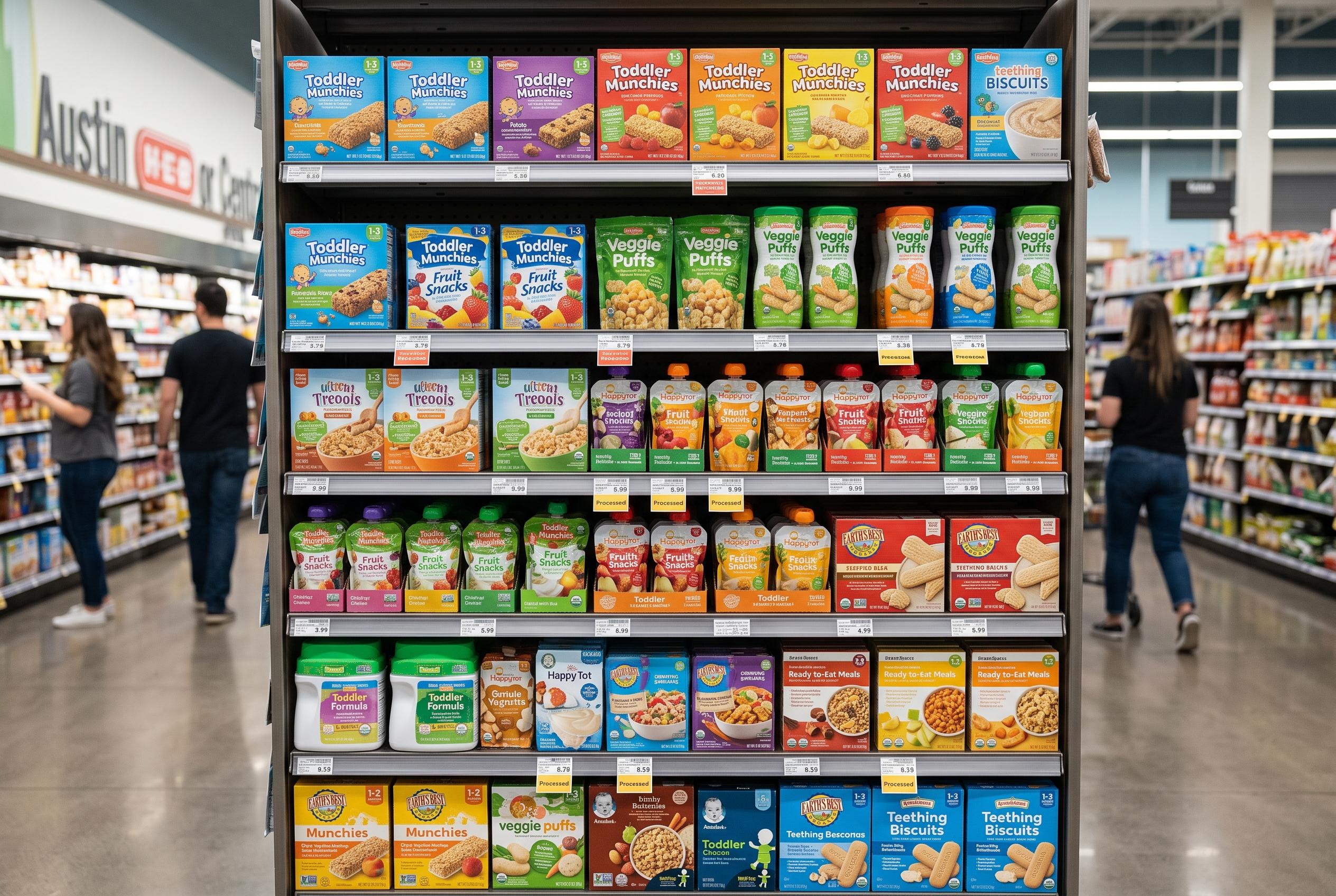

An audit of toddler foods in Austin uncovers that 81% are ultra-processed, many failing to meet WHO nutrient standards, raising concerns over early childhood diet quality.
An audit of toddler foods sold in 21 grocery stores in Austin, Texas, has found that supermarket shelves are dominated by ultra-processed products, with almost half of items failing to meet at least one World Health Organization nutrient standard. The findings, presented at the American Society for Nutrition’s Nutrition 2026 conference, add to growing concern over the quality of food marketed to children aged six to 36 months.
The research, led by Erin Hudson of the University of Texas at Austin and colleague Marissa Burgermaster, involved photographing shelves and assessing 2,783 packaged products aimed at toddlers. The analysis excluded infant formula, drinks and the sort of first-stage purées that are typically introduced as early complementary foods.
Using the Nova classification system, the researchers said 81% of the products were ultra-processed. They also found that 17% did not meet the WHO benchmark for sugar, 25% exceeded sodium limits, 11% fell short on fat and 12% missed the target for energy density. Among the products that raised the most concern were fruit purées in squeeze pouches, oat bars, macaroni and cheese meals, turkey sticks, and cheese- and peanut-based snacks.
Hudson said many parents assume foods in the baby and toddler aisle are subject to strict nutritional standards, but the audit suggested otherwise. She also noted that higher fat or calorie levels do not automatically make a food poor quality, particularly where the product is less processed and its energy comes from whole ingredients such as peanuts or beef. By contrast, she said, ultra-processed toddler foods were more likely to deliver sugar without comparable nutritional value. The study only examined packaged shelf products and did not assess what families actually prepare at home, but Hudson argued that clearer warning labels could help shoppers make better decisions and push manufacturers to reformulate products.
Disclaimer: This content is for informational purposes only and is not intended to be a substitute for professional medical judgment, advice, diagnosis, or treatment.