

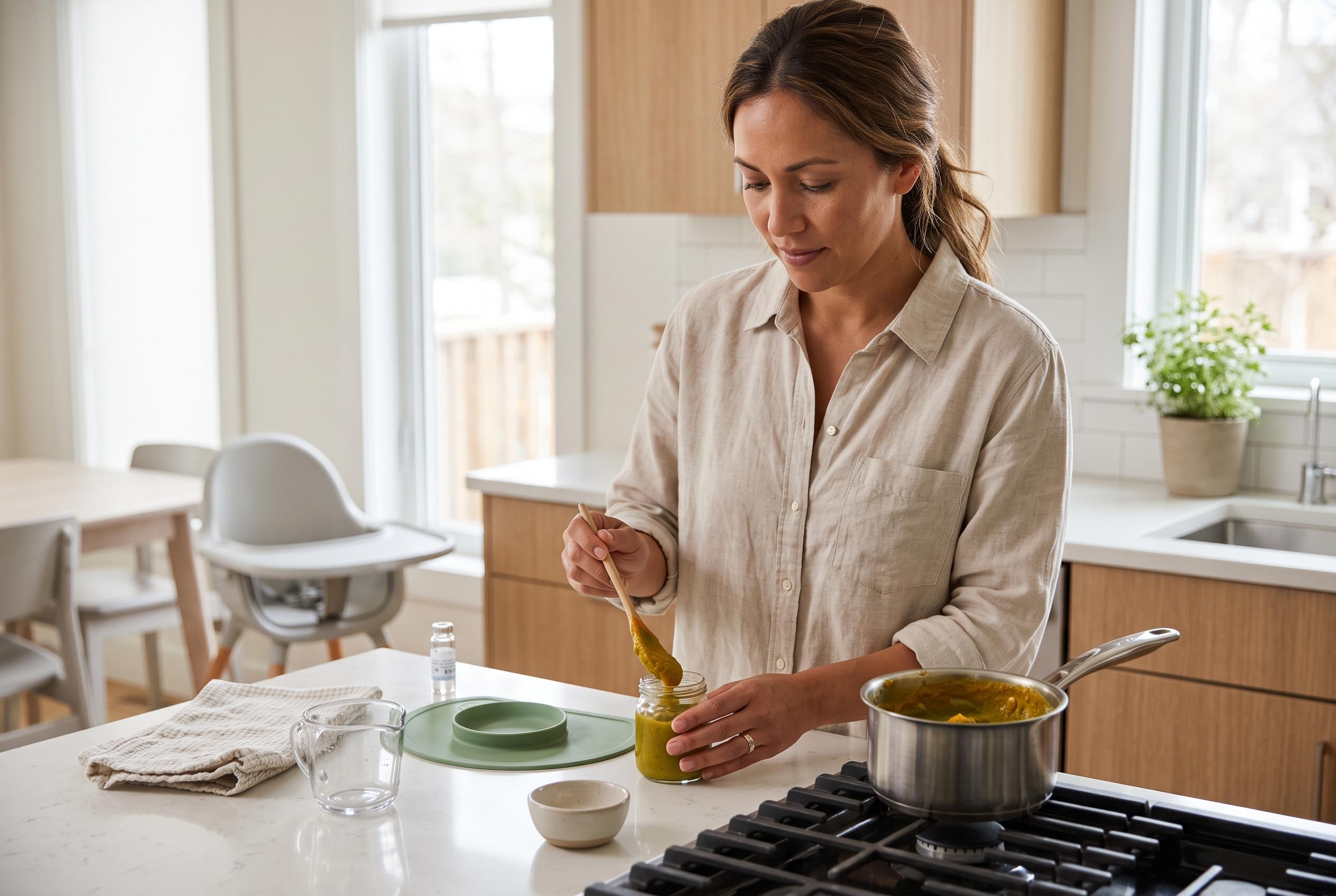

Research indicates that both store-bought and homemade baby foods remain contaminated with toxic heavy metals, prompting parents to reconsider safety strategies in infant feeding.
Parents who switched to homemade purées in hopes of avoiding contaminated commercial baby food may not be getting the protection they expected. A report highlighted by Make Food Safe says that baby meals made from shop-bought produce can still contain detectable amounts of heavy metals, including lead, arsenic, cadmium and mercury, because the contamination often begins in the soil and water where crops are grown. The report’s author, Jane Houlihan of Healthy Babies Bright Futures, said the group found no evidence that homemade baby food made from store-bought ingredients was safer than packaged baby food in terms of heavy metal exposure.
The analysis drew on testing of nearly 300 foods and found detectable heavy metals in 94% of manufactured baby foods, family foods and homemade purées made from purchased raw ingredients. Lead appeared most often, turning up in 90% of manufactured baby foods and 80% of store-bought family foods and homemade purées, while arsenic showed up in roughly two-thirds of the foods tested. Consumer Reports, summarising the Healthy Babies Bright Futures findings, said rice-based products such as rice cakes and rice puffs were among the most contaminated items, while fruits, meats and eggs were generally lower.
The concern is not just that the metals are present, but that some of the foods infants eat most often can be among the worst offenders. The report said fresh bananas had some of the lowest levels measured, while rice cakes had some of the highest. It also pointed to lower-metal options such as grits, baby food meats, butternut squash, apples, pork, eggs, oranges and watermelon. Cleveland Clinic has separately advised parents to diversify infants’ diets, use infant oatmeal instead of rice cereal and choose fresh or frozen fruit over canned fruit when possible.
Buying organic does not necessarily solve the problem. The report said contamination can come from environmental sources rather than farming method, which means organic produce may still contain heavy metals if the soil or water is affected. That is one reason the findings also apply to locally grown crops and backyard gardens unless the growing conditions have been checked carefully. For families trying to reduce exposure further, the report suggested simple swaps such as offering a frozen banana instead of a rice-based teething biscuit or rice rusk, and using peeled, chilled cucumber spears for teething relief.
The broader scientific picture points in the same direction. A 2024 study in Korea found lead in 65% of homemade baby foods it assessed and said more than half exceeded safety thresholds, while research published in 2022 found detectable arsenic, cadmium, lead and mercury in many foods made for infants, especially fruit, grain and root vegetable products. The American Academy of Paediatrics has said there is no safe level of lead exposure, underscoring why specialists continue to urge parents to focus less on whether food is homemade and more on variety, preparation and ingredient choice. When families have concerns, paediatricians can help interpret blood test results and suggest ways to limit exposure without making infant feeding more complicated than it needs to be.
Disclaimer: This content is for informational purposes only and is not intended to be a substitute for professional medical judgment, advice, diagnosis, or treatment.



