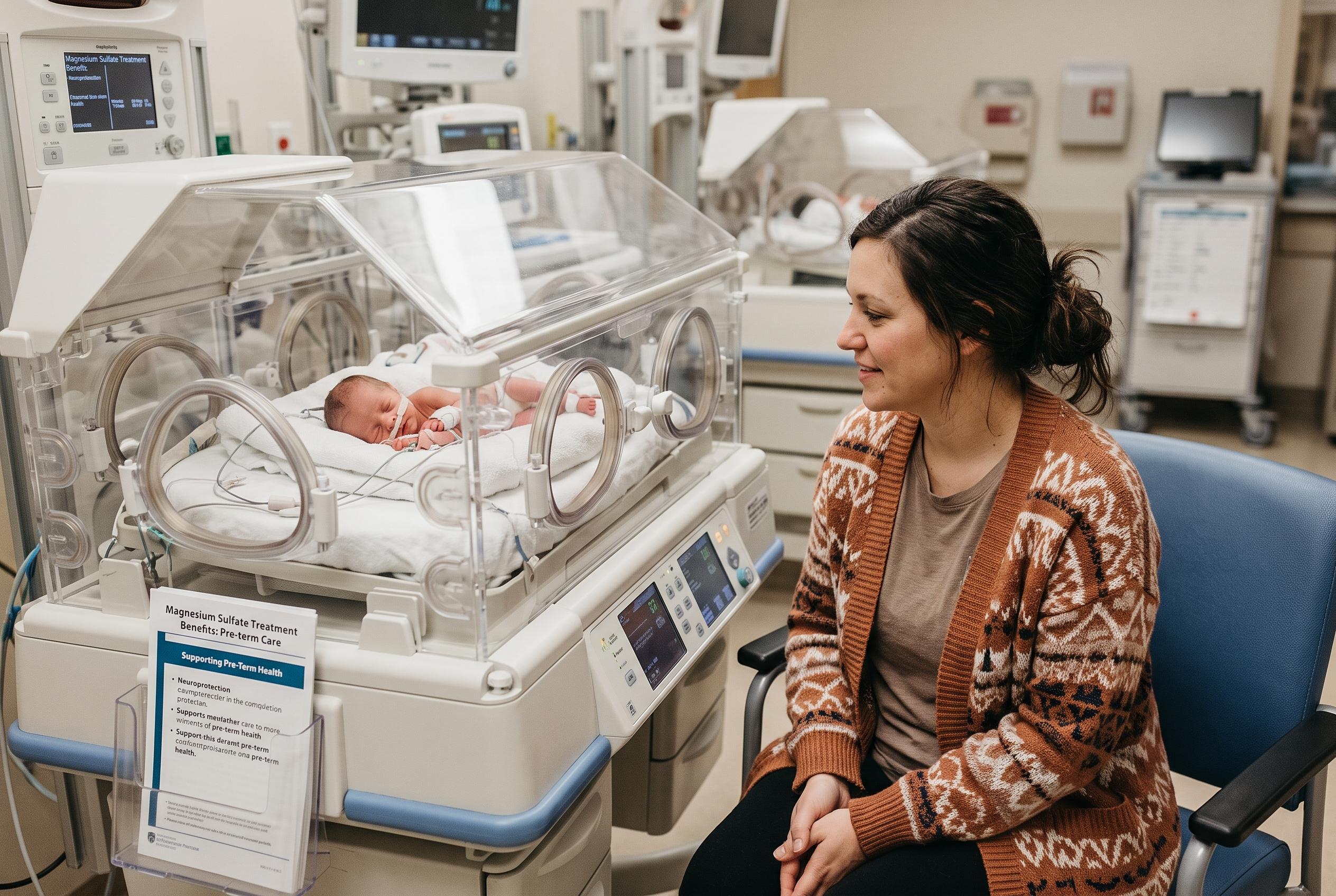

New research from South Australia supports the routine use of magnesium sulfate for women facing very pre-term delivery, showing improved child survival without cerebral palsy and other disabilities, adding to a growing body of evidence on its benefits.
New research from South Australia adds to evidence that giving magnesium sulfate to women facing a very pre-term birth can improve a child’s chances of surviving without cerebral palsy.
The study, led by Emily Shepherd at SAHMRI and the University of Adelaide and published in the American Journal of Obstetrics and Gynecology, examined children born extremely pre-term or with very low birth weight in Australia and New Zealand. It found that antenatal magnesium sulfate was linked with better outcomes at ages 2 to 3, including survival without cerebral palsy and without moderate to severe functional impairment.
Cerebral palsy is the most common physical disability in childhood and is seen more often in babies born very early. It can affect movement, posture and co-ordination, with consequences that may last for life. Shepherd said the findings were reassuring because they suggest a simple, low-cost treatment is delivering benefits in routine care, not just in clinical trials.
The latest paper fits with a longer line of evidence. A 2003 randomised trial found magnesium sulfate was associated with lower rates of substantial gross motor dysfunction, while a 2008 study reported less moderate or severe cerebral palsy in a prespecified secondary analysis. An updated Cochrane review in 2023 concluded with high-certainty evidence that the treatment reduces cerebral palsy and the combined outcome of death or cerebral palsy, supporting its use in clinical guidelines.
Disclaimer: This content is for informational purposes only and is not intended to be a substitute for professional medical judgment, advice, diagnosis, or treatment.