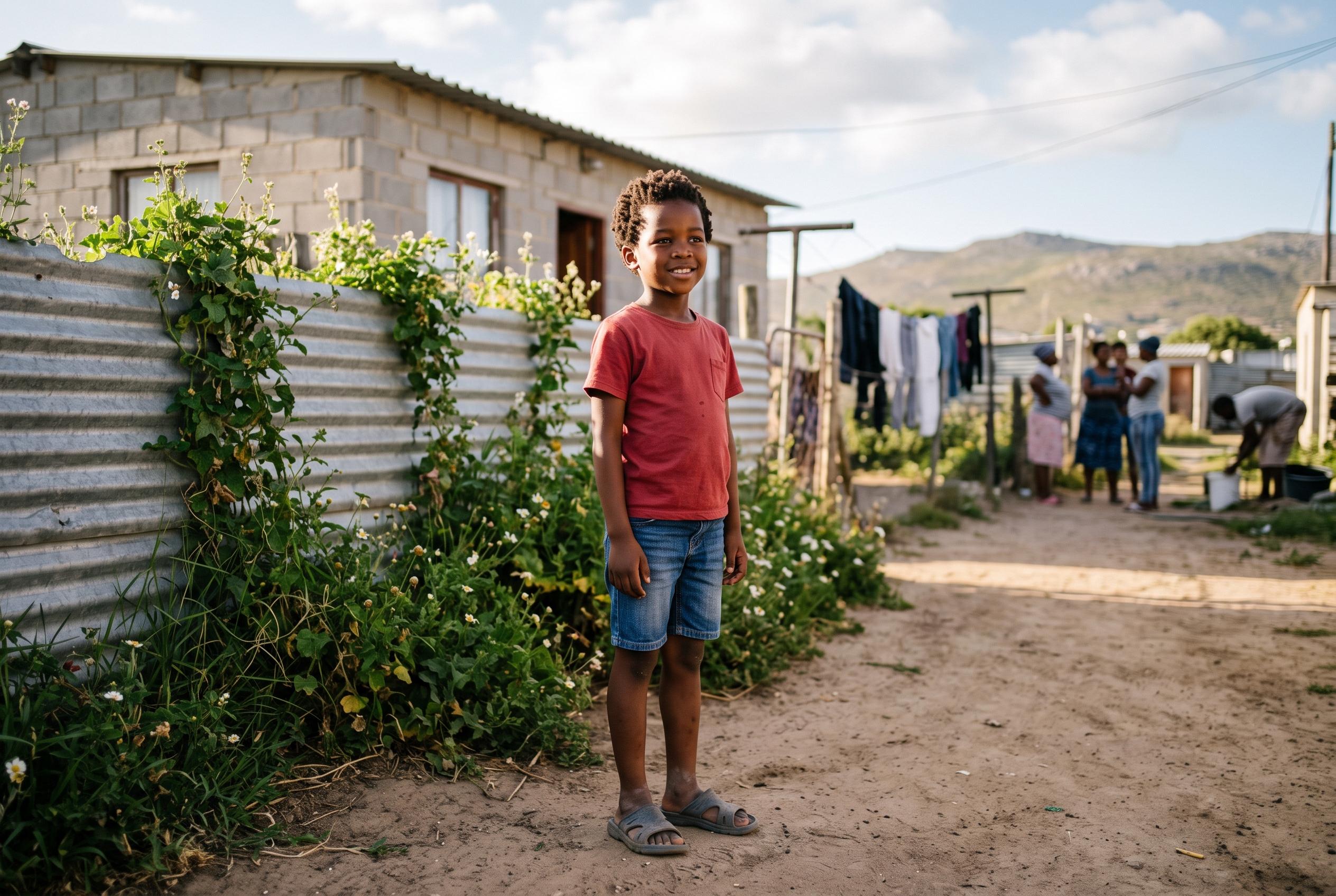

Despite efforts to improve food access, South Africa faces a persistent childhood stunting crisis driven by undernutrition, poor sanitation, and wider development challenges, prompting calls for comprehensive intervention ahead of the 2030 goal.
South Africa’s childhood height crisis is not simply a matter of inherited family traits, health experts say. It is being driven by chronic undernutrition in the earliest years of life, when bodies and brains need consistent access to protein, vitamins and minerals to grow properly. Health Minister Aaron Motsoaledi told the South African Human Rights Commission’s inquiry into food systems that 28.8% of children under five are stunted, a level far above the global average. Africa Check has noted that the problem has stayed stubbornly high for two decades, with little sign of sustained improvement.
That reality challenges the common assumption that feeding children until they are full is enough. The Citizen reported that StartWell Foundation, a child nutrition organisation, says South Africa does not have a simple food shortage so much as a nutrition shortage. Its Tshimbi Mokgele said many communities misunderstand stunting as something children will naturally outgrow, when in fact the damage often begins long before it is visible and can shape lifelong health.
The limits of current feeding schemes are part of the problem. According to the report, many early childhood development centres do valuable work by providing regular meals, but budgets are tight and often favour calories over nutritional quality. Jean-André Butcher of the Legal Resources Centre said the Department of Basic Education’s subsidy of R24 a child a day does not cover all the costs of running these programmes, especially when payments are delayed. StartWell says it has tried to close that gap with ready-to-eat meals built around chickpeas, peanuts, sorghum, oats and milk powder, and says it now feeds more than 21,000 children a day.
But even better food will not solve stunting on its own. Microbiologist Thulani Makhalanyane and health economist Ronelle Burger have argued that infections, unsafe water, poor sanitation and unhygienic surroundings can stop children from absorbing nutrients properly. Makhalanyane said repeated exposure to dirt, sewage and toxic dust can contribute to environmental enteric dysfunction, a condition in which inflammation of the gut impairs absorption and leaves children unable to make full use of what they eat.
That is why experts say stunting must be treated as a wider development failure, not just a nutrition problem. Mokgele said low birth weight, poor maternal nutrition, alcohol use during pregnancy and repeated illness can all raise the risk, while routine growth monitoring can help spot children who are falling behind before the effects become harder to reverse. StartWell says its community-based workers measure children’s height each month and compare the results with global growth standards.
The issue has also become a national policy concern. President Cyril Ramaphosa set a goal in February to end child stunting by 2030, and the Presidency has created a joint task team led by Saul Musker to coordinate the effort across departments. The challenge, experts say, is that no single intervention is likely to be enough. Ending stunting will require safer water, better sanitation, stronger maternal support, improved feeding and closer attention to the conditions in which young children are growing up.
Disclaimer: This content is for informational purposes only and is not intended to be a substitute for professional medical judgment, advice, diagnosis, or treatment.