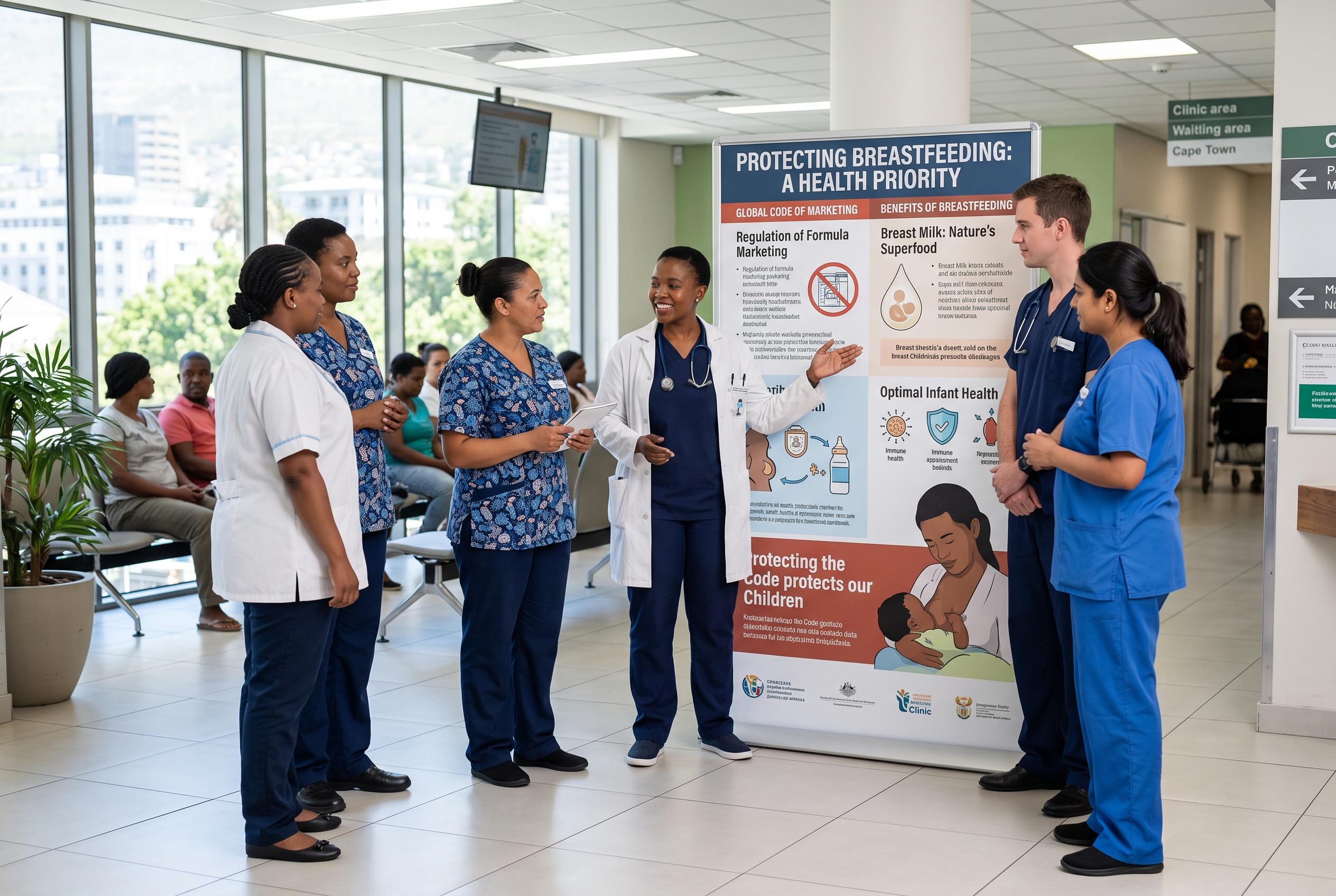

Health experts in South Africa urge doctors and nurses to resist corporate influence and promote unbiased infant-feeding advice amid ongoing formula marketing pressures, highlighting the vital role of breastfeeding in child health.
At an online discussion held on August 5, health experts urged doctors, nurses and other frontline staff to shield parents from pressure to use commercial milk formula and to keep infant-feeding advice free from corporate influence.
The event, organised by the Healthy Living Alliance during World Breastfeeding Week, came as campaigners warned that formula makers continue to reach families through trusted health workers. World Health Organisation Africa said in 2024 that 48% of infants under 6 months were exclusively breastfed worldwide, but the rate in South Africa was only 22%, underlining the scale of the challenge.
Tanya Doherty, chief specialist scientist at the South African Medical Research Council, said breastfeeding protects children against common infections and disease, supports healthy development and lowers the risk of obesity. She added that it also reduces a mother’s chances of breast cancer, ovarian cancer and type 2 diabetes. Doherty said the key issue was not the existence of formula, but whether parents and health professionals were being given accurate, impartial information rather than messages shaped by commercial interests.
Her comments drew on a World Health Organisation and Unicef report, How the marketing of formula milk influences our decisions on infant feeding, which found that companies were not only targeting parents but also health professionals, because they are seen as trusted sources of advice. The report said one in five women in South Africa had been advised to formula feed by a health professional and one in four had received a brand recommendation from one.
Doherty said the report also found that almost half of health professionals surveyed in South Africa had direct contact with company representatives, more than a quarter had attended company-sponsored events and some had recommended products after receiving marketing information about them. She said formula was often described in misleading terms, including as being “close to breastmilk”, while normal newborn behaviours such as crying, colic or regurgitation were presented as problems that formula could solve. The report also found that marketing often used scientific language and ingredient claims to create a sense of innovation and credibility.
Gilbert Tshitaudzi, nutrition manager at Unicef, said formula marketing in South Africa is regulated by Foodstuffs for Infants and Young Children, known as R991 of 2012, which is based on the WHO code on breast-milk substitutes. He said the rules cover labelling, composition, packaging, promotion and sponsorships involving health workers. Speakers said health facilities and professional bodies should reject formula marketing, strengthen conflict-of-interest policies and ensure that staff remain the main source of evidence-based feeding advice.
Angelika Grimbeek of Heala pointed to the Nourished Truth Programme, launched in 2022 by academics, experts, civil society organisations and the University of the Western Cape, as one effort to educate health workers about the regulations and the commercial tactics used by formula companies. Asafika Mbangata, chairperson of the Rural Doctors Association of Southern Africa, said more needed to be done to support working mothers so they can breastfeed, and suggested that waiting rooms could be used to show educational material on common feeding problems and when to seek help.
Disclaimer: This content is for informational purposes only and is not intended to be a substitute for professional medical judgment, advice, diagnosis, or treatment.