

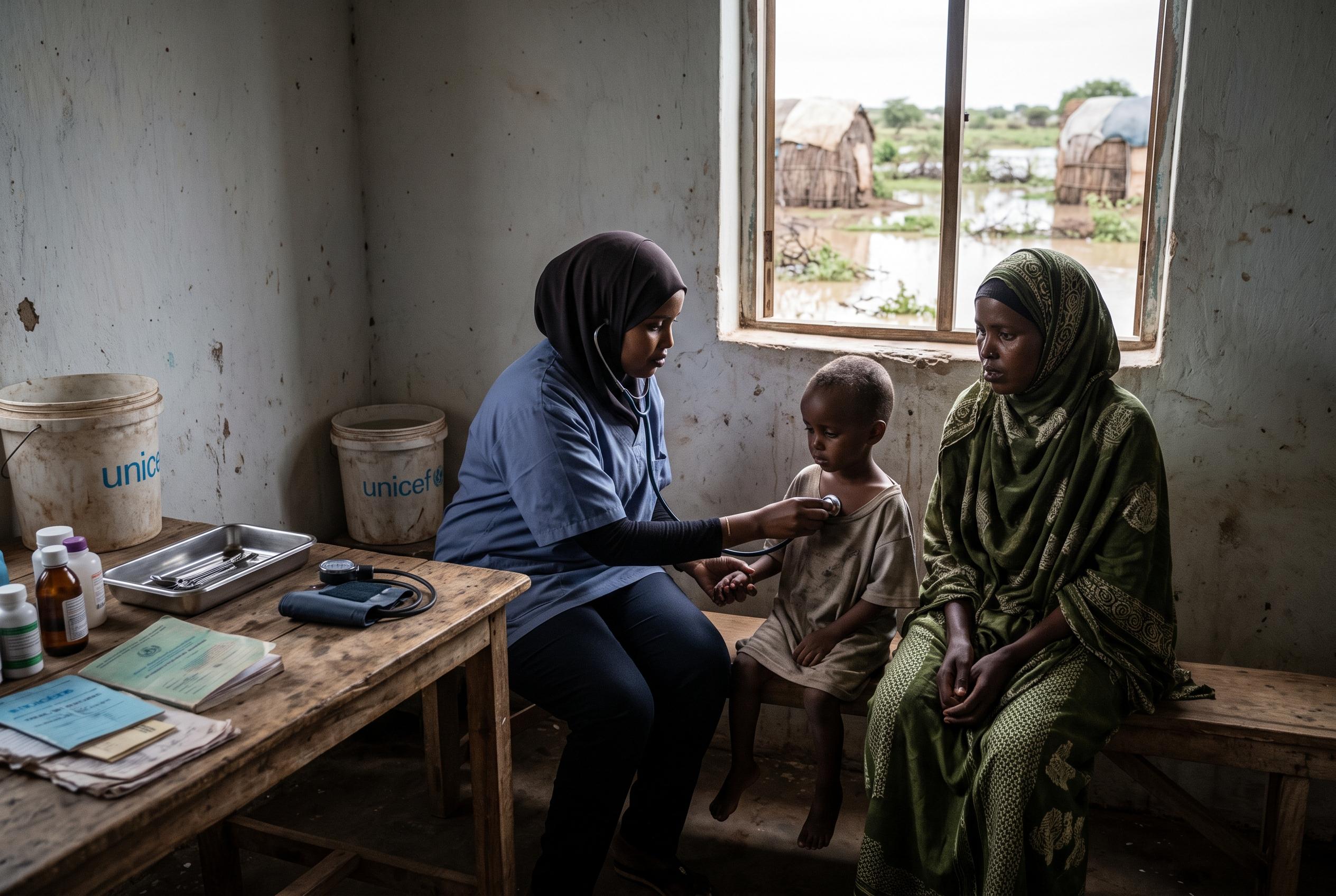

Nearly 1.92 million Somali children are expected to need treatment for acute malnutrition as conflict, disease, flooding and funding shortfalls limit access to care.
For three days, Halima Abdullahi Ibrahim carried her three-year-old daughter, Asho Hassan Abdi, from their village in southern Somalia to a hospital nearly 90 kilometres away after the child’s body began to swell, a symptom associated with severe malnutrition. At Kismayo Referral Hospital, the girl was taken to a stabilisation ward, where staff work to treat the most serious cases of undernourishment and related illness.
Health workers and aid officials say Asho’s case is part of a wider emergency that is deepening across Somalia. Somalia’s malnutrition caseload has been pushed higher by conflict, displacement, disease and repeated climate shocks, with the country facing both hunger and worsening access to treatment in remote and insecure areas. The United Nations children’s agency says children are dying from malnutrition while illnesses such as measles are making survival even harder.
According to the Integrated Food Security Phase Classification, 1.92 million Somali children between six months and almost five years old are expected to need treatment for acute malnutrition over the year to June 2027, including 433,000 children at risk of severe acute malnutrition, the deadliest form. UNICEF UK said the wider food crisis is also severe, with 5.4 million people forecast to face crisis levels of hunger or worse between October and December 2026, including 1.5 million in emergency conditions.
The situation is especially serious in the south, where flooding, disease outbreaks and limited access to clean water, sanitation and health services are compounding the crisis. The World Food Programme and other UN agencies have warned that about 6 million people, or 31% of the analysed population, faced acute food insecurity between April and June 2026, and that Burhakaba district remained at risk of famine if conditions did not improve. They said poor rains, soaring food prices, currency weakness and conflict-driven displacement were all contributing to the deterioration.
For families uprooted by violence and poverty, the lack of aid is magnifying the danger. Ali Adan Ali, Jubbaland’s commissioner for refugees and internally displaced people, said many displaced households had received no humanitarian support since 2023 because aid agencies were short of money. Sandra Lattouf, the Somalia representative for UNICEF, said during a visit to Kismayo that children were dying and that stronger cooperation between local authorities, community health workers and humanitarian groups was urgently needed. As El Niño-related flooding threatens to cut off more communities, aid agencies warn that the window to prevent a further rise in deaths is narrowing.
Disclaimer: This content is for informational purposes only and is not intended to be a substitute for professional medical judgment, advice, diagnosis, or treatment.



