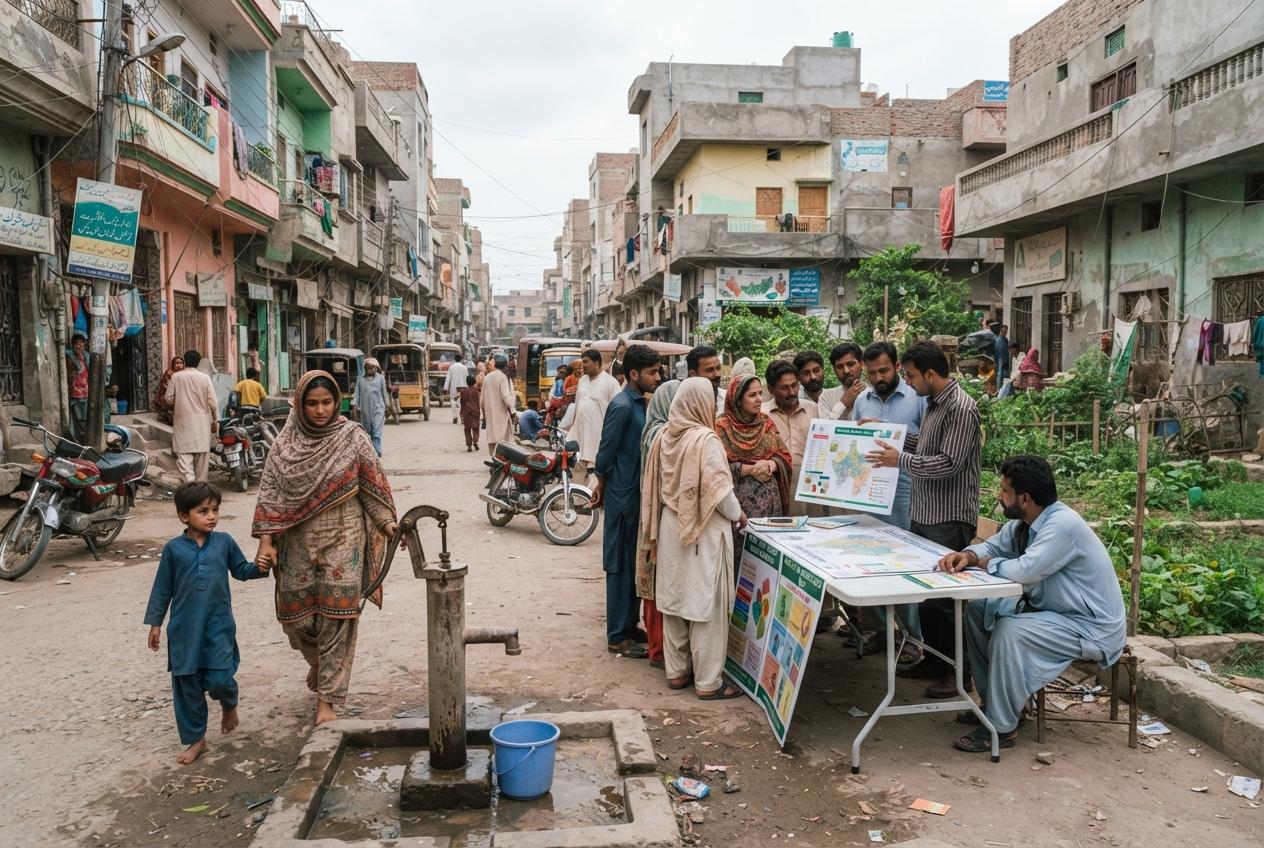

Sindh and the World Bank have collaboratively developed a comprehensive, multi-sectoral strategy aimed at tackling child stunting across the province, integrating health, water, sanitation, social protection, and agriculture programmes under a unified oversight system to ensure effective implementation and measurable results.
Sindh and the World Bank have moved towards a province-wide plan to tackle child stunting by linking health, nutrition, water and sanitation, social protection and agriculture programmes under one system of oversight and measurement.
At a meeting in Karachi, Chief Minister Syed Murad Ali Shah and World Bank Country Director Bolormaa Amgaabazar backed a convergence model that would align budgets, targets and implementation across departments rather than leaving each sector to work in isolation. Officials said the approach is intended to address the underlying causes of poor child growth, including malnutrition, unsafe drinking water, inadequate healthcare, poverty and limited access to diverse foods.
The plan builds on several World Bank-supported operations already running in Sindh. The National Health Support Programme covers all 29 districts of the province, while the Sindh Integrated Health and Population Programme and the Social Protection Delivery System are active in 15 districts, with the latter due to expand further. The STARS-WASH initiative has identified service areas in all 22 rural districts and is expected to be rolled out in phases, starting with districts where health, social protection and water interventions overlap.
According to officials present at the meeting, the proposed strategy would combine safer water supply, sanitation and wastewater treatment with maternal and child health services, immunisation, family planning, behavioural change campaigns and cash-transfer schemes such as MAMTA and Nashonuma. The agricultural component would focus on crop diversification, higher livestock productivity, sustainable farming and household kitchen gardens to improve access to nutritious food.
The governance structure would place the chief minister at the centre of the initiative, supported by a provincial steering committee, a convergence secretariat and district-level coordination committees led by deputy commissioners. A single management information system is also planned to bring together data from health facilities, outreach workers, vaccination records, social protection databases, WASH infrastructure and district budgets, with monthly scorecards intended to sharpen accountability.
The World Bank has long framed stunting in Pakistan as a human capital issue rather than a narrow health problem. In a visit to Pakistan last month, World Bank Vice President Ousmane Dione said the bank remained committed to supporting work on child stunting, while a World Bank results update on Punjab highlighted how improved WASH services can help reduce the problem. In Sindh, recent discussions have also underscored the scale of the challenge: more than 90% of rural households reportedly depend on self-supplied drinking water, often from contaminated groundwater, adding urgency to the province’s rural water and sanitation plans.
Mr Shah said the real test would be whether the strategy can deliver at village level, where mothers, children and local service providers meet the state’s most basic gaps. Ms Amgaabazar welcomed the province’s willingness to adopt a coordinated model and said the bank would support efforts to focus resources on districts most affected by stunting. The two sides agreed to finalise the governance and monitoring arrangements before early implementation begins in priority areas.
Disclaimer: This content is for informational purposes only and is not intended to be a substitute for professional medical judgment, advice, diagnosis, or treatment.