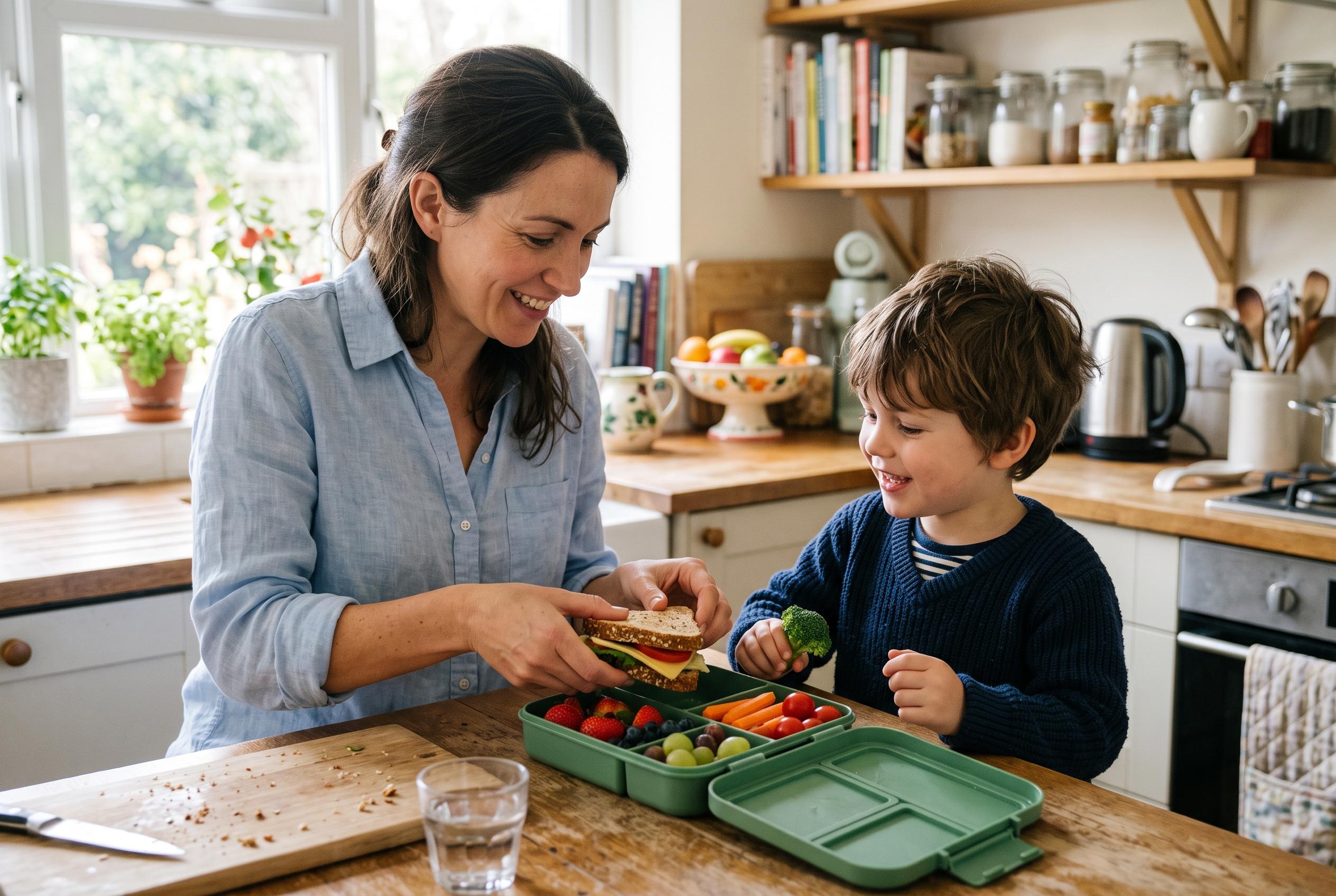

Parents can ease cold mornings by adopting straightforward, balanced lunch routines that focus on consistency and appeal, reducing stress and encouraging children to eat well during the school day.
Back-to-school mornings already ask enough of parents without turning lunch into a daily production. A practical packed lunch does not need to be fancy; it just needs to be filling, portable and something a child is willing to eat. A simple way to build one is to combine protein, fruit or vegetables and a whole grain, with a little dairy or healthy fat if it fits your child’s tastes. Harvard Health’s Kid’s Healthy Eating Plate uses a very similar approach, stressing colour, balance and variety.
That framework leaves room for easy combinations that can be repeated all week. A turkey and cheese wrap with cucumber and strawberries, chicken quesadilla with carrots and orange slices, or hummus with pita, cucumber and berries all fit the same basic pattern. So does last night’s dinner, reheated in a thermos. The point is not novelty. It is consistency, because children are far more likely to finish lunches that are familiar and appealing than ones assembled to look impressive.
The same logic applies to snacks. Pairing carbohydrate with protein can make a snack more satisfying, which is why combinations such as apple with peanut or sunflower butter, Greek yoghurt with berries, carrots with hummus or whole-grain crackers with cheese work so well. Harvard’s guidance on lunchboxes and healthy eating for children echoes this approach, recommending that half the lunchbox be fruits and vegetables, with the rest split between whole grains and protein, plus a modest amount of dairy or healthy fats.
A little planning on Sunday can save several rushed decisions during the week. Boiling eggs, washing fruit, trimming vegetables and cooking a little extra dinner all reduce the odds of scrambling at the last minute. It also helps to narrow the choices. Instead of asking children what they want every day, offer a small set of options they already accept. Harvard Health says involving children in meal planning and packing can make them more likely to eat what is in the lunchbox, and the Mayo Clinic Health System notes that balanced meals can support focus, memory and mood during the school day.
There is also no need to chase perfection. A lunch that gets eaten is better than a carefully designed one that comes home untouched. Parents do not need ten different combinations or a new idea every morning; four or five reliable lunches on rotation may be enough. The aim is a routine that works in real life, leaves less stress at 7.20 a.m. and gives parents a little more time to look after themselves once the school run is done.
Disclaimer: This content is for informational purposes only and is not intended to be a substitute for professional medical judgment, advice, diagnosis, or treatment.